WELDING PROCESS 
# WHY USE THE GTAW TIG PROCESS FOR WELDING STAINLESS STEELS?
Stainless steels are a group of materials whose main characteristic is corrosion protection, due to their CHROMIUM content,…

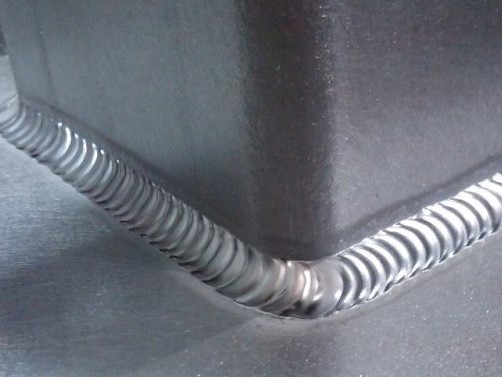
The answer is very simple: yes, it is possible. In fact, since the early development of the GMAW or MIG welding process in the mid-1940s, successful applications have been carried out on large-scale projects involving aluminum and aluminum alloys.
The GMAW process offers the same advantages as the GTAW process for aluminum applications; that is, it can be used in all positions depending on the equipment, and different thicknesses can be welded while achieving an excellent appearance, with the added advantage of a higher deposition rate.
To weld aluminum using the GMAW process, the following recommendations should be taken into account:
Welding equipment: It is a myth that specialized equipment is required. A conventional power source can be used as long as the parameters are properly adjusted and certain accessories are replaced. For example, to weld properly, use U-groove drive rolls, which are specifically designed for aluminum; this roll shape prevents the wire from being crushed. Another recommended change is to replace the liner with a Teflon or carbon fiber liner.
Aluminum is a very soft material and can be bent easily, which is why replacing the liner is recommended. Contact tips specifically designed for welding aluminum are also available.
Metal transfer modes: These are the means by which the wire detaches and is transferred to the base material, generating metal transfer. For welding aluminum, the ideal mode is pulsed arc transfer, which combines short-circuit and spray arc transfer, thereby ensuring control of heat input and spatter. To achieve this type of transfer, the equipment must incorporate this technology.
Shielding gas: For this type of application, the use of inert gases such as Argon or Helium is mandatory. Argon is the most widely used gas due to its lower cost compared to Helium. If thicker sections need to be welded, Helium is the ideal shielding gas, and the use of a mixture of these gases can also be a good option.
Filler metal: This is an essential part of the process; therefore, the type of alloy to be welded must be known. The most common alloys are aluminum-silicon Type 4043 and aluminum-magnesium Type 5356. Using this material classification as a reference, filler metals are available accordingly. When using conventional equipment, larger diameter wires are recommended. Thinner wires can be used with spool gun or push-pull torches.
Base metal preparation: Welding is a process of metallic surgery, so cleanliness plays a very important role. Remember to completely remove contaminants such as oils, paints, oxides, moisture, dust particles, etc. For such cases, use acetone, alcohol, or water and wipe with a clean cloth.
Welding technique: To weld aluminum properly, use appropriate parameters based on material thickness and welding position. Use the push technique to ensure that no black marks caused by lack of shielding are generated. An excellent aluminum weld is achieved with pulsed arc transfer, as it controls the arc, producing a weld bead of the highest quality and efficiency.
Ask the DoctorWelding assistant about this topic and it answers citing our articles.

Stainless steels are a group of materials whose main characteristic is corrosion protection, due to their CHROMIUM content,…
When purchasing a welding machine, several factors must be analyzed since it represents your next business investment. It…