WELDING PROCESS 
CAN ALUMINUM BE WELDED WITH THE MIG/MAG PROCESS?
The answer is very simple: yes, it is possible. In fact, since the early development of the GMAW…
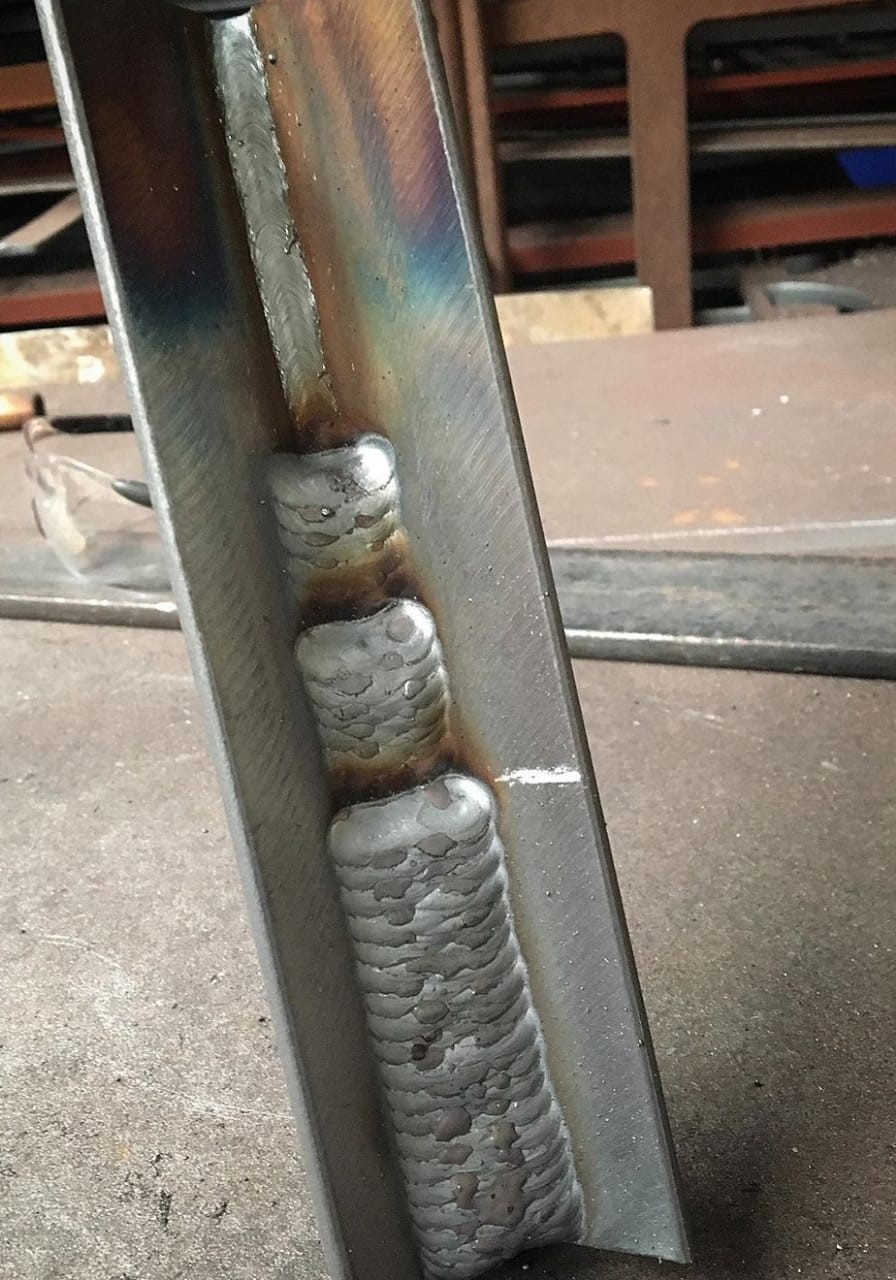
In the gas-shielded arc welding process, also known as the GMAW Process or MIG/MAG, solid wires and various pure or mixed gases are used as consumables for the GTAW (TIG) process, both for welding low-carbon steels and low-alloy or stainless steels; non-ferrous metals can also be welded, such as aluminum and its alloys, copper and its alloys, etc.
For the different types of both solid and flux-cored wires, there are standards that classify them; the best known is that of the AWS American Welding Society, which are equivalent to those of the ASME; these standards are the most widely recognized worldwide. Another important standard is ISO/EN.
The AWS standard is detailed below. In this system, with the exception of gases, all solid or flux-cored wires commonly used are included within it; in particular, the following specifications will be provided:
AWS A5.18 – 93 Specification for the Classification of Electrode Wires and Rods for GMAW Welding of Carbon Steels.
AWS A5.28 – 79 Specification for the Classification of Electrode Wires and Rods for GMAW Welding of Low-Alloy Steels.
AWS A5.20 – 79 Specification for the Classification of Flux-Cored Wires for FCAW Welding of Carbon Steels.
AWS A529 – 80 Specification for the Classification of Flux-Cored Wires for FCAW Welding of Low-Alloy Steels.
AWS A5.9 – 81 Specification for the Classification of Electrode Wires and Rods for GMAW, GTAW, and PAW Welding of Stainless Steels.
AWS A5.22 – 80 Specification for the Classification of Flux-Cored Wires for FCAW Welding of Corrosion-Resistant, Chromium–Nickel, and Chromium Steels.
Classification Criteria.
The classification of solid and flux-cored wires is carried out based on the mechanical properties of the deposited metal in the as-welded condition, the type of shielding gas, and the chemical composition.
These data are valid for wires under specification AWS A5.28; all the values described above also apply, but are expanded to include the chemical composition of the deposited metal.
In the case of flux-cored wires, such as those under specification AWS A5.20, these values are supplemented by the indication of the welding position; for flux-cored wires under specification AWS A5.29, the same system as the previous specification is followed, with the addition of the chemical composition of the deposited metal.
In contrast, specifications AWS A5.9 – 81 for wires and rods, and AWS A5.22 for flux-cored wires, are classified according to the chemical composition of the corrosion-resistant, chromium, and chromium–nickel stainless steel deposited by them.
Classification System.
The classification of Solid Electrode Wires under Specifications AWS A5.18 and AWS A5.28 has the following characteristics:
E R X X Y – Z
1 2 3 4
Where:
S Indicates that it is a Solid Wire.
4. Indicates that it is a composite filler metal.
Ask the DoctorWelding assistant about this topic and it answers citing our articles.

The answer is very simple: yes, it is possible. In fact, since the early development of the GMAW…
Stainless steels are a group of materials whose main characteristic is corrosion protection, due to their CHROMIUM content,…