No Catergory 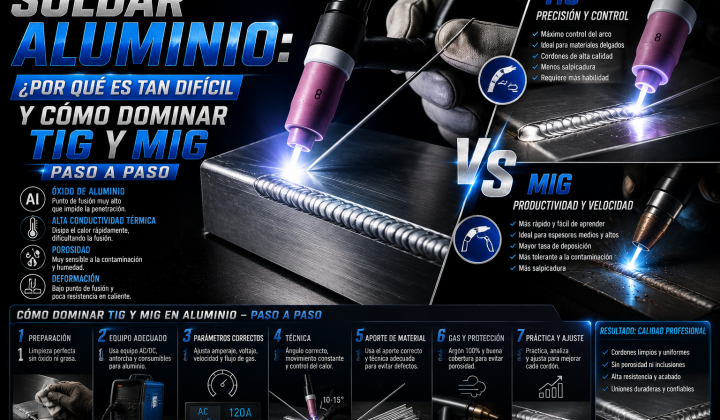
Welding Aluminum: Why It’s So Difficult and How to Master TIG and MIG Step by Step
Beginner's Guide to Aluminum Welding: Oxide Cleaning, Shielding Gas, Polarity, and Equipment Settings for TIG and MIG.


TIG (Tungsten Inert Gas) welding is a widely used welding process across various industries due to its ability to produce high-quality, precision welds. However, as with any welding process, welders working with TIG are exposed to a number of risks that can affect their health and safety if proper preventive measures are not taken. In this article, we will explore the main hazards associated with TIG welding and the steps welders can take to protect themselves.
1. Exposure to Fumes and Gases:
During the TIG welding process, harmful fumes and gases are generated, including nitrogen oxides, ozone, carbon monoxide, and metallic vapors. Inhalation of these contaminants can cause respiratory irritation, pulmonary issues, and even more serious diseases, such as lung cancer over the long term.
Safety Measures:
Work in well-ventilated areas or use fume extraction systems to remove contaminants from the air.
Use personal protective equipment, such as respirators with filters appropriate for welding fumes.
Keep your head away from fumes and vapors by using local exhaust ventilation systems and maintaining proper body positioning.
2. Exposure to Ultraviolet (UV) and Infrared (IR) Radiation:
The electric arc generated during TIG welding emits ultraviolet and infrared radiation, which can cause skin burns and eye damage if adequate protection is not used.
Safety Measures:
Use appropriate face shields that provide protection against UV and IR radiation, such as welding helmets with auto-darkening filters.
Cover exposed skin with protective clothing, such as heat- and spark-resistant jackets and gloves.
3. Electric Shock Hazard:
TIG welding involves the use of electric current to generate the welding arc, which can increase the risk of electric shock if the equipment is not handled correctly.
Safety Measures:
Regularly inspect the cables and connections of the welding equipment for any damage or wear and repair or replace them as necessary.
Use personal protective equipment, such as insulating gloves and footwear with non-slip soles, to protect against electric shock.
4. Burns and Contact Injuries:
The TIG welding arc produces extremely high temperatures that can cause severe skin burns and contact injuries from hot surfaces or molten material.
Safety Measures:
Handle welding equipment and hot materials carefully using appropriate tools, such as pliers and welding gloves.
Wear flame-resistant clothing and avoid direct contact with hot surfaces during and after the welding process.
In conclusion, although the GTAW-TIG welding process is highly effective and versatile, it is not without risks to the health and safety of welders. It is essential that workers take adequate preventive and protective measures to minimize these risks and ensure a safe and healthy work environment.
Ask the DoctorWelding assistant about this topic and it answers citing our articles.

Beginner's Guide to Aluminum Welding: Oxide Cleaning, Shielding Gas, Polarity, and Equipment Settings for TIG and MIG.
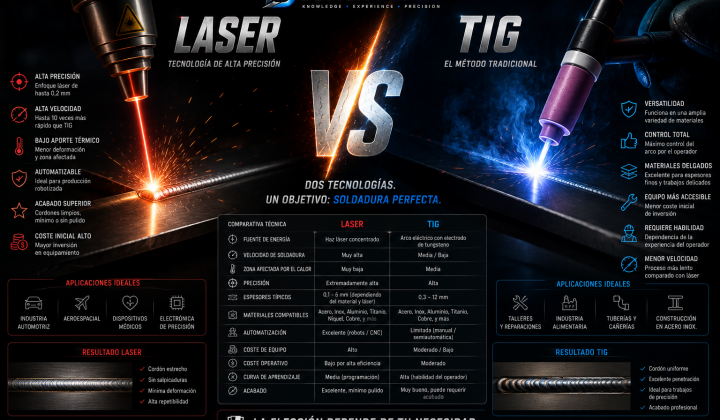
Comparison between laser and TIG welding focusing on the advantages of laser: speed, distortion, penetration, and automation.