QUALITY 
WHAT IS UNDERCUT? A DEFECT OR DISCONTINUITY.
Undercut is a surface discontinuity that occurs in the base metal directly adjacent to the weld bead; depending…
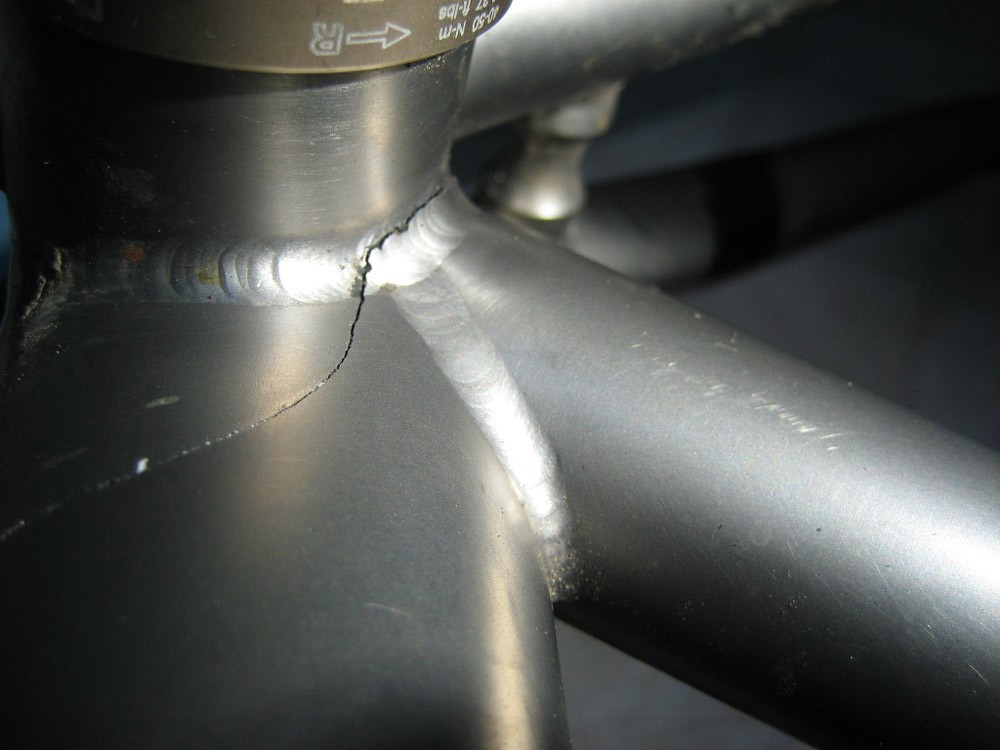
A crack initiates when the load or stress applied to a part exceeds its strength. In other words, an overload condition exists; while the applied load may not exceed the load-bearing capacity of a given part or structure, the presence of a notch or stress concentrator can produce localized stresses at a point where the tensile strength of the material is exceeded. In such cases, cracking may occur at these stress concentration points.
Cracks can be categorized in different ways. One approach is to group them as Hot Cracking or Cold Cracking, since some types have been characterized as occurring while hot, and others while cold (Delayed), in the center of the weld bead, caused by P and S (phosphorus and sulfur).
Hot cracks occur while the metal is solidifying; they appear at elevated temperatures. The propagation of these cracks is considered intergranular, that is, between individual grains. If the fractured surface of a hot crack is examined, various colors will be visible, indicating that the crack formed at elevated temperatures. Cold cracking occurs after the metal has cooled to ambient temperature. Cracks that appear during service are considered cold cracks. Underbead cracks are caused by trapped hydrogen and are also considered cold cracks.
Cracks can be described by their direction relative to the longitudinal axis of the weld. Those running parallel to the axis are referred to as longitudinal cracks; similarly, cracks perpendicular to the longitudinal axis of the weld are called Transverse Cracks. These reference directions apply to cracks occurring in both the base metal and the deposited weld metal.
Cracks can be differentiated into various types by describing the exact location where they are found relative to the various zones of the weld; the most relevant crack types are:
ROOT CRACKS. These are also longitudinal in type; their propagation can occur in both the base metal and the weld metal. They are referred to as root cracks because they typically initiate at the root of the weld bead. Like throat cracks, they are associated with the presence of weld shrinkage stresses. Furthermore, they are generally considered hot cracks. Root cracks normally result from poorly prepared joints; they also occur with excessive root openings, which can act as stress concentrators and produce cracking at the root.
TOE CRACKS. These are cracks in the base metal that propagate from the weld toe. Weld beads exhibiting excessive reinforcement or convexity create stress concentration points at the weld toe. This, combined with a lower-ductility microstructure in the HAZ (Heat-Affected Zone), increases the susceptibility to weld toe cracking. Toe cracks are generally considered cold cracks.
The stress causing this type of cracking may originate from transverse shrinkage stresses during welding, from applied service loads, or from a combination of both. This type of cracking occurs in service, generally in parts subjected to cyclic loading.
CRATER CRACKS. These occur at the termination point of a weld bead. If, upon completing a bead, the welder does not use proper technique to fill the molten metal at that point, a crater may result. The presence of such a crater, combined with weld shrinkage stresses, can produce individual cracks or a network of cracks radiating from the center of the crater.
When this type of radial cracking occurs in the crater, it is commonly known as Star Cracks. Since crater cracking occurs during the solidification of the deposited metal, it is considered hot cracking. Crater cracks can become extremely dangerous because they tend to propagate.
HAZ CRACKS. Since the HAZ (Heat-Affected Zone) is typically less ductile than the adjacent base metal and deposited weld metal, cracking can occur without the presence of hydrogen. Under high-restraint conditions, shrinkage stress may be sufficient to crack the HAZ, particularly in brittle metals such as cast iron.
BASE METAL CRACKS. Cracking can also occur in the base metal. These types of cracks may or may not be associated with welding. Base metal cracking is generally associated with stress concentrators, which result in cracking once the parts are placed in service. Radiographically, cracks appear as fine lines rather than well-defined dark lines, which distinguishes them from other types of discontinuities. In addition, their propagation path is not perfectly straight.
Ask the DoctorWelding assistant about this topic and it answers citing our articles.

Undercut is a surface discontinuity that occurs in the base metal directly adjacent to the weld bead; depending…
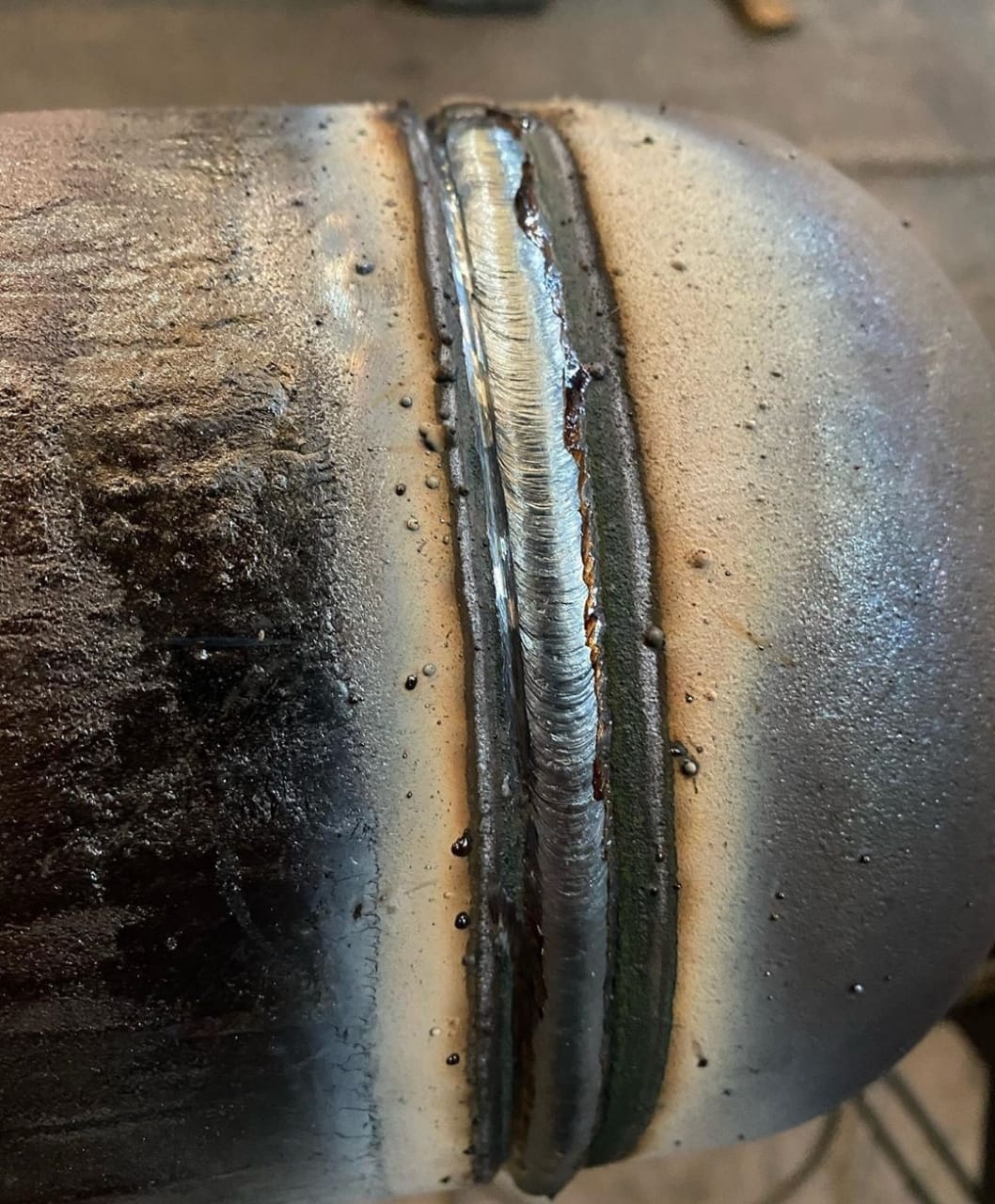
Spatter is a defect that occurs in welding processes where metal transfer takes place through an electric arc.…