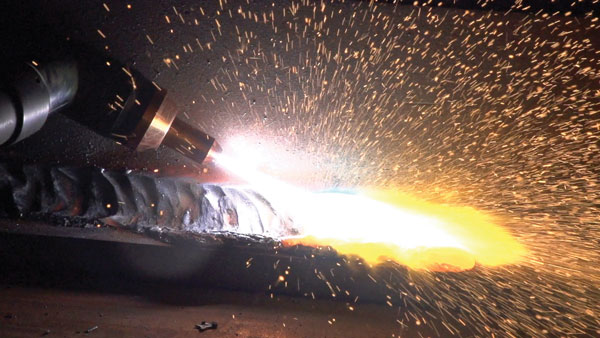
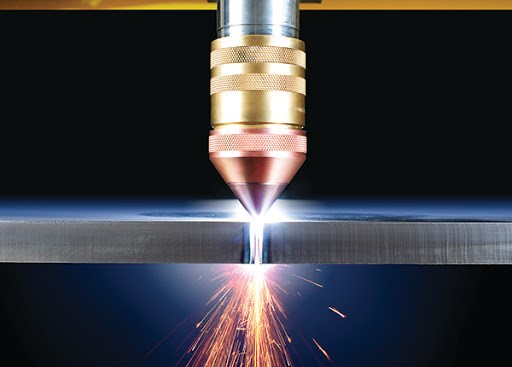
One of the most important topics to understand is how to cut metals, for which there are different processes available. These can be mechanical or thermal in nature; when referring to mechanical cutting, it includes all cuts made with shears, cutting bands, hacksaws, etc., and when referring to thermal cutting, it refers to cutting metals by means of heat, with two methods available: one by electric arc and the other by combustion.
In the electric arc cutting process, the most well-known is plasma cutting, a process by which all types of metallic materials such as steel, stainless steel, aluminum, copper, bronze, etc. can be cut. That is, any metal can be cut, unlike the chemical combustion process, better known as oxyfuel cutting, with which only steel can be cut.
When cutting efficiency is required, the plasma cutting process is the most effective due to its quality and speed of execution.
What is plasma cutting:
It is a process by which energy is supplied to a gas in order to establish an electric arc capable of cutting metals. In this process, the air used must be at a pressure of no less than 80 pounds per square inch on a continuous basis and must have a minimum flow rate of 6.5 CFM. The success of the process lies in the air quality and the amperage capacity provided by the cutting equipment.
To cut efficiently, keep the following recommendations in mind:
- Determine the most common metal thickness you will be cutting and keep in mind that this process is efficient up to 2 inches; beyond this thickness it becomes very costly.
- Select the optimal cutting speed and remember that too fast a speed can result in a poor cut; try to maintain a constant travel speed.
- Check whether the equipment offers a high-frequency start option, as this makes arc ignition easier and is an advantage when working with thin materials.
- Compare the cost of consumables against their service life to ensure savings. There are very expensive consumables on the market that negatively impact process productivity.
- Always run tests with the equipment to verify cut quality.
- Check the machine’s working visibility and find the best position to observe the progress of the cut.
- Look for equipment that is portable so you can perform any job without weight restrictions.
- Before purchasing the machine, check that it is easy to use and that you feel comfortable operating it.
- Consider safety factors; remember that an electric arc is being generated, therefore you need eye protection with a filter shade no lower than a shade number 5.
- Check the air quality; it must be completely dry to prevent premature wear of the consumables.