QUALITY 
WHAT IS UNDERCUT? A DEFECT OR DISCONTINUITY.
Undercut is a surface discontinuity that occurs in the base metal directly adjacent to the weld bead; depending…

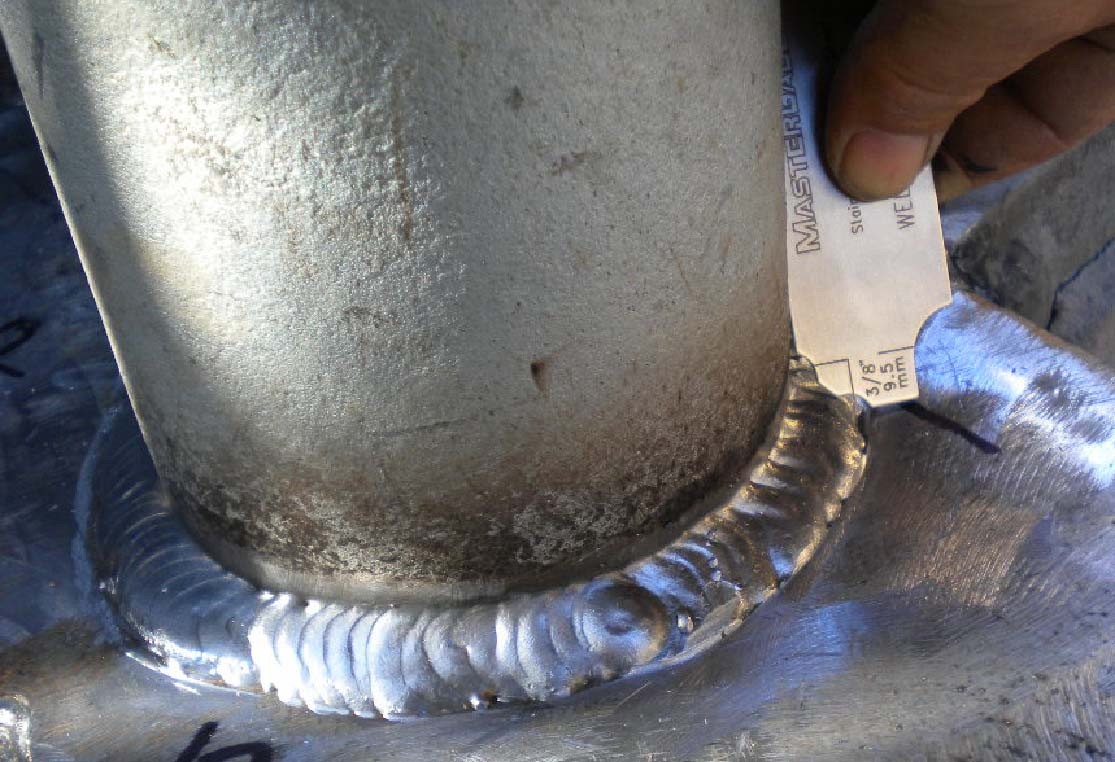
Inspection and testing methods are grouped into two types: destructive and non-destructive. The former, which are performed exclusively in the laboratory, are aimed primarily at testing processes prior to the final weld in order to validate procedures, where all the variables of the welding procedure are verified, such as: current, electrodes, materials, gases, etc., and come in several types: tensile, bend, hardness, fatigue, and impact tests. This type of testing is also directed at diagnosing the causes of failures and accidents; it consists of taking samples that are subsequently analyzed by various more or less sophisticated procedures. In this article, we consider it more worthwhile to focus attention on inspection using non-destructive procedures, which make it possible to perform quality control of the welded structure.
Non-destructive tests are performed on the finished weld, and there are different methods, described as follows.
Visual inspection
This is the most widely used method. It must be performed by highly trained personnel with keen visual acuity, natural or corrected, and may be aided by certain auxiliary tools: gauges for measuring defects such as misalignment, root opening, joint parameters, and weld dimensions; other instruments are also used, such as lighting devices, rulers and measuring tapes, magnets, temperature-indicating sticks, thermometers, and magnifying glasses. For visual inspection inside pipes, an optical instrument equipped with an illumination source known as a fiber optic borescope or fiberscope is used, allowing the interior to be viewed and even photographed or recorded.
Visual inspection covers all phases of the process, from material procurement and storage through the preparation and execution phases and finally the finished weld. Its purpose is to detect surface and external defects such as cracks, undercuts, weld appearance, and weld parameters. The visual inspector must pay particular attention to joint preparation, since many internal weld defects can be prevented at this stage. During weld execution, inspectors can make use of metallographic reference specimens produced under the same conditions as the welding being carried out.
Liquid penetrant inspection
This is a test that detects cracks or defects that are open to the surface but not visible to the naked eye. It consists of applying a liquid to the surface and allowing it to dwell for a few minutes so that it penetrates any potential cracks. The excess is then removed by cleaning the surface and applying a developer—powder or other products—that absorbs the liquid drawn out of the crack, revealing it clearly. Photographs may be taken to document the inspection. Two types of penetrant liquids are used: fluorescent, more suitable for shop inspection, and color-contrast for field inspection. Fluorescent penetrant inspection requires the use of high-intensity light sources filtered through lenses to highlight the fluorescent pigments.
Magnetic particle inspection
This is a fast and practical procedure for detecting cracks and other internal or visually imperceptible defects (it is capable of detecting cracks as small as one ten-thousandth of a millimeter). It takes advantage of the distortion that a crack produces in the lines of a magnetic field created by a magnetizer using permanent magnets or electric current. The area to be inspected is first coated with finely divided magnetic particles. The inspection can be carried out by the dry method or the wet method. Observations can be recorded by photography. Once the inspection is complete, the part must be demagnetized if it is to be machined; demagnetization is not necessary in the case of structural components.
Radiographic inspection
This method is based on the interpretation of images produced on a radiographic film exposed by X-rays or gamma rays after they have passed through the welded joint. It is a highly reliable procedure for wall thicknesses of 16 to 20 mm; for greater thicknesses, ultrasonic testing is recommended. It is used primarily for butt welds, since fillet welds are difficult to radiograph. It allows the detection of defects such as incomplete fusion, porosity, and slag inclusions. This procedure always provides a permanent inspection record.
Ultrasonic inspection.
This procedure uses the propagation of sound through a solid medium as a means of identifying potential defects inside the weld, since the characteristics of the sonic waves change in the presence of missing metal (cracks or porosity) or changes in composition (slag or fusion defects). Modern equipment allows an electronic record of the inspection to be obtained. This procedure is not well suited for fillet welds.
Ask the DoctorWelding assistant about this topic and it answers citing our articles.

Undercut is a surface discontinuity that occurs in the base metal directly adjacent to the weld bead; depending…
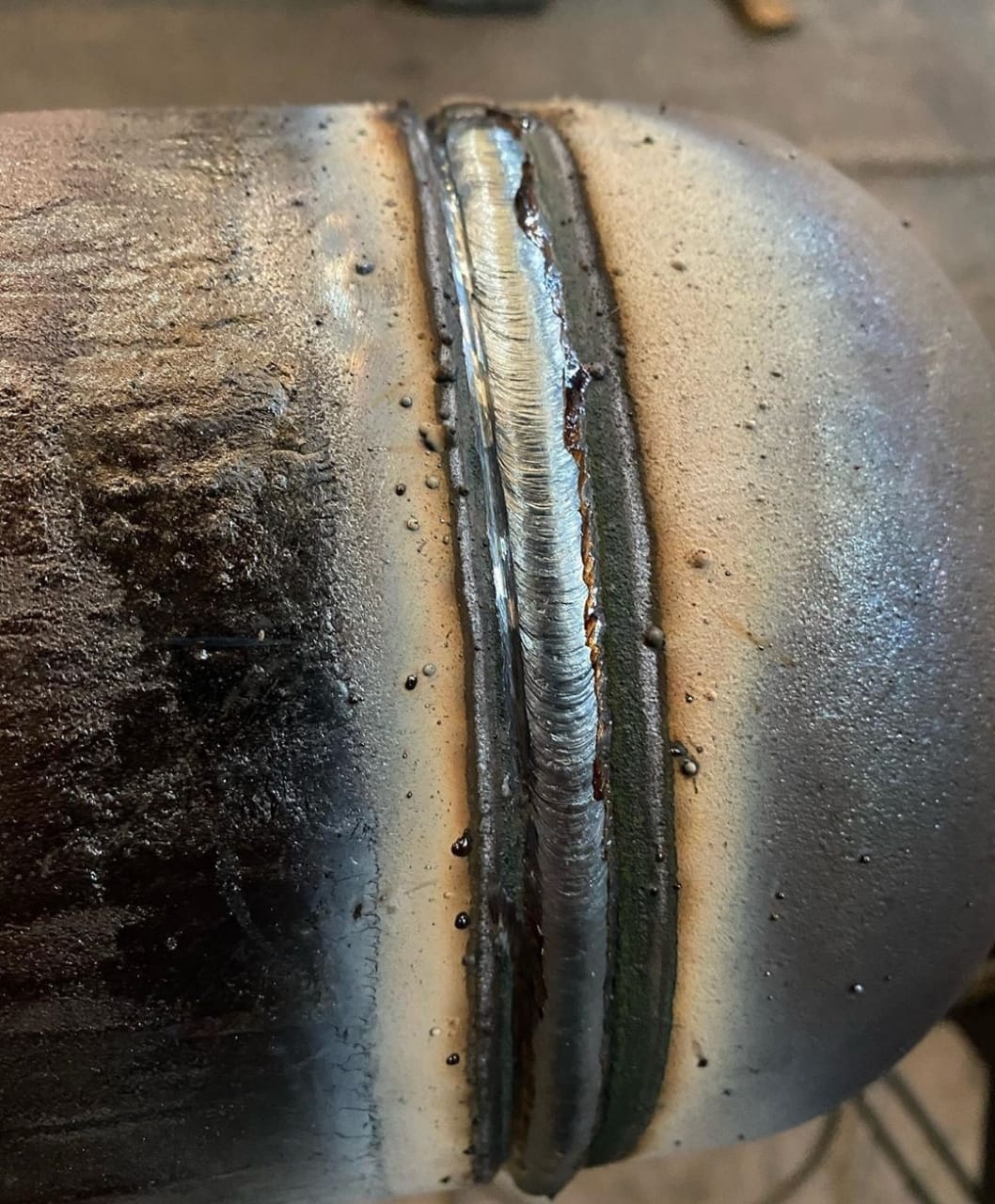
Spatter is a defect that occurs in welding processes where metal transfer takes place through an electric arc.…