MATERIALS 
## HOW ARE METALS CLASSIFIED?
Metals play a major role today in all areas of society’s development. These materials are present daily in…

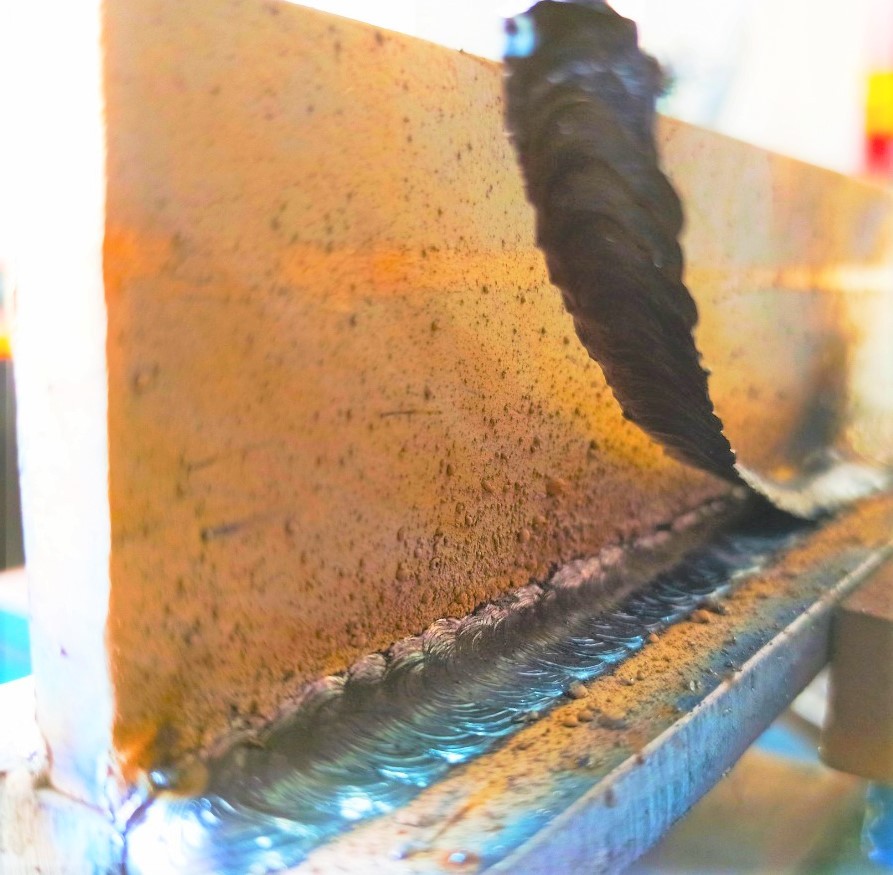
The manufacturing of electrodes must comply with manufacturing standards, according to AWS specifications. Furthermore, having a clear understanding of this formulation is very important, as it is responsible for ensuring that the electrode meets the required chemical, metallurgical, and mechanical properties. The following are the chemical elements of the coating.
Minerals:
Aluminum Silicates:
Acids:
Fluxes
Bases:
Groups of other materials involved in electrode coatings.
Not all coating components can be included in this classification, since they sometimes serve more than a single purpose, meaning they may appear in more than one of the five groups listed above.
IONIZING MATERIALS
The rapid evaporation of certain elements contained in the coating facilitates arc ignition while simultaneously increasing electrical conductivity. Combinations of alkali metals and alkaline earth metals are used as ionizing materials. Examples of these elements include potassium, sodium, lithium, and calcium.
GAS GENERATORS
To protect the arc against air infiltration, materials are used that form a protective gas or vapor shield, which acts partly as a mechanical barrier and partly by combining with oxygen and nitrogen.
These gas generators are:
Denitriding agents or nitrogen eliminators:
Deoxidizers or oxygen eliminators:
Carbon-contributing materials:
SLAG PRODUCERS
The slag produced by the coating must be lightweight so that it can rise quickly to the surface of the weld pool. It must spread uniformly over the weld bead without piling up or curling, since its primary function is to protect the molten weld metal against the ingress of oxygen and nitrogen from the atmosphere.
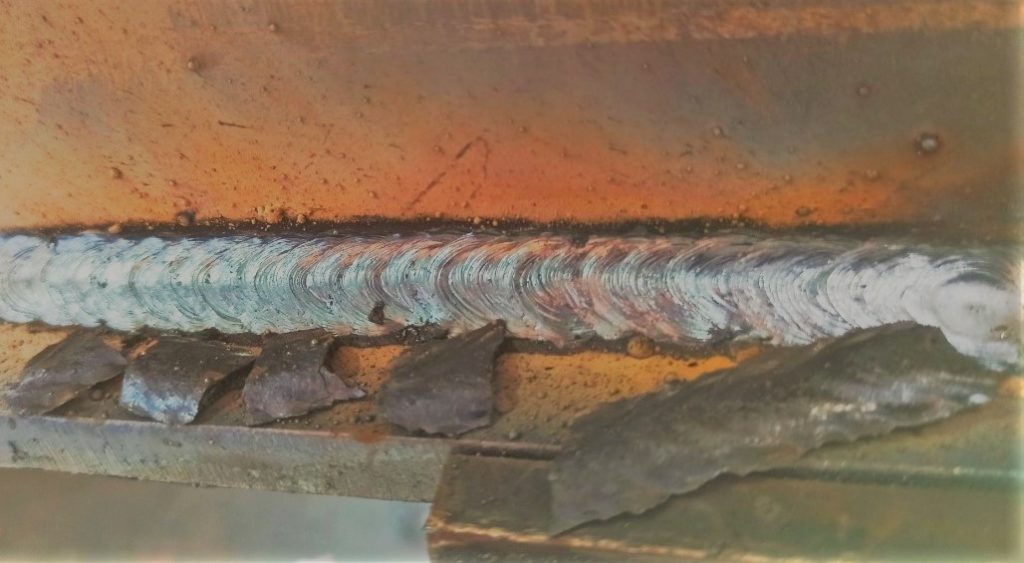
The formation of a thick slag layer causes a delay in solidification, and consequently promotes easier fusion and better outgassing of the weld, while also inhibiting the formation of crystallized structures within the weld.
Chemical compounds used as slag-forming materials include: calcium and magnesium carbonates, fluorides, and silicates of iron, calcium, aluminum, and magnesium.
Acetates and nitrates of alkali metals and alkaline earth metals, as well as naturally occurring minerals such as feldspar, powdered shale sand, limestone, dolomite, magnesite, clays, and manganese and titanium ores.
Electrodes generate a large amount of heat and can withstand high electrical overloads, particularly when the core contains large amounts of alloying elements; these are referred to as oxidizing-coated electrodes, whereas those with a neutral coating can only withstand low current intensities.
The properties of the slag are significantly influenced by its content of Si Ox (acidic) and Ca O (basic), and the melting point of the slag depends primarily on the quantity of these materials.
Silicon oxide lowers the melting point and produces glassy slags when present in significant amounts. Calcium oxide raises the melting point and produces spongy, highly porous slags.
ALLOYING ELEMENTS
Alloying materials act in two ways: they either blend into the weld metal as alloying components, or they act as deoxidizers and denitriding agents to reduce existing iron oxides. Ferroalloys of manganese, silicon, aluminum, titanium, and vanadium are used in particular to prevent porosity (weld pool stabilization). The use of carbon, manganese, silicon, aluminum, titanium, and nickel is also recommended. The most effective are ferroaluminum and ferrotitanium-aluminum. In any case, it is important to understand that the quality of welds capable of meeting the most demanding practical requirements is due to the favorable combination of the basic and chemical effects of high-quality coatings with electrodes made from materials properly selected from a metallurgical standpoint.
BINDERS
The coating must be resistant and solid, non-hygroscopic, and must not crack or spall upon the slightest bending of the rod or electrode during fusion, in order to bond or mix the materials together and adhere them to the core. Organic binders such as dextrin, shellac, and phenol resin are used, as well as inorganic substances such as sodium or potassium silicate.
According to coating composition, they are divided into four groups:
By acidic, quartz and rutile (titanium dioxide) are understood; conversely, basic coatings are applied to non-alloyed, oxidation-resistant, and heat-resistant wires.
Fast-melting electrodes with heavy coatings, weldable with either alternating or direct current and in any position, are provided with highly acidic or mildly acidic coatings. Alloyed core wires for welding are always manufactured with medium-thickness coatings, with lime-based coatings as the base. Non-alloyed wires are generally manufactured with heavy coatings, melt more slowly, and as a rule have a deposition rate of 15 to 20%. They can only be welded connected to the positive pole and almost always transfer in the form of large droplets.
Ask the DoctorWelding assistant about this topic and it answers citing our articles.

Metals play a major role today in all areas of society’s development. These materials are present daily in…
Copper was one of the first metals used by mankind, as it existed in relatively abundant quantities in…