MATERIALS 
# HOW CAN COPPER BE WELDED?
Copper was one of the first metals used by mankind, as it existed in relatively abundant quantities in…

Metals play a major role today in all areas of society’s development. These materials are present daily in buildings, structures, bridges, tanks, automobiles, aircraft, etc. Metals are fundamental elements in the development of a civilization.
Regarding the classification of metals, first of all it can be determined that metals are comprised of elements that possess special characteristics and properties. These properties are determined according to their alloying elements; among the most relevant are metallic luster, thermal and electrical conductivity, mechanical strength, and above all, great plasticity. The latter refers to the ability to deform without fracturing; since plasticity and thermal and electrical conductivity are exclusive properties of metals, it has been assumed that they have a constitution different from other solids due to the characteristic bonding of their atoms. For this reason, metals have come to be considered a special class of the solid state known as the metallic state.
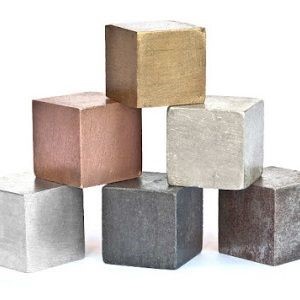
Regarding the classification of metals, they are classified into ferrous metals and non-ferrous metals.
FERROUS OR FERRIC METALS:
These are derivatives of iron. Iron is very abundant in nature (it forms part of the core of the Earth’s crust) and is the most widely used metal. These can in turn be classified into steels and cast irons.
Carbon Steels:
An alloy of iron and carbon in which the carbon content is present at a percentage below 2.1%.
Low-alloy steels:
They are composed of various alloying elements such as chromium, nickel, molybdenum, vanadium, etc., and are characterized by the fact that the sum of these elements must be less than 6%.
High-alloy steels: These materials are made up of various alloying elements whose total must be greater than 6.1%; among the most characteristic are stainless steels and manganese steels.
Cast Iron:
Cast iron refers to those alloys of iron, carbon, and silicon in which the carbon content ranges between 2.1% and 6.67%.
NON-FERROUS METALS:
These are metals in which the iron content is very low, generally less than 1%, and can be classified into heavy metals and light metals.
Heavy metals:
These are metals whose specific gravity is greater than 2.67 g/cm³, for example: copper, lead, nickel, among others.
Light metals: These are metals whose specific gravity is less than 2.67 g/cm³, for example: aluminum, magnesium, titanium.
Ask the DoctorWelding assistant about this topic and it answers citing our articles.

Copper was one of the first metals used by mankind, as it existed in relatively abundant quantities in…
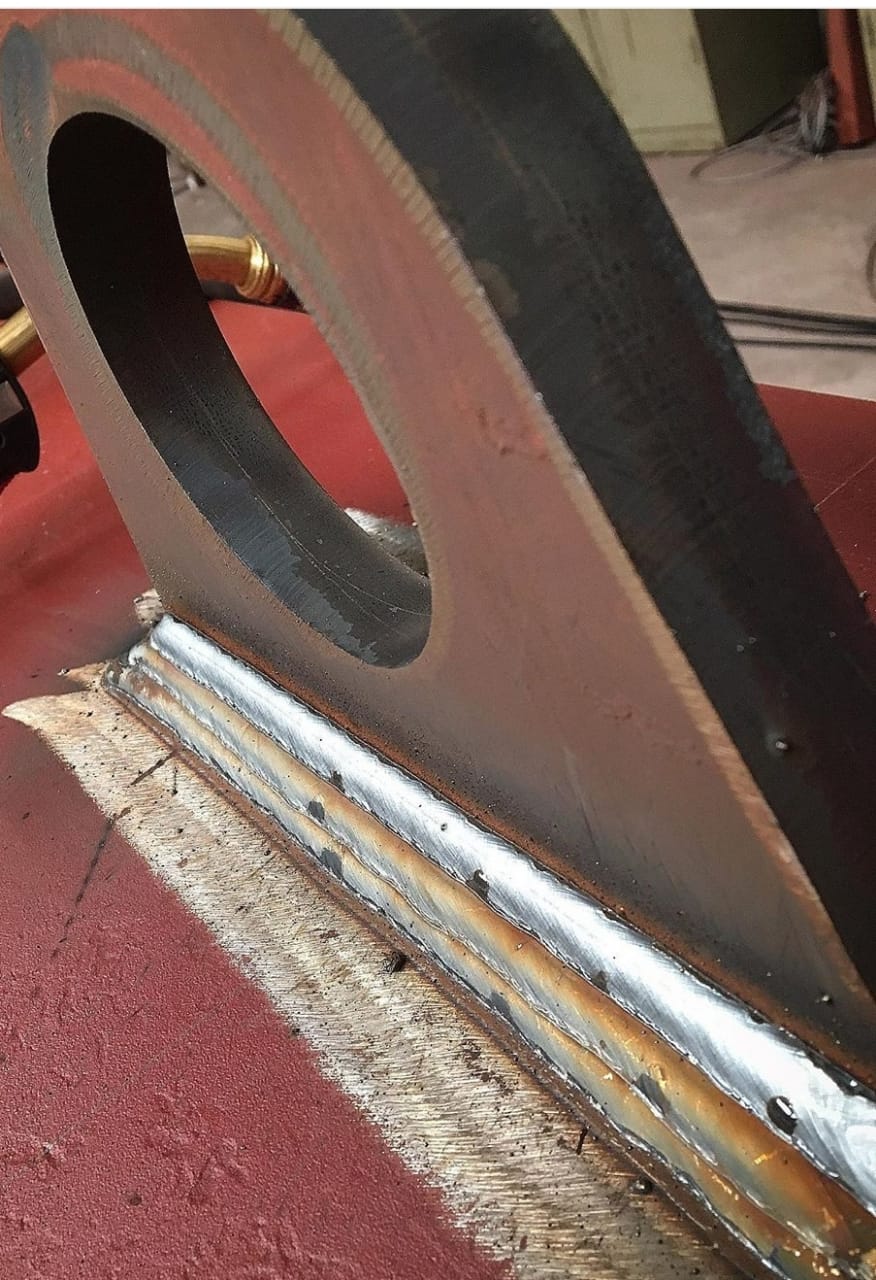
Lamellar tearing is the separation in the base metal or matrix caused by through-thickness stresses induced by weld…