MATERIALS 
## HOW ARE METALS CLASSIFIED?
Metals play a major role today in all areas of society’s development. These materials are present daily in…
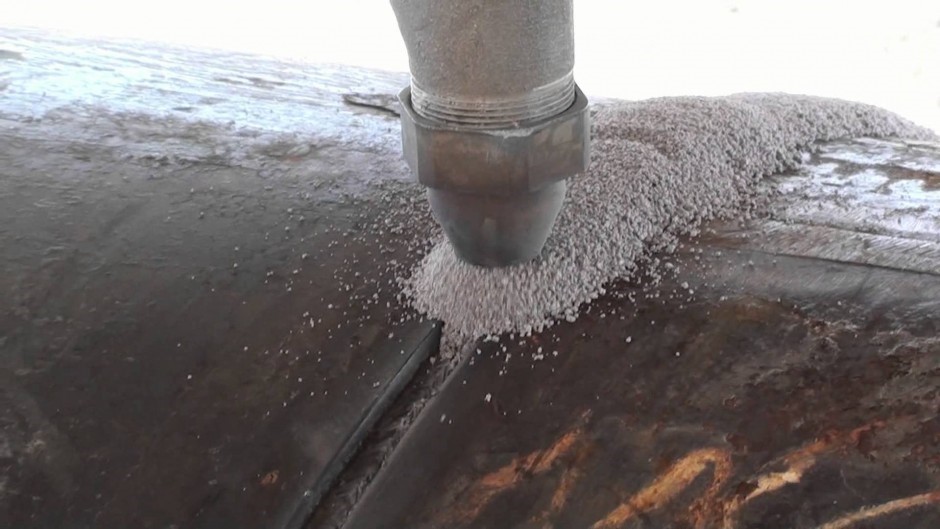
The main characteristic regarding the quality of the weld deposit produced by the SAW (Submerged Arc Welding) process is that the deposited metal results from the combination of an Electrode Wire and a Flux. For this reason, and similarly to what occurs with shielded metal arc welding electrodes, the classification of these consumables — wire and flux — is performed jointly.
In accordance with the classification of the various consumables used in welding, the AWS A5.17 – 86 Specification is detailed here, as it is the most widely used worldwide.
Classification System.
The Electrode Wire. Based on its chemical composition.
The Flux. Based on the mechanical properties of the deposited metal, using the flux in combination with any of the electrode wires classified in this specification.
Classification System.
The classification of a flux and electrode wire combination has the following characteristics:

Where:
F 6XX – E XXX Tensile Strength in the range of 60,000 PSI to 80,000 PSI (415 N/mm2 to 550 N/mm2), where the 6 indicates the minimum strength of the range.
F 7XX – E XXX Tensile Strength in the range of 70,000 PSI to 95,000 PSI (480 N/mm2 to 650 N/mm2), where the 7 indicates the minimum strength of the range.
It should be noted that the AWS specification distinguishes four (4) types of fluxes according to their manufacturing process, which are:
a. Fused Fluxes
b. Bonded Fluxes
c. Agglomerated Fluxes
d. Mechanically Mixed Fluxes
3. This letter designates the heat treatment condition under which the tests were performed:
A As-welded condition.
P Post-weld heat treatment. The time and temperature of these heat treatments are specified within the specification itself.
4. This digit refers to the lowest temperature at which the V-notch Charpy impact test was performed, obtaining values no lower than 27 joules for the deposited metal.
Examples:
F XXZ – EXXX Z indicates that no impact testing is required.
F XX0 – EXXX 0 indicates that the minimum temperature at which the
impact test was performed was – 18°C.
F XX2 – EXXX 2 refers to a minimum temperature of – 29°C.
F XX4 – EXXX 4 indicates a minimum temperature of – 40°C.
F XX5 – EXXX 5 indicates a minimum temperature of – 46°C.
F XX6 – EXXX 6 indicates that the minimum temperature was – 51°C.
F XX8 – EXXX 8 refers to the impact test being performed at – 62°C.
5. The letter E designates an Electrode Wire, and the letters EC indicate a Composite Electrode Wire.
6. This field will be covered by one of the following letters: L, M, or H, referring to the Manganese content in the Electrode Wire, as follows:
L. Low, Low-Manganese wire, maximum 0.6%.
M. Medium, Medium-Manganese wire, maximum 1.4%.
H. High, High-Manganese wire, maximum 2.2%.
7. These two digits refer to the chemical composition of the Electrode Wire.
8. The letter K, when incorporated into the Electrode Wire classification, indicates that it was manufactured from Silicon-killed Steel.
Ask the DoctorWelding assistant about this topic and it answers citing our articles.

Metals play a major role today in all areas of society’s development. These materials are present daily in…
Copper was one of the first metals used by mankind, as it existed in relatively abundant quantities in…