WELDING PROCESS 
CAN ALUMINUM BE WELDED WITH THE MIG/MAG PROCESS?
The answer is very simple: yes, it is possible. In fact, since the early development of the GMAW…
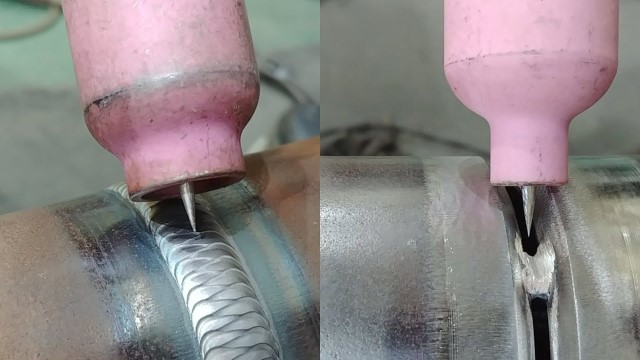
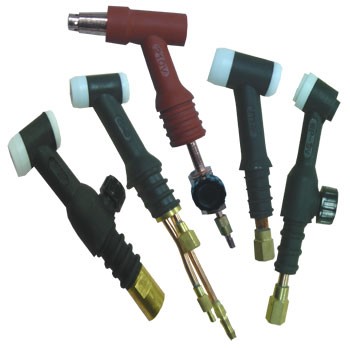
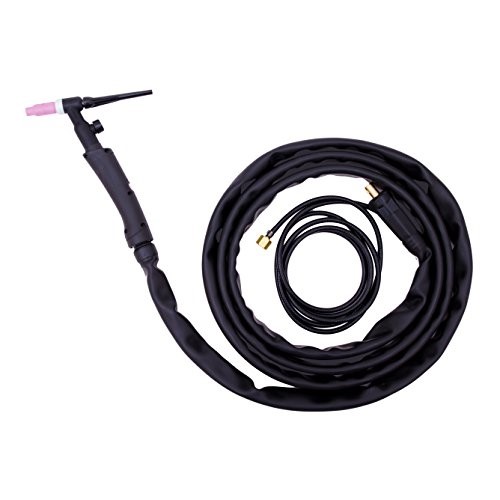
Welding torches for the TIG process are available in various designs and amperage ranges. The most common has a 70° angle head; some are available with 90° (perpendicular) or 180° (straight) heads. Hoses, nozzles, and other accessories must be designed to withstand high welding temperature environments and resist deterioration resulting from intense UV light. Most TIG torches are black so they do not reflect the intense light of the welding arc.
Due to the high temperatures they are subjected to during welding, some method of cooling must be provided. They can generally be divided into two main categories according to the cooling method they use; the two methods are water and air cooling. Torches specifically designed for one cooling method are not interchangeable with torches designed for the other. Water-cooled torches have an internal circuit to circulate water, and air-cooled torches have an additional surface for air cooling. However, other components, such as caps, nozzles, and collets, can be interchanged with others from the same manufacturer and within an amperage range. Parts from one manufacturer’s torch may not be interchangeable with those of another, as there are no standards for them.
TIG torches are made up of:
The torch body or welding head consists of an inner metal part surrounded by a high-temperature-resistant and insulating plastic cover. The inner metal part is normally made of copper or copper alloys, such as brass. In both cases, they provide excellent electrical and thermal conductivity. Electrical conductivity is necessary to carry high welding currents, and thermal conductivity to allow dissipation of excess welding heat.
The most common welding head angle is 70°; however, they are also available with 90°, 180°, and flexible angles.
Power cables and hose connections can be threaded or clamped. Clamped connections allow for a smaller, tighter fit than threaded ones.
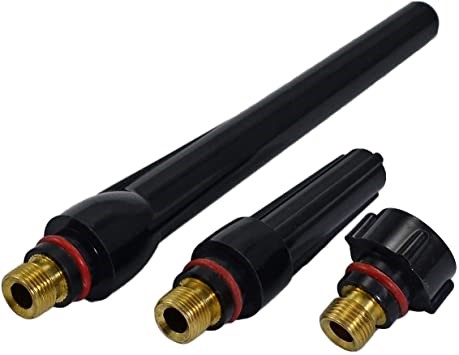
Back Cap.
The back cap serves two important purposes. First, it can be loosened or tightened to secure or release the tungsten electrode. Second, it also covers the rear end of the tungsten electrode, protecting it and sealing the top of the welding head to prevent shielding gas leakage.
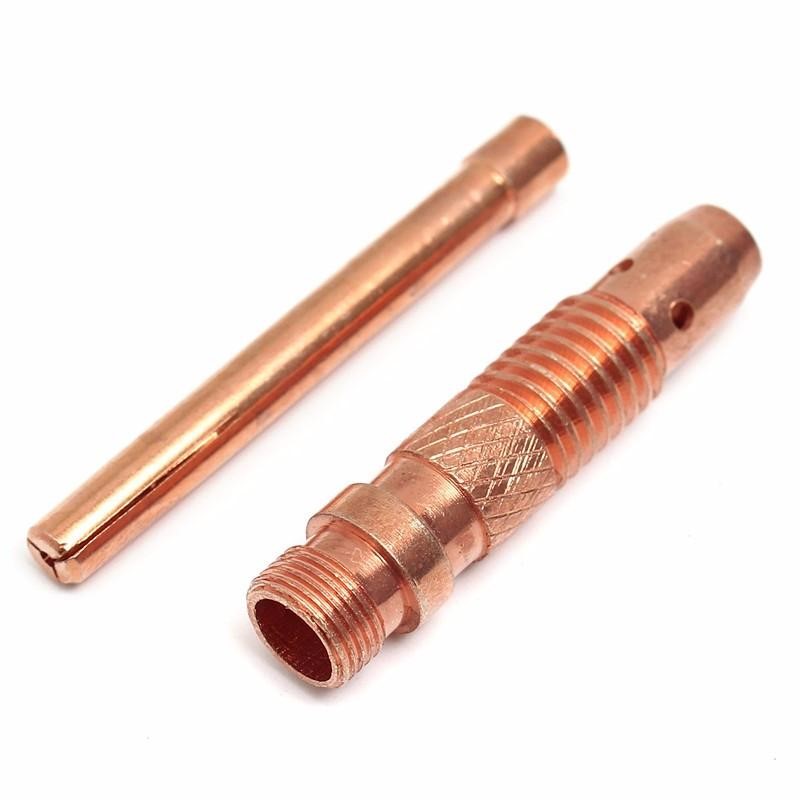
Collet body and collet.
Both the collet body and the collet, where the tungsten rod is placed, as well as the nozzle holder, can be made of copper or brass. In some cases, these components are plated to increase electrical and thermal conductivity. They must be sized to match the diameter of the tungsten rod being used.
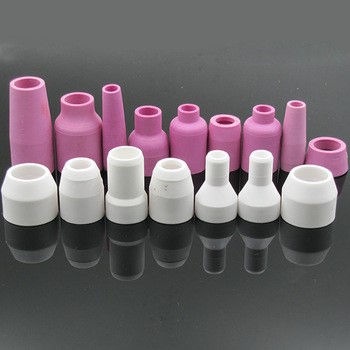
Nozzles or cups.
Welding nozzles are supplied in different sizes and materials. The size of the opening, called the orifice, and the nozzle end affect or determine the welding current and accessibility in restricted spaces. Beginners will often find it easier to use a smaller nozzle for better visibility; however, larger nozzle diameters are needed for adequate shielding gas coverage. Although smaller diameter nozzles can provide better weld visibility, they can melt during welding application. If this occurs, the shielding gas coverage can be affected, thereby altering the normal aerodynamic design of the nozzle and the proper gas flow.
Most nozzles are made of ceramic, but for some special applications, such as automated welding, a metal nozzle capable of withstanding the heat may be required. Fused quartz nozzles are transparent and are sometimes used when greater visibility is required. They are relatively expensive compared to conventional ceramic nozzles.
The choice of size, both in length and diameter, is normally made based on the welder’s personal preference; the welding specifications may indicate the size to be used. The factors that can affect nozzle size selection are as follows:
Ceramic nozzles are heat-resistant and will have a relatively long service life when used correctly. The service life of a ceramic nozzle is affected by the current level and its proximity to the workpiece.
Silicon nitride nozzles will withstand higher temperatures than ceramic ones and therefore have a longer service life.
The fused quartz (glass) nozzle is used when weld visibility is an issue. They are very durable and do not break as easily as ceramic nozzles; however, their high cost limits their use.
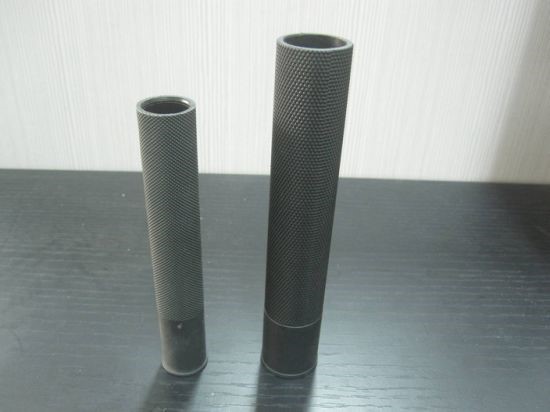
Handle
The torch handle is made of high-temperature plastic and can be slid or screwed onto the welding head. They are normally smooth or ribbed to provide a better grip. They often have a flat side that allows the welder to hold the torch in the desired position.
Hoses and cables.
Air-cooled torches sometimes have a single hose that connects to the head and surrounds the power cable; others have a hose that supplies shielding gas and a separate power cable. The single-hose system has the advantage of making the torch easier to handle because a single combined gas and power cable is much less likely to become tangled. The advantage of the dual system is that if the hose or cable becomes damaged, only one of them needs to be repaired or replaced.
The water-cooled torch has three conduits connected to the welding machine. One hose carries the shielding gas, another supplies cooling water to the head, and the third is a combination of the water return line and the power cable.
The shielding gas hose must be made of a heat-resistant plastic that can withstand the welding environment and not contaminate the gas. Rubber hoses contain oils and other solvents that can mix with the gas, causing weld contamination.
Hoses that have been used for water or other fluids cannot be used as shielding gas hoses because they may also contain residues that will contaminate the weld.
The power cable must be capable of carrying the current (amperage); water-cooled torches are generally recommended when currents exceed 200 amperes.
Ask the DoctorWelding assistant about this topic and it answers citing our articles.

The answer is very simple: yes, it is possible. In fact, since the early development of the GMAW…
Stainless steels are a group of materials whose main characteristic is corrosion protection, due to their CHROMIUM content,…