No Catergory 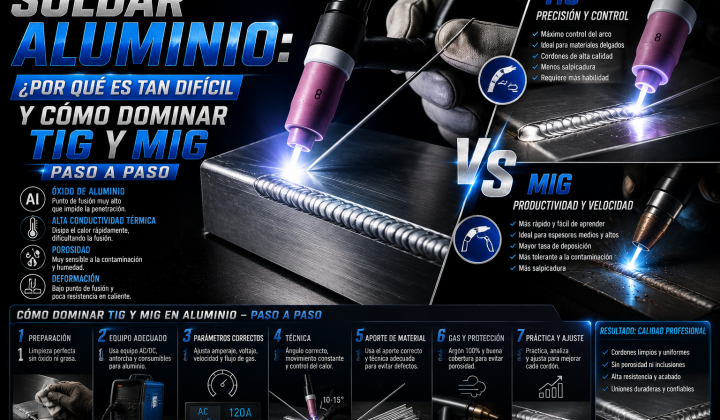
Welding Aluminum: Why It’s So Difficult and How to Master TIG and MIG Step by Step
Beginner's Guide to Aluminum Welding: Oxide Cleaning, Shielding Gas, Polarity, and Equipment Settings for TIG and MIG.

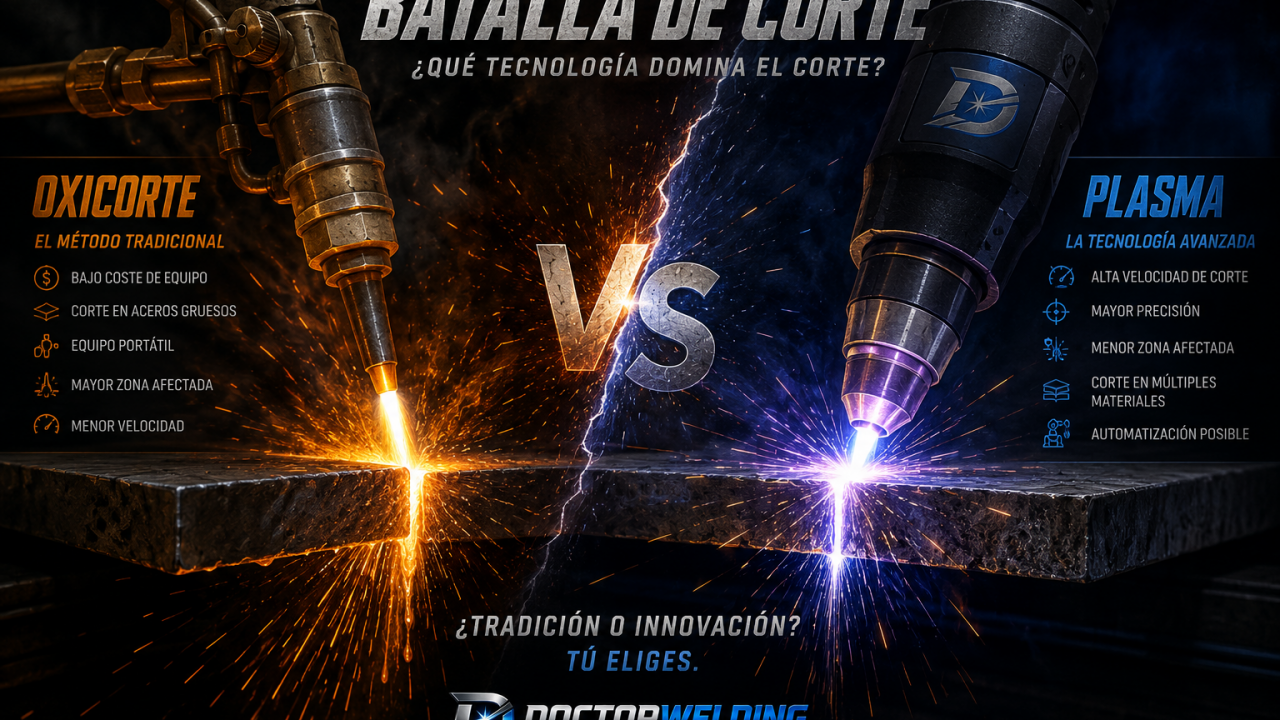
This is the first filter and it almost never fails:
As a general guide for carbon steel:
| Thickness | General Recommendation | Comment |
|---|---|---|
| < 6 mm | Plasma | Fast, clean cut with minimal thermal distortion. |
| 6–25 mm | Plasma or oxyfuel | Overlap zone; operating cost and cut quality determine the choice. |
| 25–150 mm | Oxyfuel | Very cost-effective with affordable equipment at heavy thicknesses. |
| > 150 mm | Oxyfuel | Industrial high-power plasma can reach these ranges, but at very high cost. |
The maximum limit of plasma depends heavily on the equipment: high-power industrial systems can achieve considerable thicknesses [VERIFY], but the cost per hour rises sharply compared to oxyfuel cutting.
Initial equipment cost and cost per meter cut do not align. Broadly speaking:
| Criterion | Oxyfuel | Plasma |
|---|---|---|
| Initial investment | Low | Medium-high |
| Consumable cost | Low | Medium |
| Materials | Carbon/low-alloy steel only | Any conductive metal |
| Optimal thickness | Heavy sections | Thin and medium |
| Speed on thin plate | Low | High |
| Portability without power supply | High | Limited |
In many shops the solution is not choosing one or the other, but having both: plasma for the bulk of plate work and oxyfuel as a backup for heavy sections and occasional jobs.
Safety: Both processes generate metal fumes, radiation (especially plasma, which poses a risk to eyes and skin), spatter, and fire hazard. Use appropriate PPE (filter lens of the correct shade, gloves, flame-resistant clothing), fume extraction/ventilation, and keep the work area clear of flammables. With oxyfuel cutting, take extra precautions with the storage and handling of compressed gases (flashback arrestors, leak checks). Consult an expert regarding the appropriate eye protection shade levels and the flow rates/pressures recommended by the manufacturer.
Ask the DoctorWelding assistant about this topic and it answers citing our articles.

Beginner's Guide to Aluminum Welding: Oxide Cleaning, Shielding Gas, Polarity, and Equipment Settings for TIG and MIG.
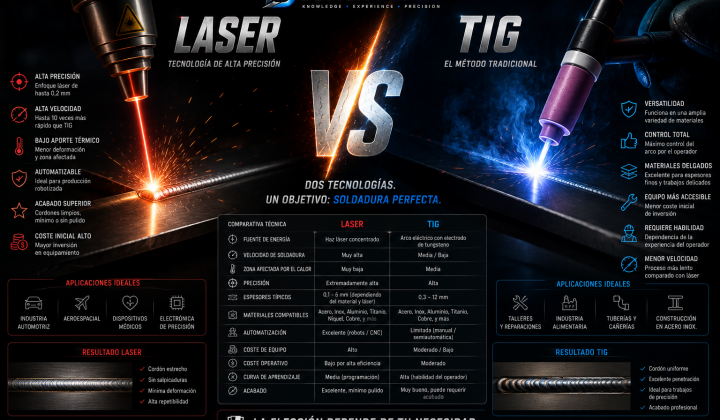
Comparison between laser and TIG welding focusing on the advantages of laser: speed, distortion, penetration, and automation.