QUALITY 
WHAT IS UNDERCUT? A DEFECT OR DISCONTINUITY.
Undercut is a surface discontinuity that occurs in the base metal directly adjacent to the weld bead; depending…
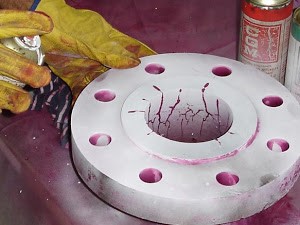
Quality is undoubtedly a predominant factor in every weld joint. Welders’ responsibilities are not only focused on producing sound joints, but also on ensuring that these contain no defects or discontinuities. In order to prevent future failures that could trigger a major accident, it is essential to perform examinations on weld joints.
To carry out this inspection in the best possible way, non-destructive testing exists. These methods are part of the quality field and, as their name indicates, they are tests that cause no damage to the welded component or structure.
The purpose is to detect surface or internal discontinuities in materials, welds, components, and fabricated parts. The materials that can be inspected are very diverse; they can be metallic and non-metallic. In the vast majority of industrial processes, metals are typically used and must be inspected in order to guarantee their quality.
These tests must be performed in accordance with written procedures that meet the requirements of the main fabrication codes and standards, such as ASME, ASTM, API, and AWS, among others.
To perform and interpret these tests, inspectors must be qualified by ASNT, the American Society for Nondestructive Testing, which establishes three levels of inspectors, with Level III being the most senior. The inspector classification is as follows: Level I, II, and III, in accordance with the requirements of Recommended Practice SNT-TC-1A, CP-189.
For some standards, the use of non-destructive testing is mandatory for detecting material flaws; for others, it is a quality verification factor. The sectors that most frequently use non-destructive testing are: the hydrocarbon sector, pressure vessel fabrication, structural steel fabricators, and aircraft manufacturers and repair facilities. All these sectors seek the detection of defects and discontinuities, for which the 5 most widely used techniques exist, classified according to the most appropriate method.
Surface and Near-Surface Discontinuities.
– Visual Testing and Inspection.
– Liquid Penetrant Testing
– Magnetic Particle Testing
Internal Discontinuities:
– Radiographic Testing
– Ultrasonic Testing
Ask the DoctorWelding assistant about this topic and it answers citing our articles.

Undercut is a surface discontinuity that occurs in the base metal directly adjacent to the weld bead; depending…
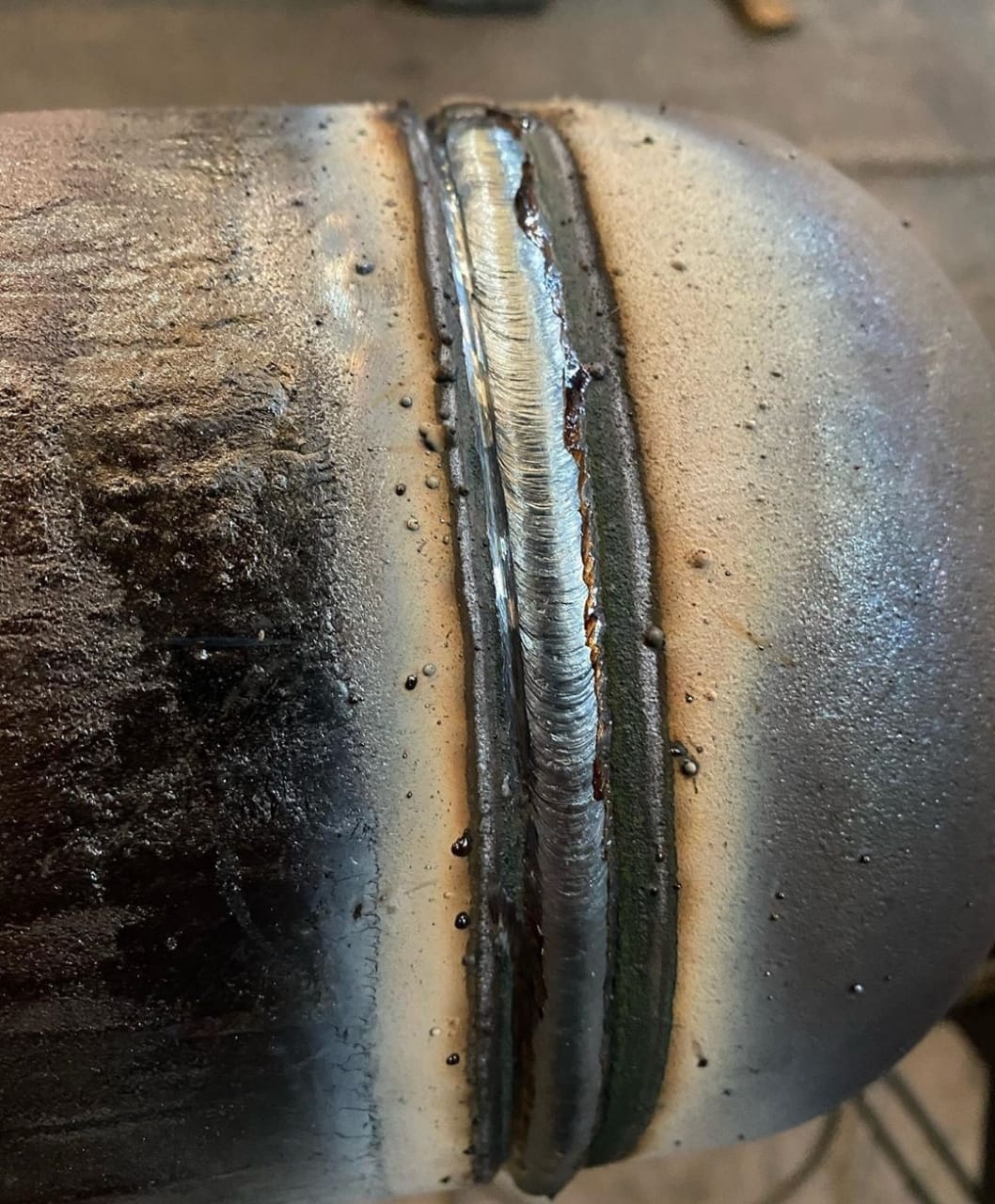
Spatter is a defect that occurs in welding processes where metal transfer takes place through an electric arc.…