WELDING PROCESS 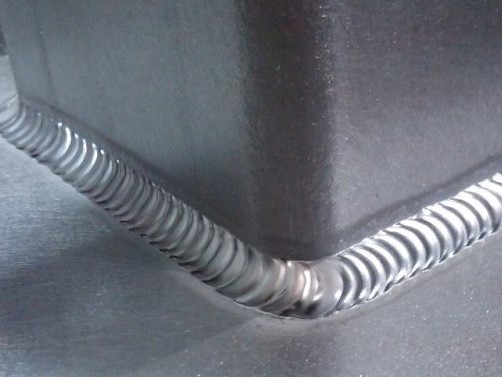
CAN ALUMINUM BE WELDED WITH THE MIG/MAG PROCESS?
The answer is very simple: yes, it is possible. In fact, since the early development of the GMAW…

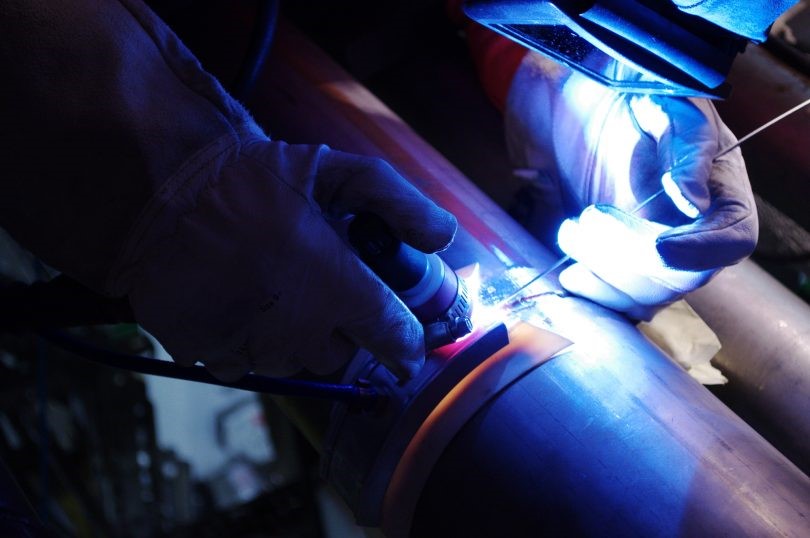
Terms and definitions in welding are a fundamental communication tool; below are the 50 most commonly used terms in welding.
Groove angle: (Groove angle) The angle of the groove between two workpieces to be welded together.
Root angle: (Root angle) The groove angle at the root of a weld joint between two pieces to be welded. The root of a weld is the point at which the base metals are closest to each other.
Groove: (Groove) An opening between two parts that may contain a weld.
Weld face: (Weld face) The exposed surface of a weld on the side from which welding was performed.
Certification: (Certification) The process by which a welder obtains authorization to weld under specific variables.
Code: (Code) A compilation of laws or standards that outline practices for a particular application. Welding codes ensure safe welding practices and high-quality welded products.
Welding code: (Welding code) A standard used to govern welding processes and ensure safe welding practices as well as high-quality welded products.
AWS Structural Codes: (AWS Structural Codes) A set of codes from the American Welding Society that govern welded structures, such as buildings and bridges. When welding is involved in structural construction, designers use the AWS Structural Codes.
Tail: (Tail) The part of the welding symbol that appears opposite the arrow element on the reference line. The tail contains special instructions regarding the weld.
Concavity: (Concavity) An inward curvature of a surface. Many fillet welds have concave faces.
Convexity: (Convexity) An outward curvature, as on the exterior of a circle. Many fillet welds have convex faces.
Test coupons: (Test coupons) A weld made on a sample piece of metal using exactly the same variables outlined in the welding procedure specification, for the purpose of testing and inspection.
Weld dimensions: (Weld dimensions) The specific measurements of a weld. Weld dimensions include length, pitch, and size.
Ductility: (Ductility) The ability of a metal to be drawn, stretched, or formed without fracturing.
Test specimens: (Test specimens) Portions of the test coupon that are subjected to weld testing and inspection.
Arrow element: (Arrow element) An arrow extending from either end of the reference line that points to a diagram of the projected weld joint.
Grinding: (Grinding) A method of finishing a weld using an abrasive.
Weld spacer (Weld spacer) A strip of metal that acts as backing for the weld but is inserted into the root of a groove weld joint. The weld spacer maintains the root opening of the joint during the welding process.
Specification (Specification) A detailed description of particulars. The term “specification” is frequently used interchangeably with “code” when referring to welding codes.
Welding procedure specification: (Welding procedure specification) A written document containing all necessary and specific information regarding the application of a welding project. Welding procedure specifications must be approved and tested before welding begins.
Standard: (Standard) A rule or set of established expectations. The term “standard” is frequently used interchangeably with “code” when referring to welding codes.
Consumable insert: (Consumable insert) A type of filler material added to the weld joint. Consumable inserts typically add strength to the weld joint.
Physical inspection: (Physical inspection) An inspection in which an inspector takes measurements of a part. A physical inspection of a weld includes measuring the weld length and size.
Visual inspection (Visual inspection) An inspection that requires an inspector to carefully observe a welded part.
American Institute of Steel Construction: (American Institute of Steel Construction) A non-profit organization that regulates industry standards for the structural steel design and construction industries. When welding is involved in steel construction, designers use AISC codes.
American Petroleum Institute: (American Petroleum Institute) A non-profit organization that regulates industry standards for the oil and natural gas industry. When welding is involved in pipelines or related materials, designers use API codes.
Arrow side: (Arrow side) The part of the welding symbol that is below the reference line. Instructions appearing on the arrow side of the welding symbol correspond to the arrow side of the base metal to be welded.
Weld leg: (Weld leg) The distance from the root to the toe of a fillet weld. The size of a fillet weld is determined by the length of its legs.
Other side: (Other side) The part of the welding symbol that is above the reference line, opposite the arrow side. Instructions appearing on the other side of the welding symbol correspond to the other side of the base metal to be welded.
Reference line: (Reference line) The horizontal line at the center of the welding symbol to which all elements of the welding symbol refer. The reference line is one of the most important elements of the welding symbol.
Multiple reference lines: (Multiple reference lines) The use of two or more reference lines. Multiple reference lines are used when a joint requires a sequence of operations.
Pitch: (Pitch) The distance from the center of one intermittent weld bead to the center of the next intermittent weld bead.
Blueprint: (Blueprint) A document containing all necessary instructions to complete a project. A blueprint with welding instructions contains one or more welding symbols.
Postheating: (Post heating) The application of heat to the weld immediately after welding. Postheating helps reduce stresses in the weld metal.
Preheating: (Preheating) The application of heat to a base metal immediately before welding. Preheating helps reduce hardness in the weld metal.
Mechanical properties: (Mechanical properties) Properties that describe a material’s ability to be compressed, stretched, bent, scratched, notched, or fractured.
Welding performance qualification test: (Welding performance qualification test) A test administered to a welder to determine their ability to perform a specific welding application. Welding performance qualification tests are specific to a single WPS.
Guided face and root bend test: (Guided-face and root-bend test) A weld test used for thinner base metals, which places a weld test specimen in a jig and bends it; the weld test specimen must not fracture or exhibit defects beyond those specified in the code.
Fillet weld performance test: (Fillet weld performance test) A weld test performed on fillet welds, which places a fillet weld test specimen under a load and bends it flat upon itself so that it can be inspected for defects.
Guided side bend test: (Guided-side bend test) A weld test used for thicker base metals, which places a weld test specimen in a jig and bends it to 180°. The weld test specimen must not fracture or exhibit defects beyond those specified by the code.
Tension-reduced section test: (Tension-reduced section test) A weld test that places a weld in a tensile testing machine to test the ductility of the metal.
Fillet weld procedure test: (Fillet weld procedure test) A visual weld test performed on the weld and heat-affected zone of fillet welds.
Welding procedure qualification record: (Welding procedure qualification record) A written document that records the results of a weld that has undergone weld testing and inspection.
Tensile strength: (Tensile strength) The ability of a material to resist forces that attempt to pull it apart or stretch it.
Weld backing: (Weld backing) A strip of metal placed on the side opposite the weld, which provides a surface for depositing the first layer of weld metal and prevents molten metal from escaping through the joint. Weld backing is used for complete joint penetration welds.
Finish symbol: (Finish symbol) A symbol appearing within the welding symbol that indicates to the welder how to finish the completed weld joint. Finish symbols indicate the need for processes such as grinding, machining, or chipping.
Contour symbol: (Contour symbol) A supplementary symbol that indicates to the welder the desired shape of the finished weld bead.
Welding symbol: (Welding symbol) A systematic grouping of symbols that together clearly and concisely convey the instructions for making a weld.
Weld symbol: (Weld symbol) A symbol appearing within the welding symbol that indicates to the welder the type of weld to be deposited in a joint.
Ask the DoctorWelding assistant about this topic and it answers citing our articles.

The answer is very simple: yes, it is possible. In fact, since the early development of the GMAW…
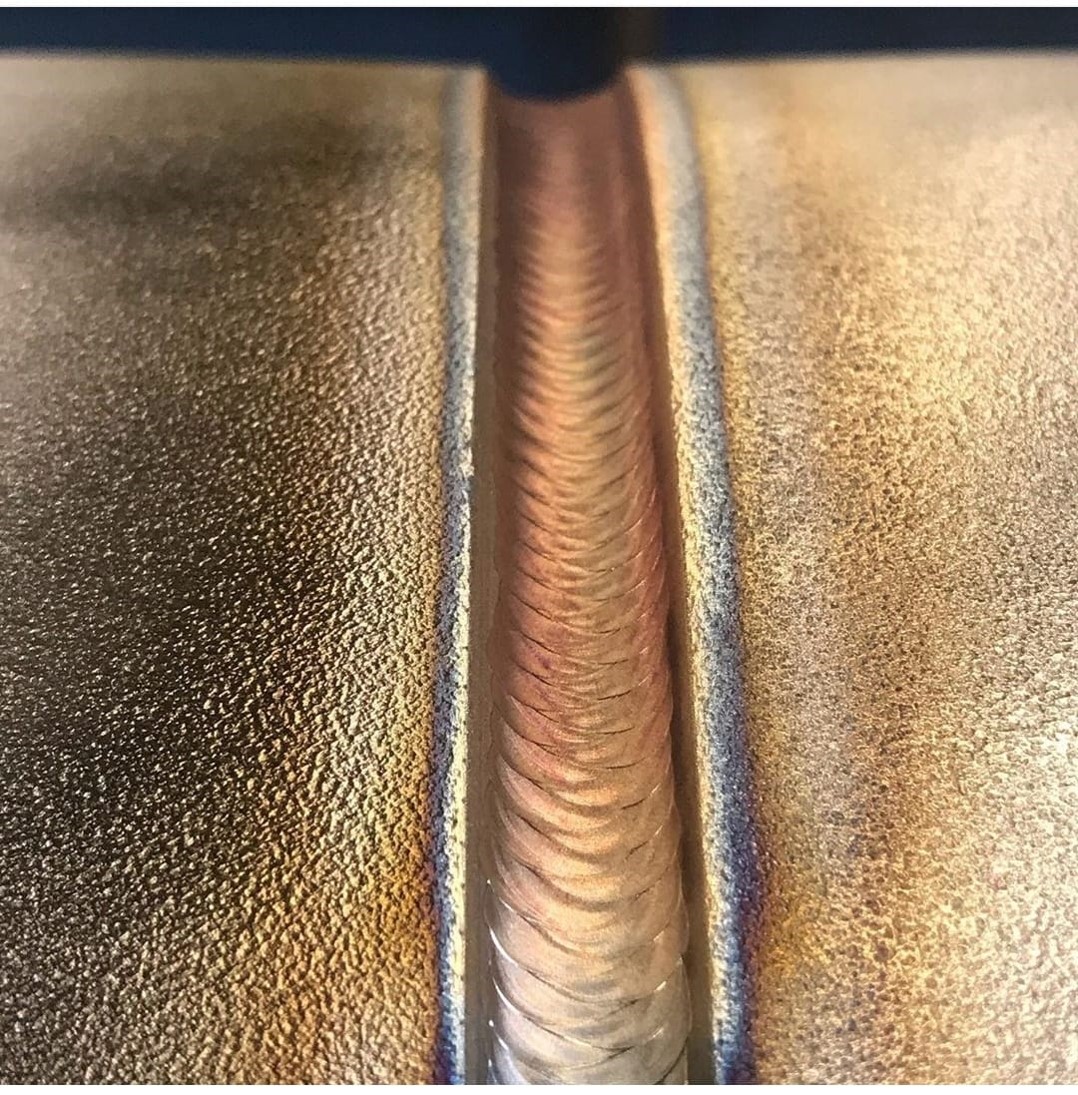
Stainless steels are a group of materials whose main characteristic is corrosion protection, due to their CHROMIUM content,…