No Catergory 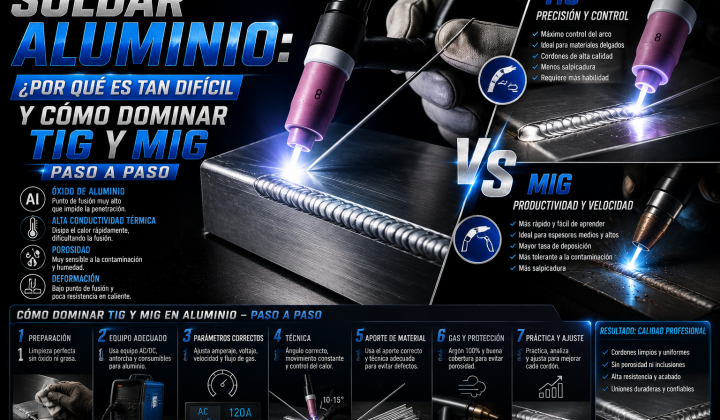
Welding Aluminum: Why It’s So Difficult and How to Master TIG and MIG Step by Step
Beginner's Guide to Aluminum Welding: Oxide Cleaning, Shielding Gas, Polarity, and Equipment Settings for TIG and MIG.


The welding industry in Latin America is undergoing a significant transformation driven by various megatrends that will shape its direction in the coming years. These trends are not only changing the way welding is carried out, but are also influencing efficiency, sustainability, and safety in this key sector. Here we present some of the most notable megatrends:
1. Automation and Robotics:
The adoption of automation and robotics technologies in welding processes is on the rise. Companies in Latin America are investing in welding robots that offer precision, efficiency, and repeatability, reducing dependence on manual labor and improving work quality.
2. Smart Welding:
Smart welding, backed by the integration of technologies such as artificial intelligence (AI) and machine learning, is enabling automatic real-time adjustments. Intelligent welding systems can adapt to variable conditions, optimizing welding parameters to improve quality and productivity.
3. Innovative Materials:
The use of advanced materials, such as special alloys and high-strength steels, is gaining ground in welding across Latin America. These materials are essential in industries such as automotive and aerospace, and welding plays a key role in their fabrication.
4. Environmental Sustainability:
Concern for sustainability is influencing welding practices throughout the region. The pursuit of cleaner processes and the use of eco-friendly materials are growing trends. Submerged arc welding and other techniques that minimize fume emissions and waste are increasingly valued.
5. Training and Certification:
With the evolution of welding technologies and techniques, the training and certification of professionals has become essential. Updated training programs and internationally recognized certifications are increasingly in demand to ensure quality and safety on the job.
6. Digitalization and Connectivity:
The digitalization of processes through the implementation of Industry 4.0 is gaining ground in welding. Connected sensors, remote monitoring, and data analytics are being used to optimize operational efficiency and prevent failures.
7. Equipment Innovation:
A rapid evolution in the design and functionality of welding equipment is being observed. From more efficient power sources to advanced arc control systems, equipment innovation is driving significant improvements in welding productivity and quality.
8. Workplace Safety:
Occupational safety is at the center of concerns in the welding industry. The adoption of improved personal protective equipment for vision, along with fume detection technologies and efficient ventilation systems, are key aspects in enhancing workplace safety.
Welding in Latin America is undergoing a transformation driven by the integration of advanced technologies, the pursuit of sustainability, and adaptation to new materials. Those companies that embrace these megatrends will be better positioned to face the challenges and seize the opportunities presented by the future of welding in the region.
Ask the DoctorWelding assistant about this topic and it answers citing our articles.

Beginner's Guide to Aluminum Welding: Oxide Cleaning, Shielding Gas, Polarity, and Equipment Settings for TIG and MIG.
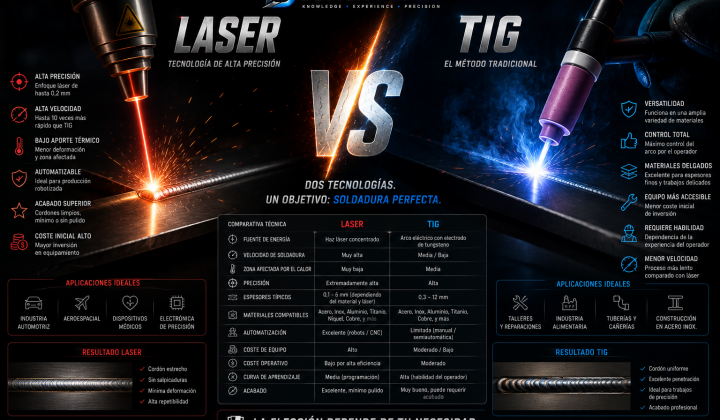
Comparison between laser and TIG welding focusing on the advantages of laser: speed, distortion, penetration, and automation.