QUALITY 
WHAT IS UNDERCUT? A DEFECT OR DISCONTINUITY.
Undercut is a surface discontinuity that occurs in the base metal directly adjacent to the weld bead; depending…
WELDING PROCEDURE.
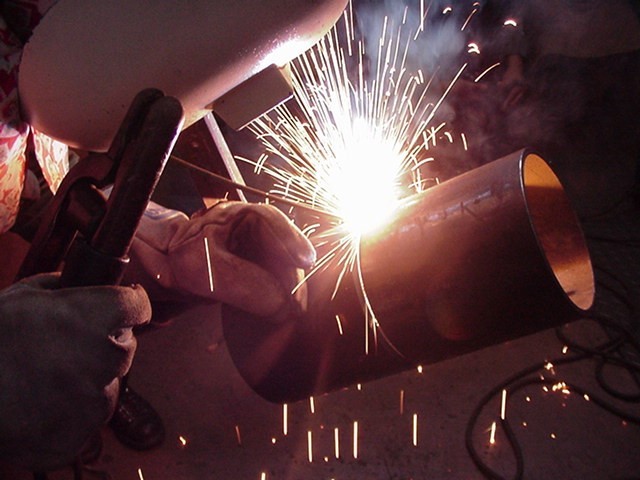
A welding procedure is a set of variables used to produce a quality welded joint.
Since welding is the “surgery of metal” and nearly 70% of what surrounds us is metallic, we must prepare ourselves so that this “surgery” is performed in the best possible way.
If we compare the joining of two metals using a welding process with the procedure a surgeon follows when performing a surgical intervention, we can see that the surgeon works carefully to carry out his work successfully. In the same way, inspectors, engineers, supervisors, welders, and all those who are involved in one way or another in the fabrication of welded metal products must thoroughly manage the qualification of welding procedures.
When observing market demands, competitiveness, and technological development worldwide, we can see that it is important to work with qualified procedures in compliance with the codes, standards, and quality requirements demanded at both national and international levels.
It is worth noting that for each industrial sector there is an applicable code or standard; the following are the most relevant ones.
In the structural sector, it is governed by AWS (American Welding Society) under its various codes depending on the chemical composition of the material and its thickness; in the pressure vessel fabrication sector, such as tanks and piping, the ASME (American Society of Mechanical Engineers) code applies; and for the joining of carbon steel and low-alloy steel pipelines used to transport hydrocarbons, the API 1104 (American Petroleum Institute) standard is used.
As previously mentioned, all personnel involved in the welding procedure for joining welded metal products must have a thorough knowledge of all the variables to be used in said procedure.
The specific values of each variable may influence the mechanical properties and/or microstructure, soundness, or productivity.
A welding procedure is made up of three types of variables:
ESSENTIAL VARIABLES:
These are variables that have a direct influence on the mechanical properties of the welded joint and that, when changed, alter the characteristics of the product. They are relative to each welding process used.
NON-ESSENTIAL VARIABLES:
These are variables that do not have a direct influence on the mechanical properties of the welded joint, meaning they do not alter the characteristics of the product. They are relative to each welding process used.
SUPPLEMENTARY VARIABLES:
These are variables that have a direct influence on the toughness of the welded joint. This type of variable exists in ASME Section IX and AWS D1.1, and includes any additional information considered necessary to obtain the desired welds.
A Welding Procedure must DEMONSTRATE its ability to produce welded joints that meet the minimum quality requirements demanded by the welding standard or code used in the construction of a product. One of the most important steps of a procedure is qualification.
QUALIFICATION
Following the details established in the proposed WPS (Welding Procedure Specification), a test coupon is welded.
After the Visual Inspection and the Non-Destructive Testing required by the welding standard or code used in the construction of a product have been approved on the welded test coupon, specimens are cut and mechanically tested.
The type and number of specimens (test pieces), the method of removing them from the coupon, and the minimum required results (acceptance criteria) are specified in the welding standard or code used in the construction of a product.
The actual values of all variables used in welding the test coupon, as well as the number, type, and results of the tests performed, are recorded in a document called the Procedure Qualification Record (PQR).
If the acceptance criteria for all required tests (visual inspection, non-destructive testing, and destructive testing) are satisfied, the qualification is successful and WPSs may be established based on the successful PQR.
PREQUALIFIED WPS
These are WPSs with specific welding processes and specific joint types that have been tested and have a long history of successful results.
A prequalified WPS may be used in production without the need to be qualified by destructive and non-destructive testing.
This alternative is permitted only by certain welding codes, such as AWS D1.1 (Structural Welding Code – Steel); conversely, this type of prequalified procedure does not appear in the ASME code or in the API 1104 standard.
The use of a prequalified WPS does not imply that its use will produce joints that meet the quality requirements or conditions demanded by the code. It is the responsibility of the fabricator to verify that the selected variables are appropriate for the specific application.
For a procedure to be prequalified, ALL, ABSOLUTELY ALL VARIABLES, must comply with the requirements set forth in the PREQUALIFICATION section of the welding standard or code used in the construction of a product.
Ask the DoctorWelding assistant about this topic and it answers citing our articles.

Undercut is a surface discontinuity that occurs in the base metal directly adjacent to the weld bead; depending…
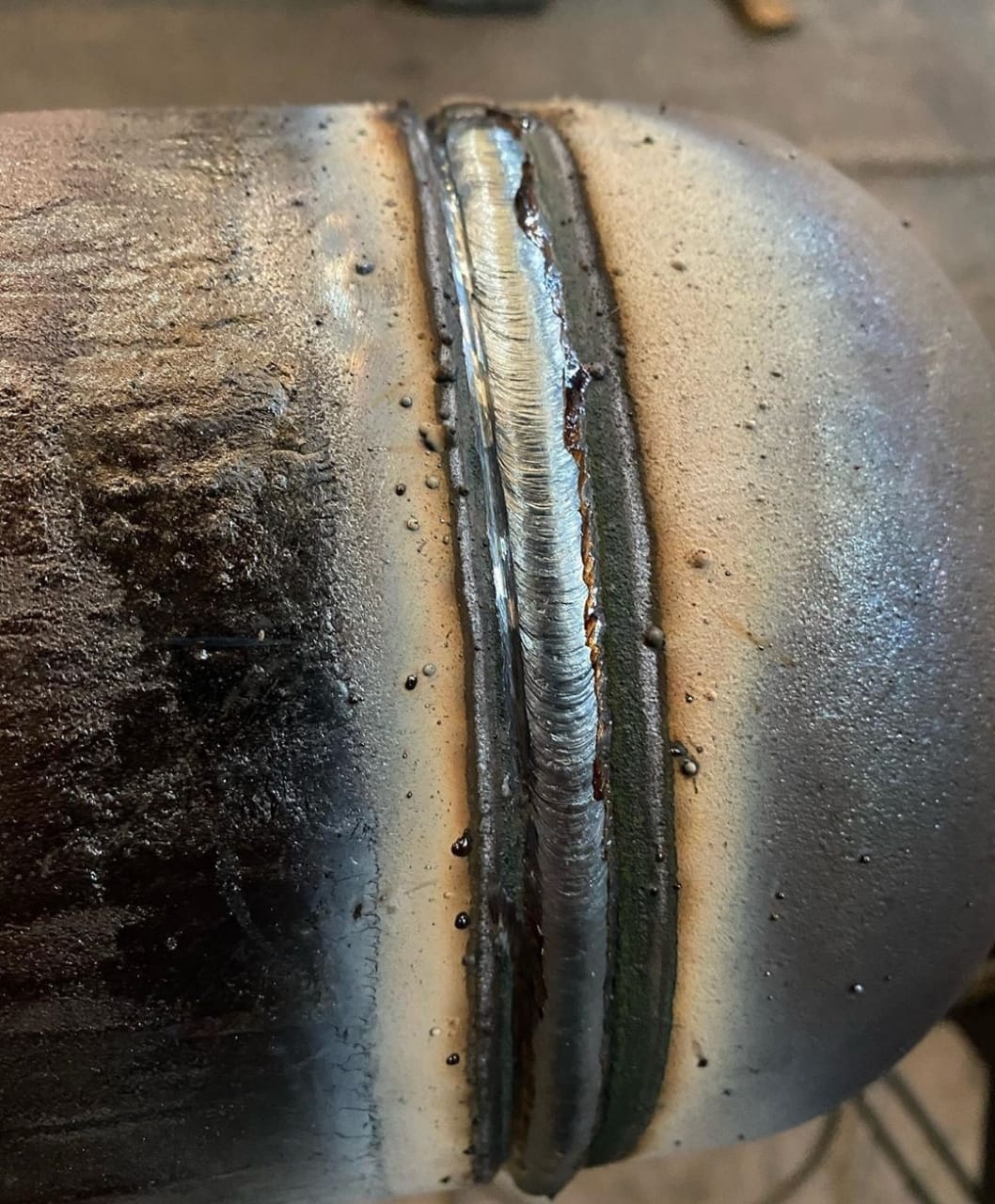
Spatter is a defect that occurs in welding processes where metal transfer takes place through an electric arc.…