MATERIALS 
## HOW ARE METALS CLASSIFIED?
Metals play a major role today in all areas of society’s development. These materials are present daily in…

Titanium is a metallic element discovered in 1763 in the sands of Cornwall, isolated in impure form in 1887 and purified in 1910. Only in 1950 did it begin to be used as a structural material, driven by the aeronautical industry in the USA. Its applications later expanded to other industrial fields, primarily due to its exceptional properties of low density, high mechanical strength, and high corrosion resistance.
Titanium is the fourth most abundant element in the Earth’s crust. It is found in the mineral “rutile” (titanium dioxide) and in the mineral “ilmenite” (titanium and iron oxide).
Extraction process.
The extraction process consists of treating the mineral with gaseous chlorine and carbon to form titanium tetrachloride, which is subsequently reduced to a titanium metal sponge. This titanium sponge is melted and purified through successive melt cycles to produce a metallic titanium ingot. Alloying metals may also be incorporated during these melting stages to obtain the different titanium alloys.
Titanium is commercially available in different grades. Commercially pure titanium (CP grades 1 through 4) has an alpha structure and contains small amounts of “interstitial” elements (nitrogen, oxygen, carbon) that occupy the interstitial sites in the crystal lattice. They differ from one another by their oxygen content, which increases from grade 1 to grade 4, imparting progressively higher mechanical strength. Titanium alloys are classified according to their microstructure as “alpha alloys” (grades 6, 7, 11), “alpha-beta alloys” (grades 5, 9), and “beta alloys.” Some are designed to improve corrosion resistance (grades 7 and 11 contain palladium) and others to improve their mechanical strength through heat treatment (grade 5 contains aluminum and vanadium) compared to CP titanium. Alpha alloys are not heat treatable; they are easy to weld, ductile, and have low to intermediate mechanical strength, but with excellent mechanical properties at cryogenic temperatures. Alpha-beta alloys are heat treatable; most are easy to weld. Their mechanical strength is medium to high. Beta alloys are amenable to heat treatment and are generally weldable. They achieve high mechanical strengths and good resistance to deformation up to intermediate temperatures. Titanium and its alloys can be classified according to their intended purpose as:
CORROSION RESISTANT
HIGH MECHANICAL STRENGTH
Properties
The applications of titanium and its alloys stem from their corrosion resistance and mechanical properties.
Corrosion resistance: Corrosion resistance is due to the formation of a protective surface layer of titanium oxide. Titanium is immune to attack by seawater and marine atmospheres. It is resistant to acids (oxidizing or mildly reducing; it does not resist hydrofluoric acid), alkalis (up to 80°C), natural waters (up to 300°C), corrosive gases (wet chlorine up to 70°C, chlorine dioxide), reducing atmospheres (sulfur dioxide, hydrogen sulfide), and a large number of organic substances; when alloyed with palladium, its resistance is further enhanced.
Mechanical properties: It has low density and high mechanical strength (density 4.43–4.85 g/cm³; yield strength 25–200 ksi). It has a strength-to-weight ratio far superior to that of other metals; for example, titanium grade 5 (188) compared to 316L stainless steel (26) or Hastelloy C-276 (40).
The titanium oxide layer imparts outstanding erosion resistance (approximately 20 times greater than copper-nickel alloys). Heat transfer in titanium equipment is highly efficient, since thinner wall sections can be used due to its superior mechanical strength, higher fluid velocities are permissible due to its excellent erosion resistance, and the surface remains consistently free of deposits owing to the absence of corrosion. It has a coefficient of thermal expansion significantly lower than that of ferrous alloys. It is non-magnetic and has high fire resistance.
Applications
Titanium and its alloys are technically and economically superior in a wide variety of applications: heat exchangers (no corrosion allowance or protective coatings required); pulp and paper industry (piping, pumps, heat exchangers, digesters, bleaching equipment); condensers (absence of pitting and steam erosion); desalination plants (resistant to chloride attack); flue gas desulfurization (titanium cladding resists sulfur attack); marine environments (submarines, propulsion systems, cooling systems, pumps); pharmaceutical industry (resistant to pharmaceutical products and biocompatible); food industry (resistant to all types of foodstuffs and cleaning agents); brewing industry (resistant to all types of process fluids and cleaning agents); petrochemical industry (heat exchangers resist seawater, piping resists hydrogen sulfide attack present in lower-cost crude oils); seawater handling (heat exchanger tubes and piping showing no signs of corrosion after 40 years of service, with savings in weight and space due to superior mechanical properties).
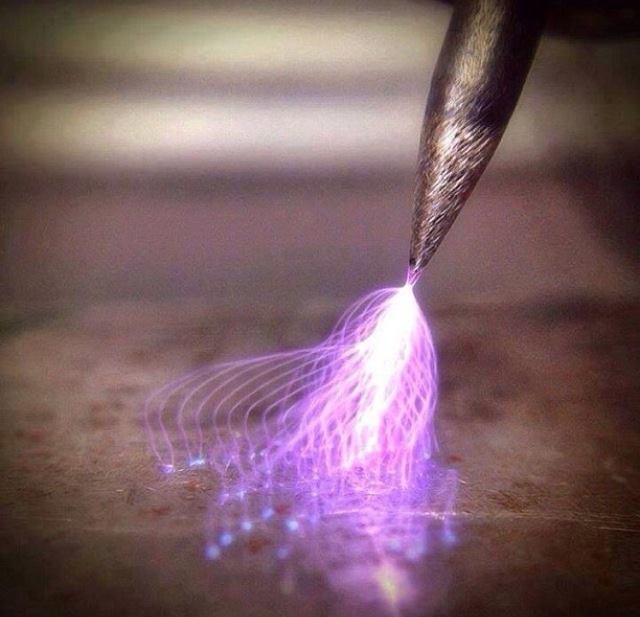
How titanium can be welded. The most recommended process for making these joints is the GTAW process. Its weldability is very similar to that of stainless steels; therefore, direct current must be used along with tungsten electrodes compatible with this type of current, inert gas shielding, thorough cleaning, and heat input control depending on the material thickness.
Ask the DoctorWelding assistant about this topic and it answers citing our articles.

Metals play a major role today in all areas of society’s development. These materials are present daily in…
Copper was one of the first metals used by mankind, as it existed in relatively abundant quantities in…