CALIDAD

WELDING DEFECTS: WHY THEY OCCUR AND HOW TO CORRECT THEM.

admin June 15, 2026 4 min 0

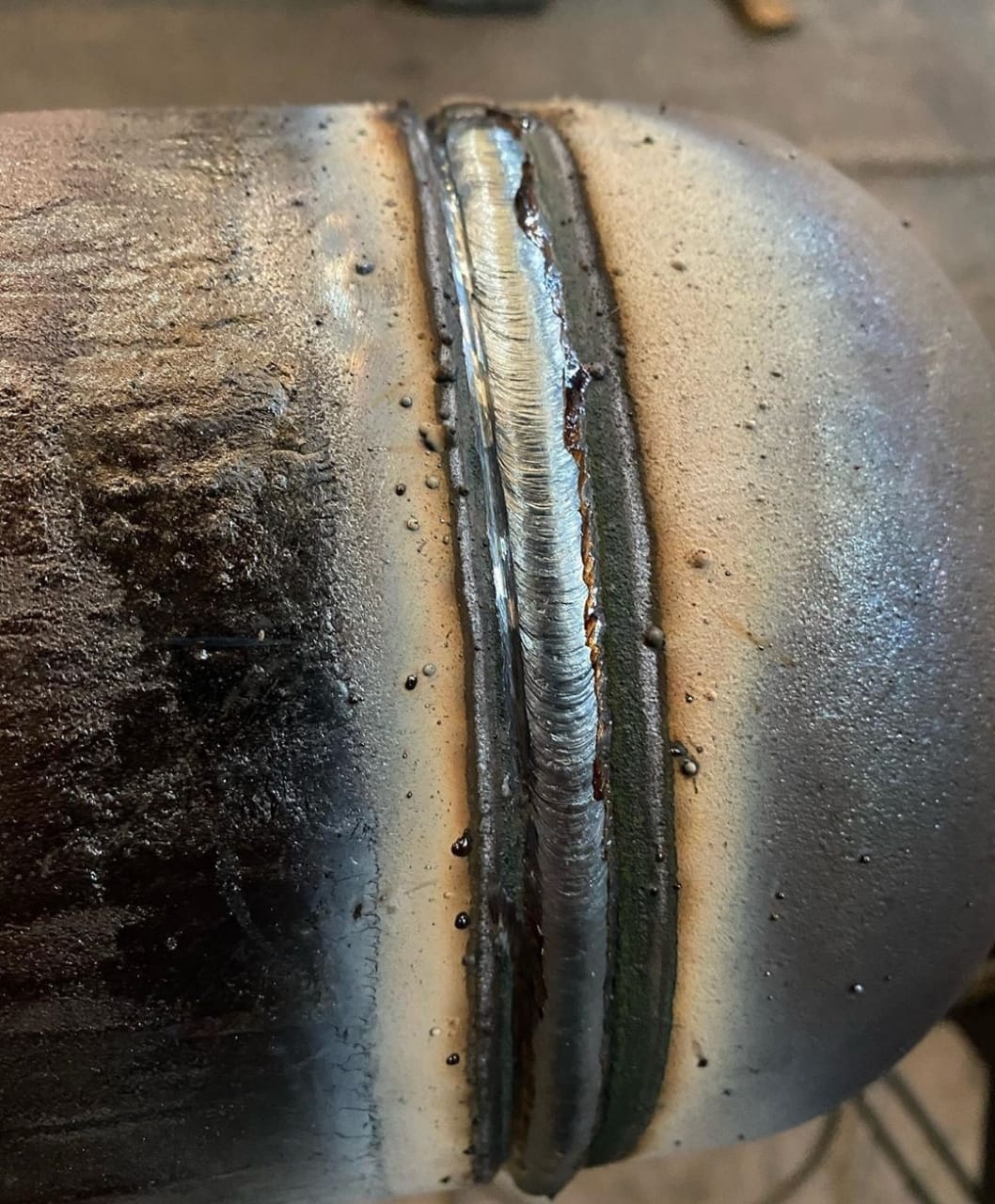
The work of a welder is not only to join metals, but to do everything possible to ensure that the joint is made in the best way and that the weld beads do not present discontinuities and defects. The work of metallurgical surgeons (Welders) is to produce quality weld joints; to do so, they must know what a defect is and what a discontinuity is.  

Defect. It is an interruption that can occur in the weld metal and must be repaired without exception; that is, a defect can cause an accident or fracture of the weld material, which is why codes and standards do not accept defects.

Discontinuity. It is any interruption that is very small and is not considered a defect; therefore, it is acceptable in a weld bead. Below, we will review the most relevant welding defects.
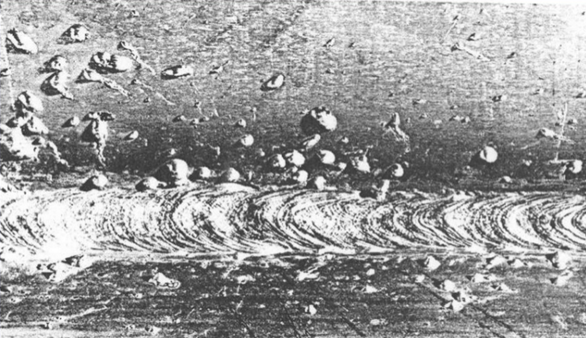
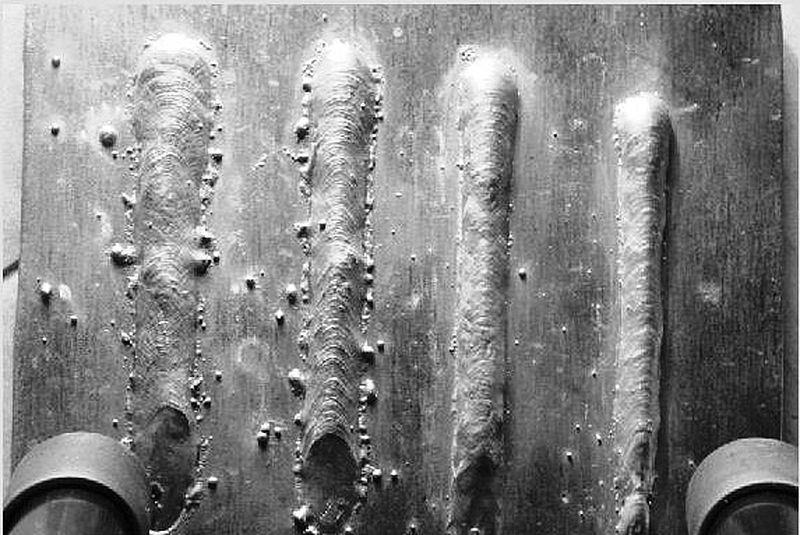
SPATTER AND SPARKING

Causes.

  • Arc blow.
  • Amperage too high.
  • Arc length too long.
  • Defective electrode.
  • Improper technique.

How to correct it

  • Ensure a proper ground connection.
  • Adjust amperage according to electrode type and diameter.
  • Adjust the arc to the proper length.
  • Use the appropriate electrode.
  • Use the correct polarity.
  • Clean thoroughly.

ARC STRIKES.

Cause

  • Arc initiation outside the bevel or joint.
  • Current too low.
  • Poor ground connection.
  • Coating buildup at the tip of the electrode.

How to correct it

  • Set the current properly.
  • Clean the workpiece thoroughly (wire brush).
  • Connections must be completely clean.
  • Clean the tip of the electrode.
  • Visually inspect the joint.

SLAG INCLUSIONS

Cause

  • Arc length too short.
  • Improper electrode manipulation.
  • Current too low.
  • Insufficient cleaning of each weld bead.

How to correct it

  • Use a medium arc length.
  • Obtain a wide weld puddle.
  • Use the recommended current and travel speed.
  • Remove all slag from the weld bead before applying the next pass.

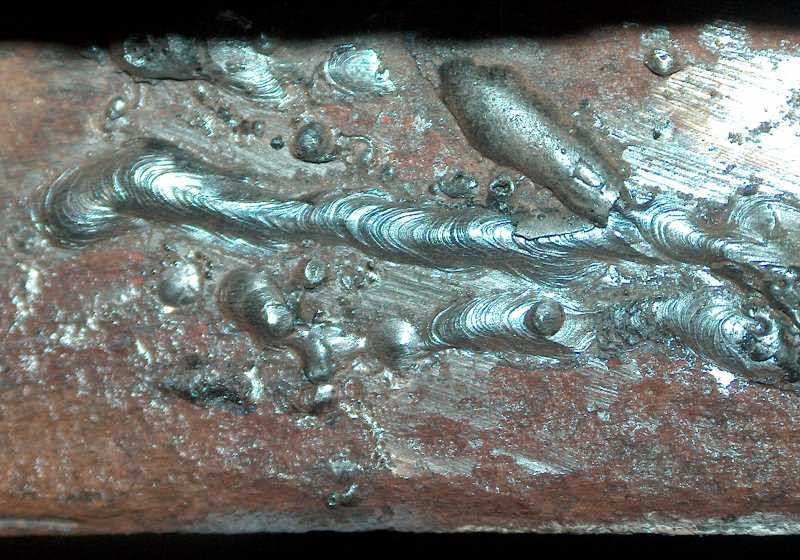
POOR APPEARANCE OR LACK OF UNIFORMITY.

Cause

  • Poor quality electrode.
  • Improper use of the electrode.
  • Overheating.
  • Long arc; high amperage and voltage.

How to correct it

  • Use certified electrodes.
  • Use the recommended technique.
  • Avoid overheating.
  • Use the correct arc length and the amperage and voltage values recommended by the manufacturer.
  • Use uniform weaving motions.

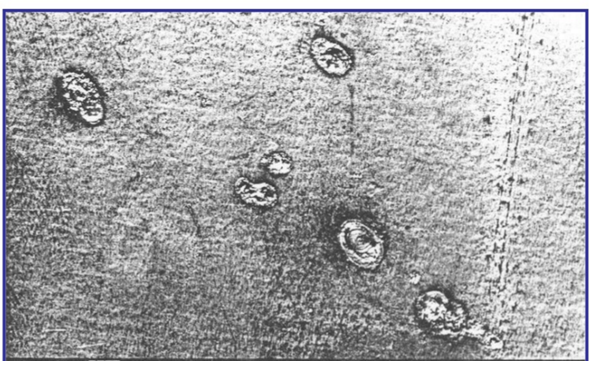
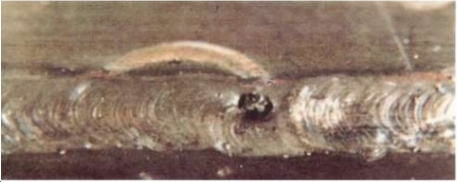
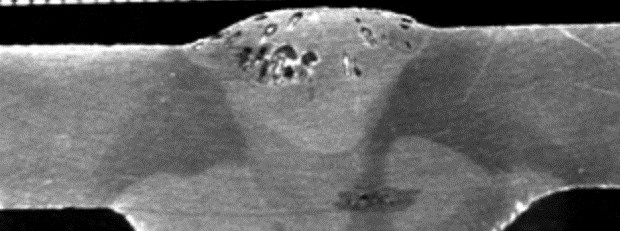
POROSITY

Cause

  • Short arc, except with stainless steel or low-hydrogen electrodes.
  • Insufficient fusion time.
  • Excessive amperage.
  • Dirty base material.
  • Damp electrode coating.
  • Excessive travel speed.

How to correct it.

  • Maintain a longer arc length.
  • Allow sufficient fusion time for gases to escape.
  • Use the appropriate amperage.
  • Clean the surface thoroughly.
  • Dry the electrode.
  • Use an appropriate travel speed.

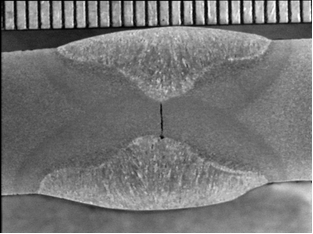
INCOMPLETE PENETRATION AND INCOMPLETE FUSION

Cause

  • Excessive travel speed.
  • Electrode diameter too large.
  • Amperage too low.
  • Defective penetration.

How to correct it

  • Leave sufficient root opening at the bottom.
  • Select the appropriate electrode.
  • Use sufficient amperage to achieve the desired penetration.
  • Correctly calculate the electrode penetration.
  • Adjust the travel speed.
  • Clean the joint of foreign matter.

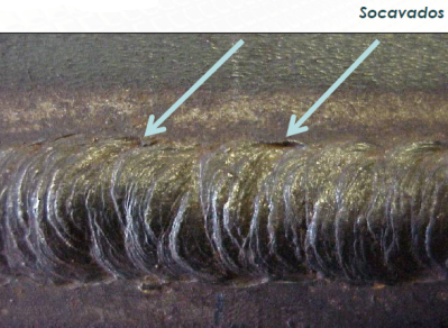
UNDERCUT

Cause

  • Improper electrode handling.
  • Use of incorrect electrode diameter.
  • Excessive amperage.

How to correct it

  • Use a uniform weaving motion in butt welding.
  • Avoid using oversized electrodes.
  • Use the appropriate amperage.
  • Avoid overwelding.
  • Hold the electrode at a safe distance from the vertical plane when making horizontal fillet welds.
Defectos, grietas, fisuras, socavados.

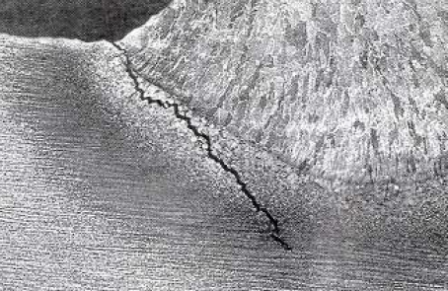
CRACKS

Causes

  • Inappropriate electrode.
  • Weld size disproportionate to the thickness of the workpiece.
  • Defective welds.
  • Poor joint preparation.
  • Rigid joint.

How to correct it.

  • To eliminate rigid joints, adopt an appropriate structural design and method.
  • Match the electrode diameter to the thickness of the workpiece.
  • Avoid sequential single-pass weld beads.
  • Keep the joint edges unrestrained for as long as possible.
  • Make sound welds with good fusion.
  • Preheat the workpieces.
  • Ensure that the joints have a uniform and adequate root gap between the plates.
  • Work with the lowest amperage possible.
  • Use low-hydrogen electrodes.

Still have a question?

Ask the DoctorWelding assistant about this topic and it answers citing our articles.

admin Technical welding knowledge since 2018

Related articles

Leave a comment