MATERIALS 
## HOW ARE METALS CLASSIFIED?
Metals play a major role today in all areas of society’s development. These materials are present daily in…

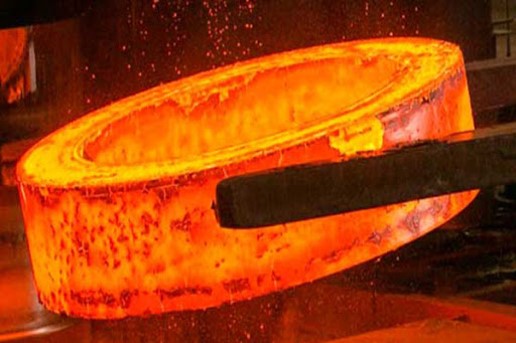
Heat treatment is the operation of heating and cooling a metal in its solid state to change its physical properties. With the appropriate heat treatment, internal stresses can be reduced, grain size can be decreased, toughness can be increased, or a hard surface with a ductile core can be produced.
To determine the temperature to which the metal must be raised to receive a heat treatment, it is advisable to consult phase change diagrams such as the iron-iron-carbon diagram. These types of diagrams specify the temperatures at which phase changes (changes in crystal structure) occur, depending on the dissolved materials.
Heat treatments have become increasingly important in industry in general, as constant innovations continue to demand metals with greater resistance to both wear and tension.
To increase the hardness of steel. The steel hardening process consists of heating the metal uniformly to the correct temperature and then quenching it in water, oil, air, or a refrigerated chamber. Hardening produces a fine-grain structure that increases tensile strength and decreases ductility.
Carbon tool steel can be hardened by heating it to its critical temperature, which is reached approximately between 1450 °F and 1525 °F (790 to 830 °C); this is identified when the metal takes on a bright cherry-red color. When steel is heated, pearlite combines with ferrite, producing a fine-grain structure called austenite. When austenite is rapidly quenched in water, oil, or air, it transforms into martensite, a material that is very hard and brittle.
Tempering. After steel has been hardened, it is very brittle or fragile, which makes it difficult to handle, as it breaks with the slightest impact due to the internal stress generated by the hardening process. To counteract the brittleness, tempering of the steel is recommended (in some texts this process is called tempering and the hardening process is called quenching). This process makes the steel tougher and less brittle, although it loses some hardness. The process consists of cleaning the part with an abrasive, then heating it to the appropriate temperature, and subsequently quenching it rapidly in the same medium used to harden it.
Annealing. When a hardened steel must be machined, it is generally necessary to anneal or soften it. Annealing is a process for reducing internal stresses and softening steel. The process consists of heating the steel above its critical temperature and allowing it to cool slowly in a closed furnace or buried in ash, lime, asbestos, or vermiculite.
Case hardening. This consists of hardening the outer surface of low-carbon steel while leaving the core soft and ductile. Since carbon is what generates hardness in steels, the case hardening method provides the possibility of increasing the carbon content in low-carbon steels before hardening. Carbon is added by heating the steel to its critical temperature while it is in contact with a carbonaceous material. The three most common case hardening methods are: pack carburizing, liquid bath, and gas.
Pack carburizing. This procedure consists of placing the low-carbon steel material in a sealed box with carbonaceous material and heating it to 1650 or 1700 °F (900 to 927 °C) for 4 to 6 hours. During this time, the carbon in the box penetrates the surface of the part to be hardened. The longer the part remains in the box, the greater the depth of the hardened case. Once the part to be hardened has been heated to the appropriate temperature, it is rapidly quenched in water or brine. To prevent distortion and reduce surface stress, it is recommended to allow the part to cool in the box and then remove it and reheat it to between 1400 and 1500 °F (cherry red) before proceeding with immersion quenching. The most commonly used hardened case has a thickness of 0.38 mm; however, thicknesses of up to 4 mm can be achieved.
Liquid bath carburizing. The steel to be case hardened is submerged in a bath of liquid sodium cyanide. Potassium cyanide can also be used, but its vapors are very hazardous. The temperature is maintained at 1500 °F (845 °C) for 15 minutes to 1 hour, depending on the required depth. At this temperature, the steel will absorb carbon and nitrogen from the cyanide. The steel must then be rapidly quenched in water or brine; this procedure achieves case depths of 0.75 mm.
Gas carburizing. In this procedure, carburizing gases are used for case hardening. The low-carbon steel part is placed in a drum into which a carburizing gas, such as hydrocarbon derivatives or natural gas, is introduced. The procedure consists of maintaining the furnace, gas, and part between 1650 and 1750 °F (900 and 927 °C); after a predetermined time, the carburizing gas is shut off and the furnace is allowed to cool. The part is then removed and reheated to 1400 °F (760 °C) and rapidly quenched in water or brine. This procedure yields parts whose hardened case has a thickness of up to 6 mm, but typically does not exceed 0.7 mm.
Carbonitriding, cyaniding, and nitriding. There are several surface hardening procedures utilizing nitrogen and cyanide, which are commonly known as carbonitriding or cyaniding. In all these processes, with the aid of cyanide salts and ammonia, hard surfaces are achieved as with the previous methods.
Ask the DoctorWelding assistant about this topic and it answers citing our articles.

Metals play a major role today in all areas of society’s development. These materials are present daily in…
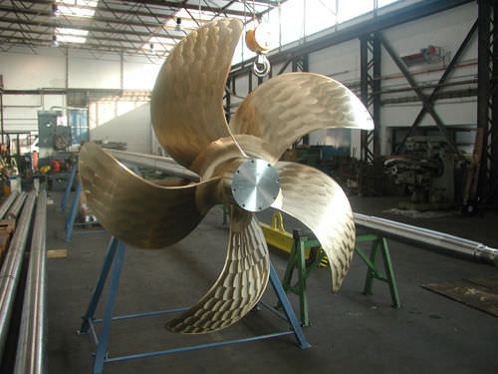
Copper was one of the first metals used by mankind, as it existed in relatively abundant quantities in…