MATERIALS 
## HOW ARE METALS CLASSIFIED?
Metals play a major role today in all areas of society’s development. These materials are present daily in…

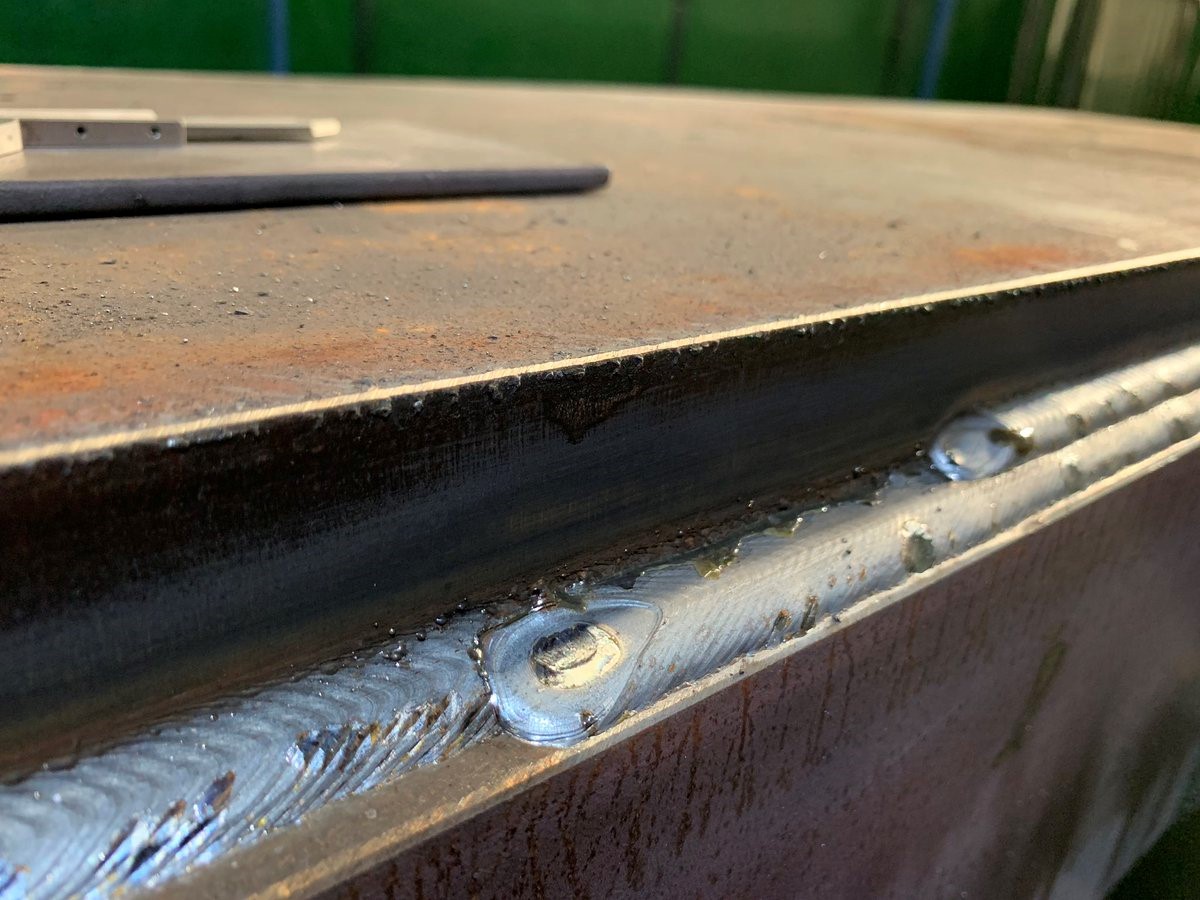
The heat intensity generated by a welding electric arc brings about certain changes in both the structure of the steel being welded and the weld metal. Some of these changes occur during welding; others, after the metal has cooled.
During welding, the temperature of the molten weld metal reaches 3000° F or higher. At a short distance from the weld, the temperature of the plate may be only around 600° F.
If the steel reaches or exceeds certain critical temperatures between these values, changes occur that affect the grain microstructure, hardness, and mechanical properties. The extent of the change in structure depends on the maximum temperature to which the metal is subjected, the length of time it is held at that temperature, the composition of the metal, and the cooling rate. The main factor controlling these changes is the amount of heat entering the plate, both from preheating and from the welding process.
The cooling rate affects properties as well as grain size. Rapid cooling rates produce stronger, harder, and more brittle steels; slow cooling rates produce the opposite properties. With low-carbon steels, the relatively small differences in cooling rates under normal practices have negligible effects on these properties. However, with higher carbon content steels or those with appreciable amounts of alloying elements, the effect can be significant.
Holding the base material plate at a high temperature, above the upper critical temperature for a long period of time, produces a structure with a large grain size. During welding, however, the metal adjacent to the weld or heat-affected zone may be exposed to high temperature for a very short time; the result is a slight decrease in grain size and an increase in strength and hardness compared to the base metal.
In multipass weld joints, each pass produces a grain-refining action on the preceding weld bead when it is reheated. However, this refinement is not likely to be uniform throughout the entire joint.
Weld bead metallurgy is responsible for analyzing and establishing temperature control variables in order to prevent major defects that may arise, such as hot cracking or cold cracking, typical defects that occur as a result of an uncontrolled welding operation. In welding, it is essential to analyze each of the joint variables in order to avoid rework and serious damage.
As a final analysis, whenever a welding operation is required, the behavior of materials under temperature changes must be reviewed. It must be remembered that welding is a fusion process in which different variables can be established to help improve a welded joint.
All metallic materials exhibit different behavior under certain temperature conditions; the same applies to welding processes, which, depending on their configuration, can deliver greater or lesser heat input.
Ask the DoctorWelding assistant about this topic and it answers citing our articles.

Metals play a major role today in all areas of society’s development. These materials are present daily in…
Copper was one of the first metals used by mankind, as it existed in relatively abundant quantities in…