CUTTING 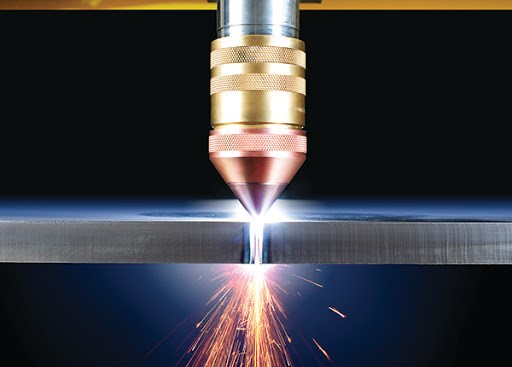
PLASMA CUTTING: AN ADVANTAGE WHEN CUTTING METALS.
One of the most important topics to understand is how to cut metals, for which there are different…

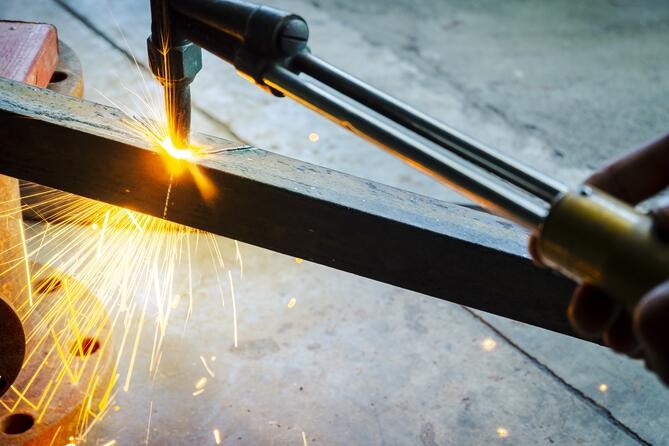
Oxyfuel.
It is a chemical combustion process in which 2 gases are mixed generating a flame that can reach 3200 degrees Celsius.
A preheat flame is formed by mixing oxygen with a fuel gas; this flame heats a point on the metal until it reaches ignition temperature, then oxygen is injected which rapidly oxidizes most of the metal in a narrow zone to make a cut. The slag is displaced by the oxygen jet, moving the torch across the workpiece at an appropriate speed to produce a continuous cut.
What are the conditions for oxyfuel cutting?
What metals can be cut with oxyfuel cutting?
Apparently only a few metals meet the conditions mentioned above, such as: carbon steels and low-alloy steels. However, it is possible to cut other metals using “special” procedures. Stainless steel, high-carbon steel, aluminum, and copper cannot be cut.
What gases should be used in the oxyfuel cutting process?
To carry out the oxyfuel cutting process successfully, the oxygen must be at least 99.5% pure.
The most common fuel gases are acetylene and propane. Acetylene produces the hottest and most concentrated flame, at approximately 3200°Celsius.
The components of the oxyfuel cutting equipment are:
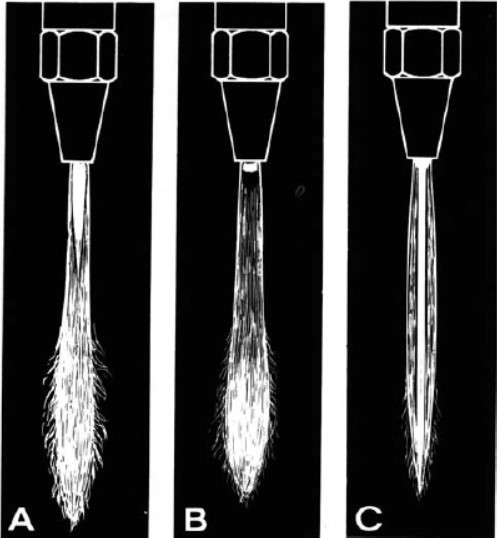
Characteristics of oxyfuel cutting flames
Flame types
Carburizing flame
Color: reddish
Inner cone: poorly defined
Uses:
Cutting of high-chromium steels.
Heavy gauge plate.
Neutral flame.
Color: white
Inner cone: well defined
Uses:
Cutting of carbon steels and low-alloy steels.
Oxidizing flame.
Color: bluish
Inner cone: well defined with feather
Uses:
Straightening
Fast cuts of low quality.
Quality piercing and beveling.
How to select the flame?
Ask the DoctorWelding assistant about this topic and it answers citing our articles.
