WELDING PROCESS 
CAN ALUMINUM BE WELDED WITH THE MIG/MAG PROCESS?
The answer is very simple: yes, it is possible. In fact, since the early development of the GMAW…
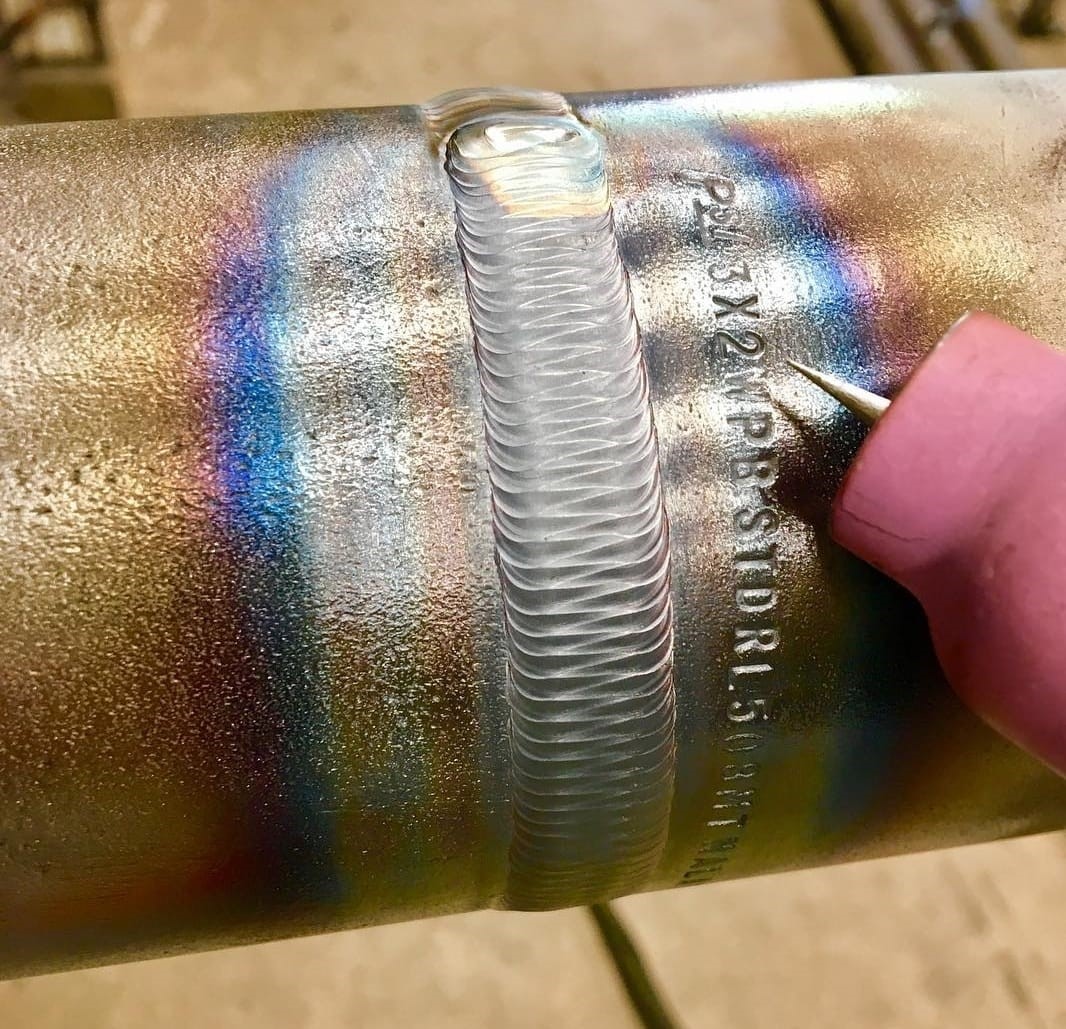
The acronym TIG stands for “Tungsten Inert Gas,” referring to a welding process carried out in an inert gas shielding atmosphere using a tungsten electrode. This process involves establishing an arc between a theoretically non-consumable tungsten electrode and the workpiece, and can be performed with or without filler material. When filler is used, it is supplied separately, either manually or automatically. The choice of filler material in TIG welding depends on the type of base material, its thickness, the welding position, the energy required at the arc, the desired quality, and the cost of the weld. Due to their inert properties, argon or helium can be used in nearly all TIG welding applications. However, for thin materials, argon is recommended. In practice, helium is only used on materials with high thermal conductivity, such as copper and aluminum.
What do we mean by TIG welding?
The high arc voltage of helium makes it effective for welding heavy thicknesses that require greater heat input and penetration.
Argon-helium mixtures improve weld quality and are used primarily for welding aluminum and copper in heavy thicknesses, unalloyed carbon steels, austenitic stainless steels, and especially in automated welding, where high travel speeds can be achieved. Adding hydrogen to argon increases the arc voltage and produces a more concentrated arc, allowing for greater heat input and a narrower weld bead. Argon-hydrogen mixtures are used mainly for welding austenitic stainless steel and nickel-based alloys. Typical mixture percentages range from 1 to 10% hydrogen; due to the metallurgical effects of hydrogen on the molten metal, these mixtures cannot be used for welding carbon steels, aluminum, copper, or titanium.
Field of application.
The TIG welding process can be used for:
Advantages and disadvantages.
The main advantages of the TIG process are as follows:
Limitations include:
Ask the DoctorWelding assistant about this topic and it answers citing our articles.

The answer is very simple: yes, it is possible. In fact, since the early development of the GMAW…
Stainless steels are a group of materials whose main characteristic is corrosion protection, due to their CHROMIUM content,…