No Catergory 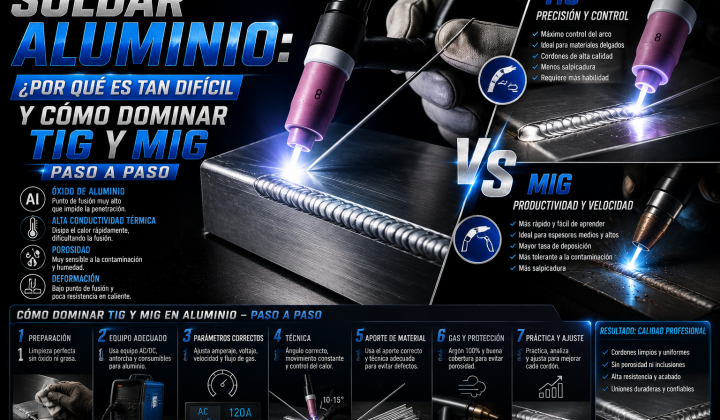
Welding Aluminum: Why It’s So Difficult and How to Master TIG and MIG Step by Step
Beginner's Guide to Aluminum Welding: Oxide Cleaning, Shielding Gas, Polarity, and Equipment Settings for TIG and MIG.

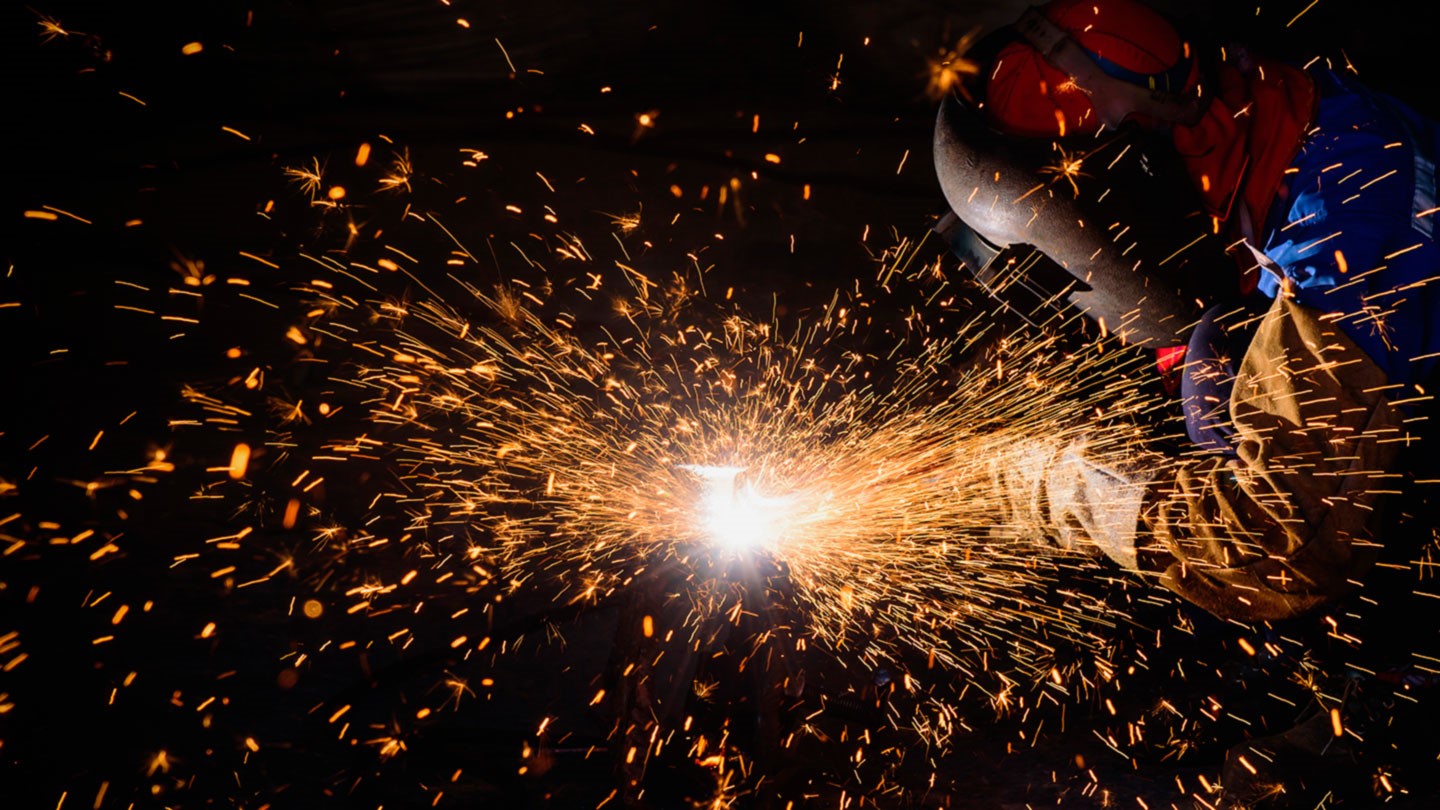
It is possible to cut, pierce, gouge, and bevel metals by melting the metal using the intense heat of an electric arc established between a special electrode and the workpiece. A high-pressure jet of gas, produced by the combustion of the special coating, strikes the molten metal pool behind the arc and displaces it. Cutting speed varies depending on working conditions; these electrodes are used with conventional manual arc welding equipment, requiring no additional equipment or accessories.
WHAT ARE THE APPLICATIONS?
The electrode cutting process is used to cut, pierce, remove defective sections, remove old welds, back-gouge the root, and prepare bevels and grooves for welding on all types of ferrous and non-ferrous metals. The cutting area is small and, since the metal is melted and rapidly removed, the surrounding area does not reach high temperatures. This reduces the tendency toward distortion and cracking.
WHAT ELECTRODES CAN BE USED?
There are two types of electrodes for this process:
• For cutting and piercing, each manufacturer assigns its own trade name to this type of electrode.
• For beveling and gouging.
Electrodes are manufactured in diameters ranging from 2.5 mm to 6.3 mm.
ADVANTAGES.
With cutting and beveling electrodes, mild steel can be removed at a rate of up to 10 kg per hour, whereas a high-speed grinding disc can remove only a maximum of 2 kg per hour. Compared to the carbon arc cutting process, it has the advantage of not requiring additional compressed air equipment and its various accessories, while also eliminating the need for the special electrode holder required for carbon arc cutting.
When compared to oxyfuel cutting, it can be seen that this process is limited solely to cutting mild steels; by contrast, with special metal electrodes designed for this purpose, it is possible to cut, pierce, etc. any type of rolled, cast, or forged steel, as well as various grades of cast iron and stainless steel, along with copper, bronze, aluminum, and any non-ferrous metal or alloy.
The process allows plates of various thicknesses to be cut by moving the electrode along the cut line in a sawing motion. To perform the cut, it is necessary to apply a motion that allows the molten metal and slag to flow out of the cutting zone.
To pierce small-diameter holes in thin plates, the arc is struck and the electrode is pressed downward until the hole is produced, then enlarged if necessary.
For beveling and gouging, any metal or metal alloy can be beveled and gouged. It also allows the removal of fatigued material or defective filler metal deposits. To produce grooves or channels, or to prepare bevels, the electrode is handled using an angled technique at 30°; with proper technique, well-defined grooves should be achieved.
Ask the DoctorWelding assistant about this topic and it answers citing our articles.

Beginner's Guide to Aluminum Welding: Oxide Cleaning, Shielding Gas, Polarity, and Equipment Settings for TIG and MIG.

Comparison between laser and TIG welding focusing on the advantages of laser: speed, distortion, penetration, and automation.