No Catergory 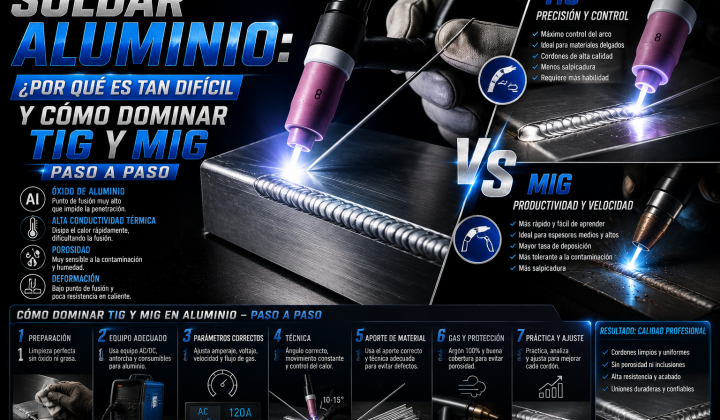
Welding Aluminum: Why It’s So Difficult and How to Master TIG and MIG Step by Step
Beginner's Guide to Aluminum Welding: Oxide Cleaning, Shielding Gas, Polarity, and Equipment Settings for TIG and MIG.

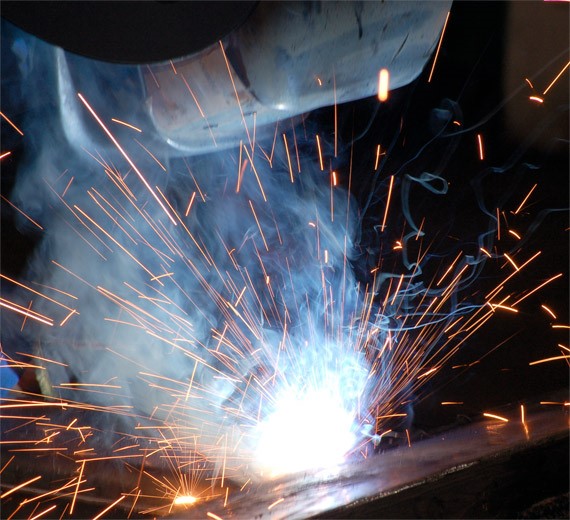
FCAW welding can be performed in such a way as to provide both the welder and those in the vicinity of the welding area with maximum safety regarding their physical integrity.
FCAW generates fumes at a rate per kilogram of deposited metal similar to that of SMAW, but because the deposition rate is much higher, the fume generation rate in grams per minute is much greater than for SMAW. In particular, metal cored wire electrodes produce lower fume levels, especially when used with Ar-rich shielding gas mixtures. Pure CO2 produces the highest fume pollution level; the calculation of the amount of fumes generated is based on the quantity of particles captured in test filters, according to AWS standard F1.2-92. The figure shows a comparison of fume levels generated by the different processes and consumables.
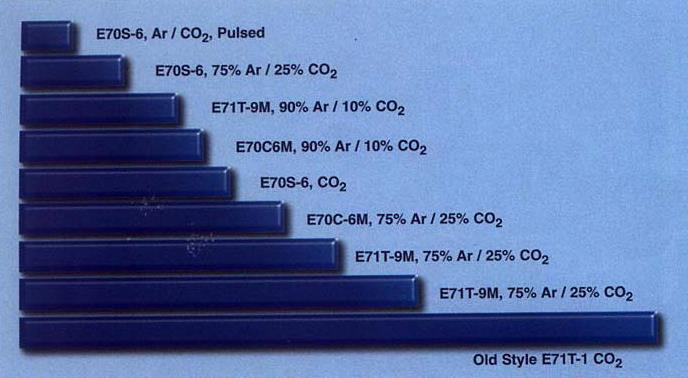
In North America, Europe, and parts of South America and Asia, welder exposure is strictly controlled. The best solution to any exposure situation is to minimize the amount of fumes generated at the arc. In this regard, the latest generation of metal cored wires produces between 20 and 50% less fumes than comparable flux cored wires.
It is important to ensure that the concentration of fumes and vapors remains below the Permissible Exposure Limit (PEL), specified at 5mg/m3 by the Occupational Safety and Health Administration (OSHA) of the United States Department of Labor. Special precaution must be taken to protect the welder from inhaling manganese vapors when welding Hadfield-type products. Likewise, when welding stainless steels or alloys with high chromium content, due to the generation of chromium vapors. Safety requirements must be observed regarding shielding gases when welding in enclosed spaces. These gases are not toxic, but are asphyxiating and can displace oxygen. When welding with high-argon-content gases, substantial ultraviolet radiation will be generated, which can react with oxygen in the vicinity of the arc to form ozone.
Safe use of the FCAW process requires careful evaluation of these factors and the application of necessary corrective measures prior to welding.
Ask the DoctorWelding assistant about this topic and it answers citing our articles.

Beginner's Guide to Aluminum Welding: Oxide Cleaning, Shielding Gas, Polarity, and Equipment Settings for TIG and MIG.
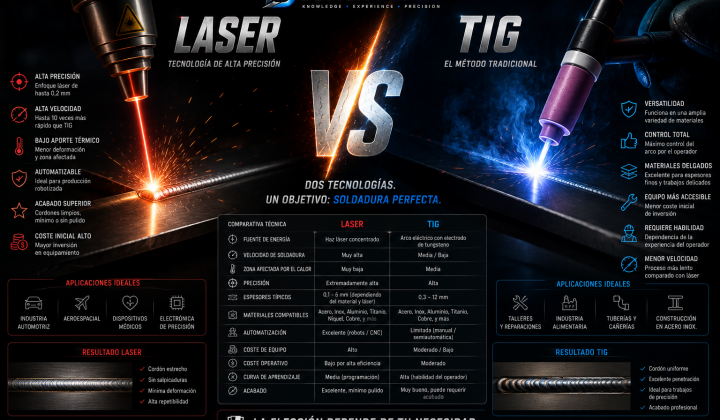
Comparison between laser and TIG welding focusing on the advantages of laser: speed, distortion, penetration, and automation.