MATERIALS 
## HOW ARE METALS CLASSIFIED?
Metals play a major role today in all areas of society’s development. These materials are present daily in…

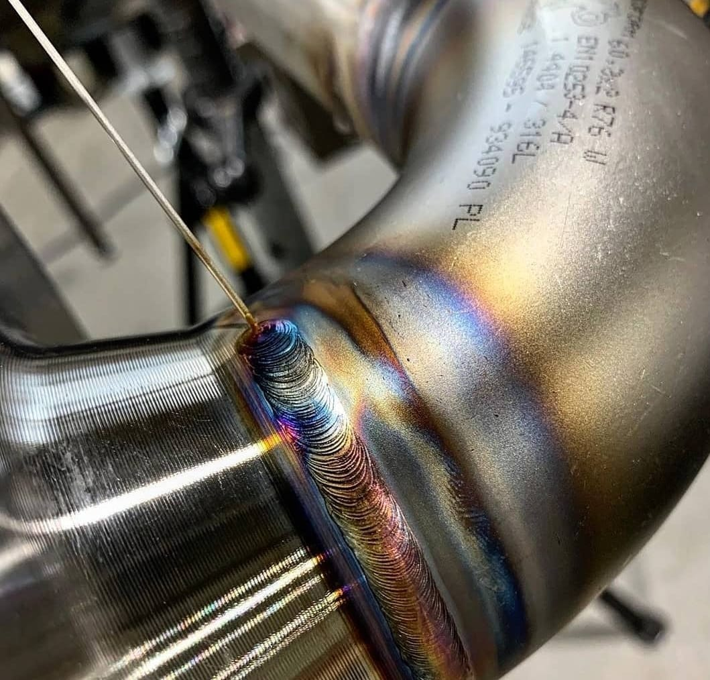
Stainless steels belong to a family of steels that have a series of special characteristics and uses in industry. The main characteristic of these steels is their good corrosion resistance, which is due to their 12% chromium content.
Chromium is primarily used in steel manufacturing applications to provide corrosion resistance and a bright finish. Other representative alloying elements in stainless steels include: nickel, molybdenum, niobium, and titanium; as well as deoxidizers such as manganese and silicon.
Classification:
Stainless steels have a wide range of applications; they are classified according to their chemical composition and microstructure, and are thus known as austenitic, ferritic, and martensitic stainless steels, among the most common. Duplex, super duplex, and precipitation-hardening grades also exist.
Austenitic stainless steels.
This group of steels is referred to as austenitic because it contains nickel as an alloying element, which promotes the formation of an austenitic microstructure. This group of steels is widely used across different industrial sectors.
Their weldability is straightforward; they can be welded using any welding process depending on the level of quality required. They can be welded using SMAW, GMAW, GTAW, and FCAW processes.
Among their most representative characteristics are:
Martensitic stainless steels.
This group of steels is called martensitic due to its high hardenability, which makes them highly corrosion resistant and gives them very good mechanical strength. They are chromium alloys with approximately 17% chromium and other alloying elements; their weldability requires careful process control to prevent cracking. When a sound welding procedure is established, they can be welded using all processes, including SMAW, GMAW, GTAW, and FCAW.
Ferritic stainless steels.
This group of stainless steels includes some grades from the 400 series according to the American Iron & Steel Institute (AISI); their microstructure is stable ferritic from room temperature up to the melting point. They are steels manufactured with 12% to 27% chromium, with carbon content controlled to the lowest practical percentage in order to minimize its detrimental effect on corrosion resistance. These stainless steels contain little or no nickel. The absence of nickel results in a lower cost compared to austenitic stainless steels; ferritic stainless steels are widely used in the automotive market. These steels are practically non-hardenable by heat treatment. Their weldability is somewhat complex, but as with martensitic steels, a welding procedure must be established in order to achieve an excellent joint; all welding processes can also be used, including SMAW, GMAW, GTAW, and FCAW.
Recommended procedure for welding stainless steels
As with any welding process, the procedures for welding stainless steels must be strictly followed to achieve the best results.
Stainless steels owe their corrosion resistance to their chromium content. When this type of steel is heated to a temperature between 430°C and 820°C, carbon in excess of 0.02% combines with chromium at the grain boundaries to form chromium carbides. This can cause chromium to lose its corrosion-resistant properties, and when the material is exposed to a corrosive environment, “intergranular corrosion” may occur. For this reason, the use of low-carbon alloys is recommended. These electrodes are identified by the letter L, which denotes an alloy with a low carbon content.
Other challenges when welding stainless steels include:
Before proceeding with the welding process, the quality requirements of the joint to be welded must be assessed. The most recommended process for welding stainless steel and ensuring weld quality is GTAW (TIG). This process allows heat input to be controlled and produces excellent weld quality. As recommendations for making the joint, take the following factors into account:
Ask the DoctorWelding assistant about this topic and it answers citing our articles.

Metals play a major role today in all areas of society’s development. These materials are present daily in…
Copper was one of the first metals used by mankind, as it existed in relatively abundant quantities in…