MATERIALS 
## HOW ARE METALS CLASSIFIED?
Metals play a major role today in all areas of society’s development. These materials are present daily in…

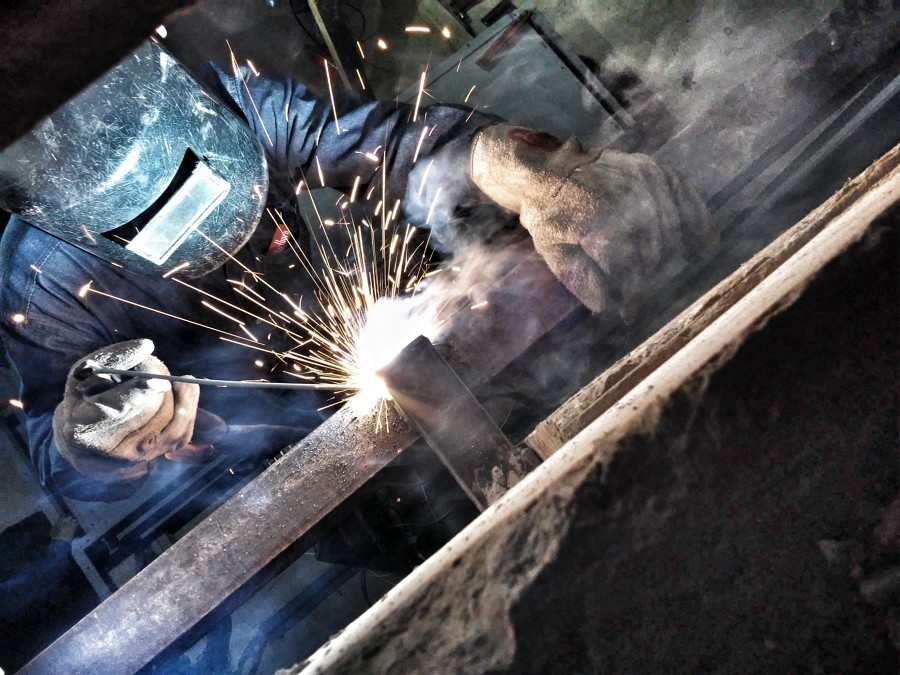
Welding filler metals are generally grouped according to the type of consumable, the process used, or the chemical composition of the deposited metal.
For this purpose, various standards exist, some more widely known than others; among the most recognized are the standards established by AWS (American Welding Society), ASME (American Society of Mechanical Engineers), another important reference in standardization is ISO (International Organization for Standardization), and EN (European Norm).
Shielded metal arc welding (SMAW) electrodes comply with manufacturing standards and all have a classification; the manufacturing specifications for these electrodes are covered by the following standards.
AWS A5.1 – 91 Standard specification for carbon steel electrodes
AWS A5.5 – 86 Standard specification for low-alloy steel electrodes.
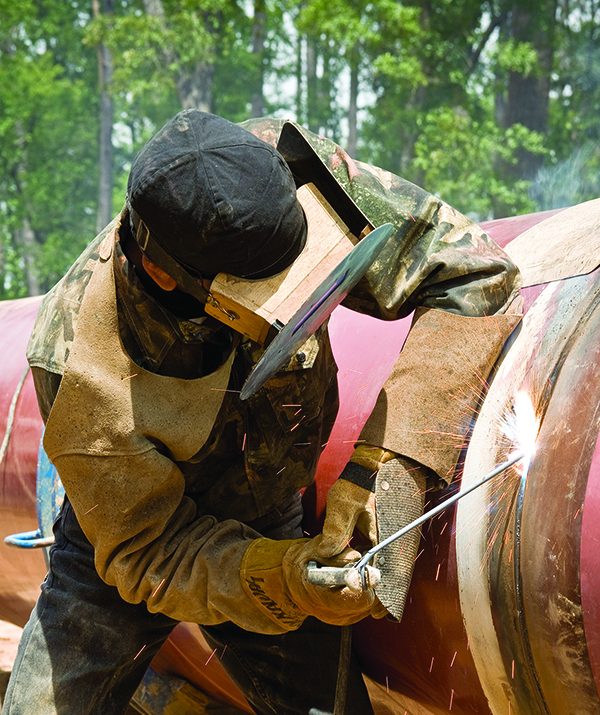
Cellulosic electrodes and their applications.
The E 6010 and E 6011 electrodes have been designed with their fast-freezing characteristics as the primary consideration. They are excellent for welding in all positions, have a coating with a high cellulosic (organic) content, and are classified within the “acidic” group; they can be used for tight-fit-up joints or small root openings. The main field of application for these electrodes is the joining of hydrocarbon transmission pipelines, fabrication of tanks and pressure vessels, and in the specific case of the E 6011, it is used for welding zinc-coated (galvanized) sheet metal.
Rutile electrodes and their applications.
Electrodes designed for high-speed welding on relatively thin metal plate are manufactured specifically with a high-fluidity characteristic that allows the molten metal to follow the electrode closely. The E 6012 and E 6013 electrodes belong to this category and are classified within the “rutile” group, with a coating of high titanium dioxide content, suitable for vertical and overhead welding positions. Their primary application is the welding of thin sheet metal, and they are most commonly used in the welding of doors, gates, and window frames.
Basic electrodes and their applications.
Electrodes used for depositing heavy beads and filling grooves are designed for rapid weld metal deposition. The electrodes included in this category are those with iron powder coatings and belong to the E 6014, E 7024, and E 7027 classifications. These electrodes are referred to as high-deposition electrodes, and the ratio of the weight of the fused rod to the weight of the deposited metal is equal to or greater than 130%. Due to their high deposition rate, these electrodes are used in tank welding. It should be noted that the E 7024 and E 7027 are suitable for flat and horizontal positions only, and produce a smooth arc transfer, generating weld beads that are smooth and spatter-free.
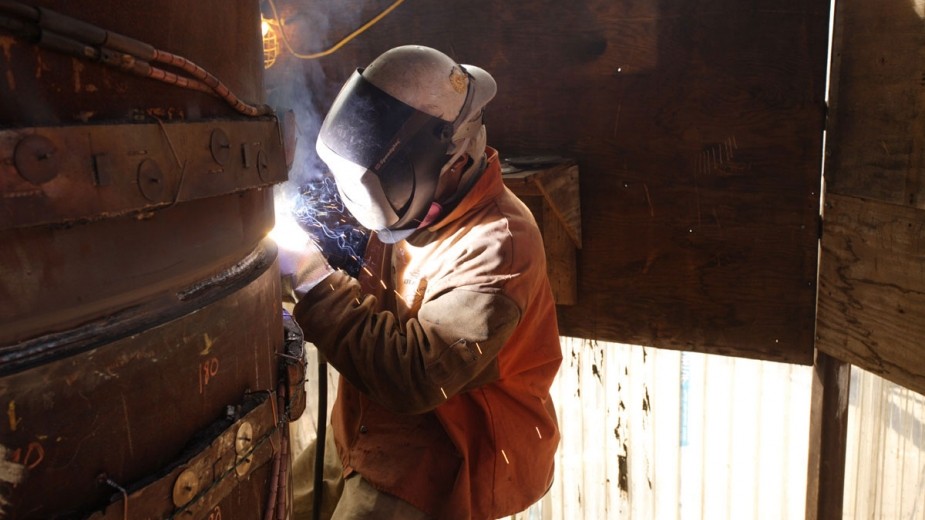
Low-hydrogen basic electrodes and their applications.
The E 7015, E 7016, and E 7018 electrodes are used for welding steels containing sulfur and high-carbon steels, as well as some medium-alloy steels that are difficult to weld with other electrodes. These electrodes have a low-hydrogen coating containing lime and sodium carbonate, or lime with rutile oxide. Their field of application is the fabrication of structural steelwork requiring higher strength; they are used for welding low- and medium-alloy steels where cracking is a concern. They must be stored at a temperature of no less than 120°C (250°F); if the coating absorbs moisture, it can cause porosity in the weld.
Ask the DoctorWelding assistant about this topic and it answers citing our articles.

Metals play a major role today in all areas of society’s development. These materials are present daily in…
Copper was one of the first metals used by mankind, as it existed in relatively abundant quantities in…