No Catergory 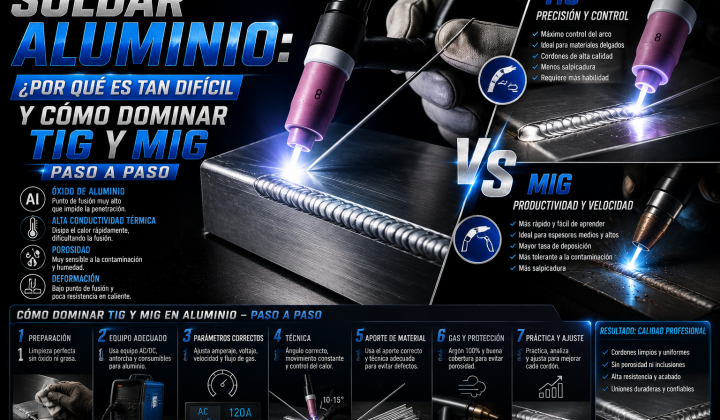
Welding Aluminum: Why It’s So Difficult and How to Master TIG and MIG Step by Step
Beginner's Guide to Aluminum Welding: Oxide Cleaning, Shielding Gas, Polarity, and Equipment Settings for TIG and MIG.

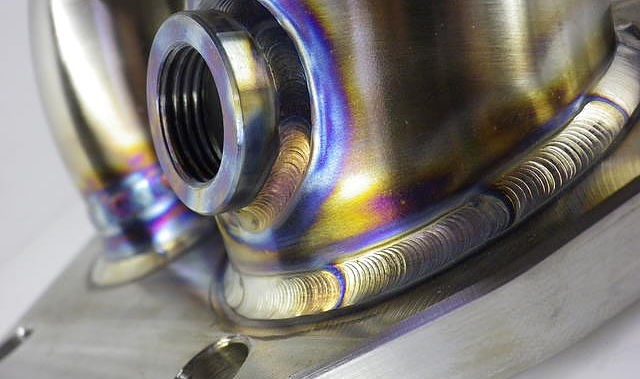
Duplex stainless steels are so named because their microstructure consists of equal parts austenite and ferrite. In cast or wrought duplex stainless steels, this microstructure is generally obtained by heat treatment in a temperature range between 1040 and 1150°C. In castings, these steels generally contain 80% ferrite or more; additionally, they contain a small amount of austenite and generally contain brittle intermetallic compounds (sigma or chi phases). The heat treatment temperature is high enough to dissolve the intermetallic compounds and low enough to allow ferrite to transform into austenite. Rapid quenching (usually in water) from the heat treatment temperature prevents the formation of new intermetallic compounds, leaving a room-temperature microstructure that is generally 40–60% ferrite, with austenite making up the balance.
In addition to the tendency to form intermetallic compounds during slow cooling through or holding at temperatures in the range of 540–930°C, duplex stainless steels may exhibit another form of metallurgical damage known as 475°C (885°F) embrittlement. This embrittlement occurs due to the precipitation of chromium-rich ferrite within the iron-rich ferrite.
Even when duplex stainless steels are properly heat treated, they lose toughness below -45°C because the ferritic phase undergoes a ductile-to-brittle transition as temperature decreases, leading to fracture. This factor, together with the 475°C embrittlement phenomenon mentioned above, limits the service temperature range to between -45 and 260°C, in contrast to the broader range exhibited by austenitic stainless steels (from -271°C up to temperatures as high as 870°C). In addition to the alloying elements chromium and nickel, duplex stainless steels generally contain small amounts of nitrogen (0.1–0.02%) and molybdenum (1.0–4.0%). Nitrogen increases strength and retards the formation of brittle intermetallic compounds. Molybdenum improves the pitting and corrosion resistance of the alloys.
CHARACTERISTICS.
Austenitic stainless steels are susceptible to stress corrosion cracking (SCC) in chloride environments but exhibit excellent weldability. Ferritic stainless steels tend to be brittle and difficult to weld but resist stress corrosion cracking. Duplex stainless steels combine some of the best characteristics of both austenitic and ferritic stainless steels.
Compared to austenitic grades, austenitic-ferritic stainless steels offer higher strength and significantly better resistance to stress corrosion cracking in chloride solutions, at the cost of slightly lower ductility and toughness, as well as being somewhat more difficult to weld.
APPLICATIONS
Duplex stainless steels are used in heat exchanger tubing, offshore platforms, gas wells, piping, cast pump and valve bodies, as well as for handling saltwater, sour gas, and petroleum. Their use in geothermal installations may prove superior to austenitic grades of stainless steel. Alloy 2205 may be in high demand in the chemical industry, as it offers pitting and corrosion resistance at least as good as Type 317L, while also exhibiting better stress corrosion cracking resistance than Grades 304L or 316L.
FILLER METALS FOR DUPLEX STAINLESS STEELS
Autogenous fusion welding (without filler metal) of duplex stainless steels causes the weld metal to revert to the as-cast microstructure (generally 80% ferrite or more). This microstructure exhibits very low ductility and will virtually always crack during bend testing.
The use of filler metal with a composition matching that of the base metal generally provides little benefit, as the weld zone still has a structure of 80% ferrite or more. To overcome this ductility problem in welding, nickel-enriched alloys (8–10% Ni vs. 5–6% Ni in the base metals) are preferred. Such filler metal, as deposited, has a ferrite content similar to that of the heat-treated metal and therefore exhibits better ductility to withstand bend testing, as well as corrosion resistance comparable to that of the base metal.
A point of particular concern when welding duplex stainless steels for use in the as-welded condition is the high dilution of the root pass. Because a considerable fraction of the root pass will consist of base metal with a lower nickel content, the overall nickel content will be lower than that of the undiluted weld metal. As a result, the root pass, with its higher ferrite content, will have lower ductility than the remainder of the joint. To avoid this problem, it is practical to use a filler metal that incorporates a built-in “ferrite cushion” in the form of some additional nickel beyond the minimum required to maintain ferrite levels that provide good ductility. Using this approach, the diluted root areas can be ductile in the as-welded condition, particularly if reasonable precautions are taken to avoid excessive dilution. Avoid knife-edge preparations; a tight root will result in greater dilution than an open root.
For applications where annealing (1040–1150°C) is performed after welding (such as the repair of duplex stainless steel castings), filler metals with a composition similar to the base metal are adequate, as the heat treatment will reduce the ferrite content in the weld. When a higher-nickel alloy is annealed, the ferrite content will also be reduced, resulting in some decrease in strength. This will depend on dilution as well as on the time and temperature of the heat treatment. In extreme cases, the nickel-enriched alloy may not be suitable after heat treatment.
Ask the DoctorWelding assistant about this topic and it answers citing our articles.

Beginner's Guide to Aluminum Welding: Oxide Cleaning, Shielding Gas, Polarity, and Equipment Settings for TIG and MIG.
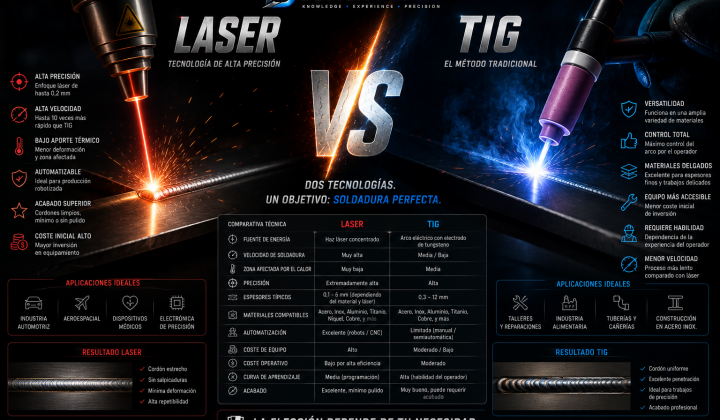
Comparison between laser and TIG welding focusing on the advantages of laser: speed, distortion, penetration, and automation.