No Catergory 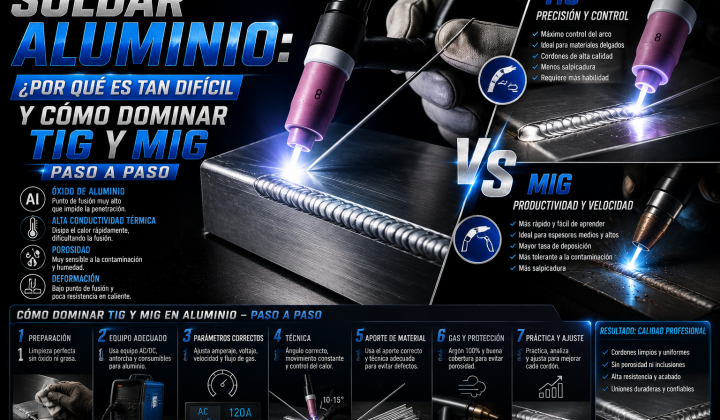
Welding Aluminum: Why It’s So Difficult and How to Master TIG and MIG Step by Step
Beginner's Guide to Aluminum Welding: Oxide Cleaning, Shielding Gas, Polarity, and Equipment Settings for TIG and MIG.

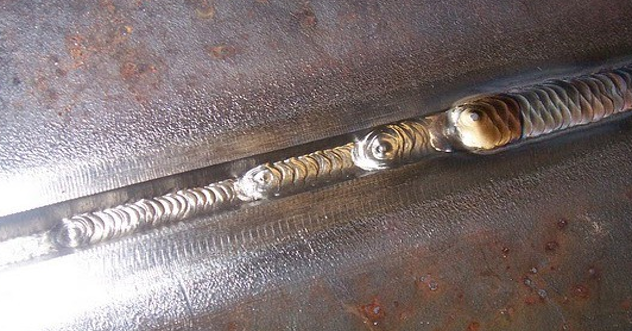
By definition, lack of fusion is described as the condition in which the deposited metal is not completely fused with the base metal or with the previous passes. Due to this, a linear condition of relative sharpness occurs at the end of said defect, representing a dangerous discontinuity in the deposited metal. This can occur in different locations within the deposited metal, one of which may be the root or between weld beads.
Lack of fusion can generally also be associated with slag inclusions; indeed, the presence of slag generated by insufficient cleaning can result in the occurrence of lack of fusion.
When the defect occurs at the root of the weld bead, this condition is commonly referred to as incomplete penetration, since the term better describes the nature and location of these flaws. On the other hand, AWS has decided to refer to lack of fusion in any case where a discontinuity occurs due to inadequate fusion.
Lack of fusion is often thought to occur only as an internal defect, but it can also appear on the surface of the weld bead. Another common term used to describe lack of fusion is “cold lap”; this term is generally used to describe lack of fusion between weld beads and the base metal or between individual passes.
Lack of fusion can result from several conditions or problems. Probably the most common cause of this discontinuity is improper electrode manipulation by the welder; some processes are more susceptible to this problem because the heat is not sufficiently concentrated, and as a result, adequate fusion of the metal is not achieved. For example, when using the GMAW process with short-circuit transfer, the welder must concentrate the arc at those points in the joint where greater fusion is required. Under other conditions, the weld joint configuration may limit the fusion obtained; these conditions include: insufficient bevel angle and excessive root opening.
Finally, excessive contamination, including oxide layers, can result in inadequate fusion. On a radiograph, lack of fusion will appear as a dense, dark line that is generally straight, unlike the images produced by elongated slag or cracks.
As established by AWS A3.0, incomplete penetration is not a standard term; it generally refers to incomplete penetration as the lack of fusion occurring at the root of the weld. This term better describes the nature and location of this type of discontinuity. Another consideration is that incomplete penetration is always related to the root face or root shoulder of the joint. This describes the situation in which the weld metal applied to the joint is unable to fuse the root face.
Since the term penetration is related to weld size, a joint that is not adequately penetrated will fail to meet the effective throat requirements (fillet weld size).
Furthermore, it is important for the welding technician to understand the meaning of the term incomplete penetration, as it is generally used to describe lack of fusion at the weld root. Incomplete penetration can be caused by the same conditions that result in lack of fusion: improper technique, poor joint configuration, or excessive contamination.
Slag inclusions, as their name implies, are regions within the weld metal in which the flux used to protect the molten metal is mechanically trapped within the solidified metal. This solidified flux or slag represents a portion of the weld metal in which it has been unable to fuse. Although slag inclusions are generally thought to occur within the weld metal, they are sometimes observed on the surface as well. As with lack of fusion, slag inclusions can occur between the base metal and the deposited metal or between passes; indeed, slag inclusions are generally associated with lack of fusion. Slag inclusions that result exclusively from processes using flux for shielding are caused by improper technique on the part of the welder or operator. Such causes may include: improper electrode manipulation or insufficient interpass cleaning.
Generally, improper electrode manipulation or the use of inappropriate parameters results in an undesirable weld bead profile that traps slag along its edges and prevents adequate interpass cleaning. The welder or operator subsequently covers this slag with a weld pass, which results in slag inclusions.
Since the density of slag is much greater than that of the metal, the inclusions appear on the radiograph as relatively dark indications with irregular shapes.
Ask the DoctorWelding assistant about this topic and it answers citing our articles.

Beginner's Guide to Aluminum Welding: Oxide Cleaning, Shielding Gas, Polarity, and Equipment Settings for TIG and MIG.
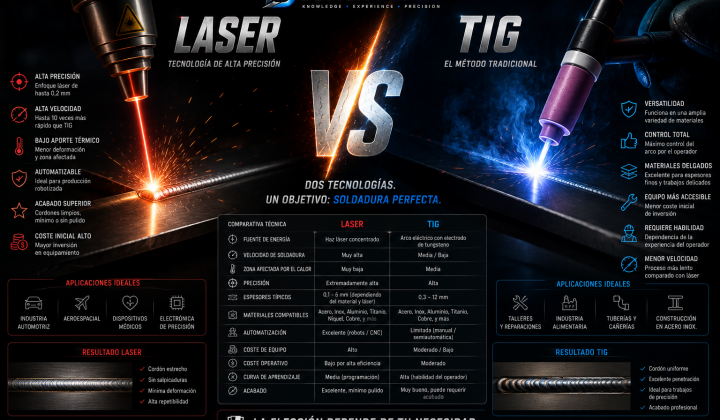
Comparison between laser and TIG welding focusing on the advantages of laser: speed, distortion, penetration, and automation.