MATERIALS 
## HOW ARE METALS CLASSIFIED?
Metals play a major role today in all areas of society’s development. These materials are present daily in…

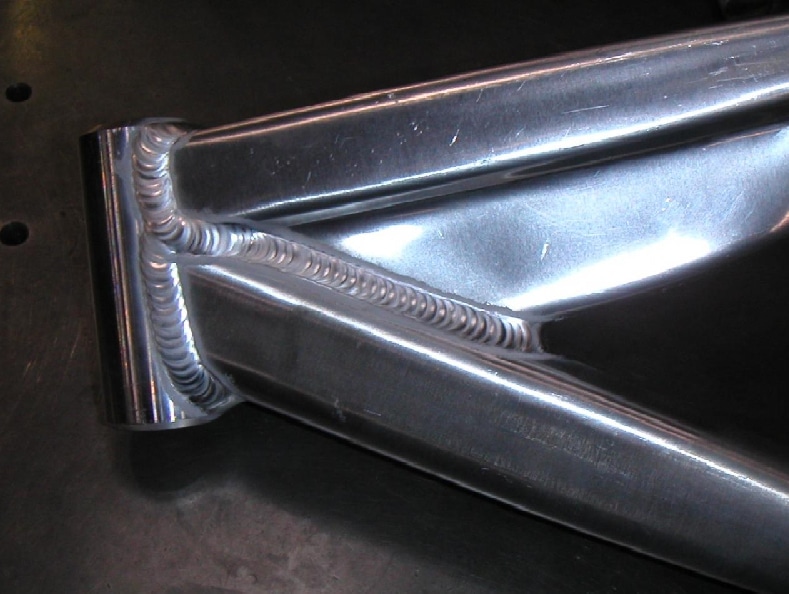
Aluminum is one of the most abundant metals in the Earth’s crust. It is characterized by its excellent resistance, is a lightweight material weighing three times less than steel, and offers very good corrosion resistance. Some alloys are used in structural fabrication due to their good strength; it also exhibits very good durability and electrical conductivity, which gives it wide application across different industrial sectors.
Welding aluminum is not an overly complex process — the proper procedure simply needs to be implemented to avoid defects and discontinuities that may arise.
The challenge with its weldability lies in its low melting point of 660°C. Furthermore, when aluminum comes into contact with oxygen, it forms a surface layer known as alumina, which melts at 2,070°C. This layer is hard, thin, and tenacious (normally 2.5–5.0 nm thick), and must be completely removed in order to achieve a proper weld.
Pure aluminum has poor mechanical properties and is therefore not used in load-bearing structures. For this reason, the metal is generally alloyed and either heat-treated or work-hardened to obtain the required properties. The main aluminum alloy groups are: Al-Cu, Al-Mn, Al-Si, Al-Mg, Al-Si-Mg, and Al-Zn.
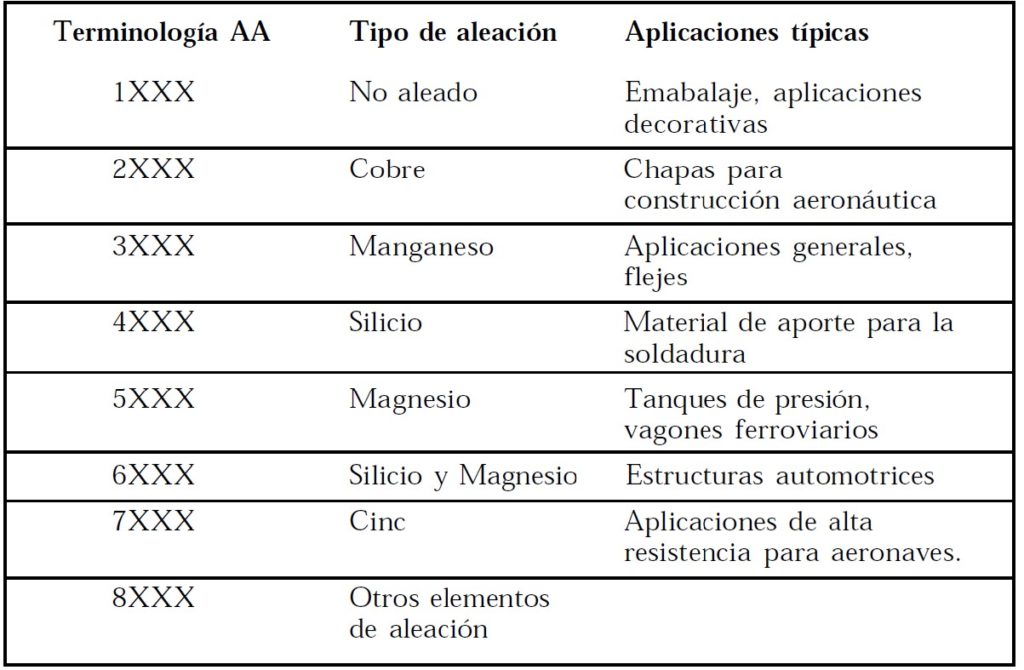
To weld aluminum properly, the type of alloy to be welded must be known. The most common alloys are the 4043 alloy, which is an aluminum-silicon alloy, and the 5356, which is an aluminum-magnesium alloy. The most recommended welding processes are GMAW, GTAW, Laser, Plasma, among others. For a quality weld, the surface to be welded must be thoroughly cleaned, and for thicknesses greater than 6.5 mm, a moderate preheat should be applied.
Aluminum welding with the SMAW (MMA) process. Today, welding aluminum with the shielded metal arc welding (SMAW) process is not cost-effective. However, if the application is necessary, it should be noted that aluminum electrodes have a salt-based flux coating, which makes handling delicate. Equipment used to weld aluminum must have a minimum open-circuit voltage of 75 volts for the electrode to operate properly; a low amperage and a short arc length must be maintained without allowing the electrode to stick.
Aluminum welding with the MIG process. The following equipment and consumables are used for this process:
To weld properly with the MIG process, pulsed arc transfer can be used, which will provide better results. The equipment must always be set according to the material thickness, and the push technique must always be used, as the drag technique will produce porosity and shielding gas defects. This process offers higher deposition rates and is therefore well suited for production welding applications.
Aluminum welding with the TIG process: The TIG welding process uses a non-consumable tungsten electrode with alternating current (AC), direct current electrode positive (DCEP), or direct current electrode negative (DCEN). Alternating current is primarily used for welding aluminum. The TIG process was developed before the MIG process and was previously applied
to all material thicknesses and joint types. Currently, the TIG process is limited to thin aluminum sheet up to 7 mm. The following elements are required to weld aluminum properly.
Ask the DoctorWelding assistant about this topic and it answers citing our articles.

Metals play a major role today in all areas of society’s development. These materials are present daily in…
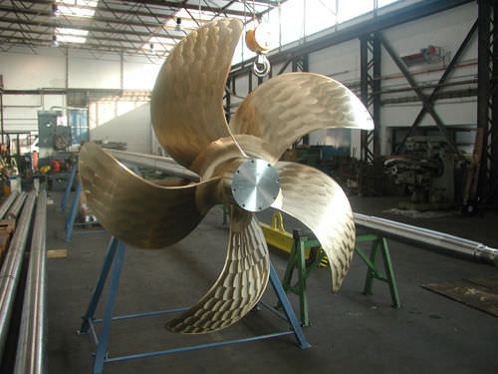
Copper was one of the first metals used by mankind, as it existed in relatively abundant quantities in…