No Catergory 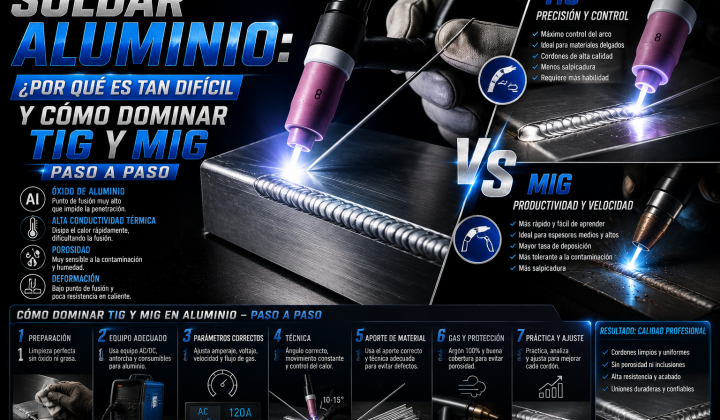
Welding Aluminum: Why It’s So Difficult and How to Master TIG and MIG Step by Step
Beginner's Guide to Aluminum Welding: Oxide Cleaning, Shielding Gas, Polarity, and Equipment Settings for TIG and MIG.
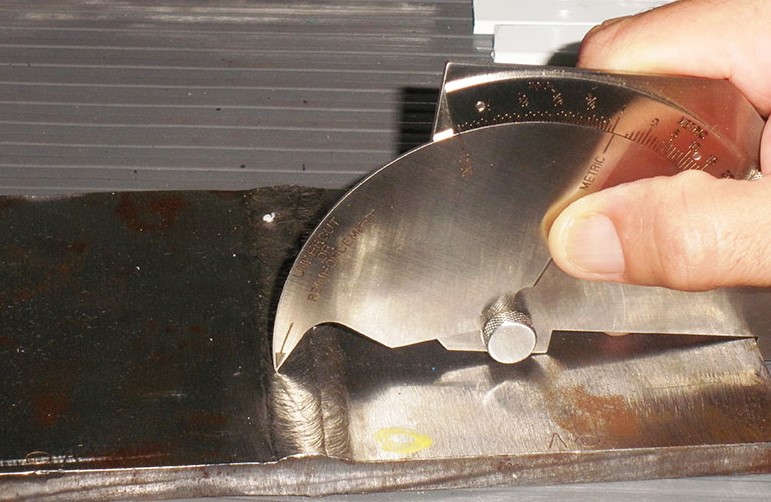
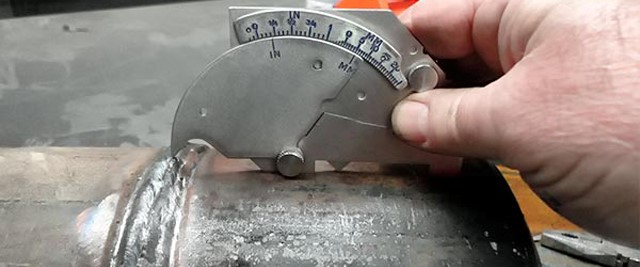
Welding processes are useful for joining metals in different industrial sectors; the question that must always be asked is How good is the weld bead? Many welders only fulfill the function of applying welds according to the process and the task they must perform, forgetting that the main characteristic of a welded joint is quality — meaning that an accident must not occur with the component that has been welded. For this reason, codes, standards, and specifications exist, whose purpose is to establish inspection systems for welded components.
Codes, standards, and specifications are reference documents that contain articles outlining the inspection of welded joints, in order to prevent future accidents and to guarantee, in some way, that the welded joint was made in compliance with the parameters of a code, standard, or specification.
Whenever a welded joint is made, inspection processes must be carried out in order to detect and correct any defects that may arise.
One of the most widely used inspection techniques is visual inspection. This technique is mandatory, and the welder is the first welding inspector, who has the obligation to report any type of discontinuity or defect that occurs before, during, or after the welding application.
Requirements for a Welding Inspection.
Unless otherwise specified in the contract documents, visual inspection shall be performed on all welds in the fabrication and erection of structural steel for buildings, tank fabrication, and pressure vessels, and shall also be applied to the joining of carbon steel and low-alloy steel piping through which petroleum or its derivatives will flow.
Visual inspections that are required and mandatory must be performed before, during, and after the welding application.
If an inspection and repair plan is not established, several defects may occur which, when accumulated, can lead to an accident in which human lives may be lost.
Inspection Before Welding.
Spending time on inspection before welding begins prevents errors and facilitates the progress of work. Copies of structural drawings and fabrication and erection drawings must be obtained and reviewed prior to beginning any work; the fabrication and erection drawings to be used must be marked as approved.
A review of the material requirements for the project must be carried out and verified. Mill test reports must be obtained, and the method of identification and marking of the steel must be determined. The selection of welding electrodes must be determined, and the storage method for welding consumables must be reviewed.
Everything must be inspected in accordance with the welding procedure and must comply with the requirements of the applicable welding code or standard. The specified welding procedure (WPS) must be documented in a format that serves as a guide for monitoring the welding application in order to ensure its quality.
The inspector must verify and obtain copies of the qualification test results for all welders, welding operators, and tack welders (fitters) who perform welds of satisfactory quality and comply with the project specifications and applicable codes.
Inspection During Welding.
It is the inspection during welding that presents the greatest challenge to the inspector. The fabrication or erection management may have developed excellent welding procedures and sequences and provided this information to the plant or field superintendent for the instruction of themselves and their personnel, but it is frequently found that this information has not been provided, or in some cases only partially so. The line of communication from the welding engineer to the superintendent, to the supervisor, and to the welder is frequently disrupted. The vast majority of the time, deficiencies in weld beads are evidenced as a result of a lack of knowledge of proper welding procedures or their sequence, resulting in extra costs and additional work. The superintendent and supervisor are sometimes less aware of the dangers of not following procedures and of the risks of not producing the prescribed tonnage of welding work.
The inspector must constantly strive to keep lines of communication open, to ensure that work is executed in the best manner possible while achieving the desired quality.
The inspector must verify that the materials used meet the contractual requirements and the mill test reports. The inspector also determines whether all welding is performed in accordance with the approved welding procedures.
Inspection during welding has its limitations; it is impractical to have an inspector looking over the shoulder of every welder. This can be mitigated by reviewing welder certification documentation before the project begins.
Inspection After Welding.
Post-weld inspection is frequently the easiest part of the inspector’s job. Part of this inspection is ensuring that all joints have been welded and that the weld beads are of the correct size. While verifying the quantity of welds, their quality is inspected a second time. Weld quality is continuously checked during the work; in this way, post-weld inspection becomes a double check. A review of the fabrication and erection drawings must be carried out to determine that all welds have been made and are of the correct size, finish, and length. It is necessary to verify that no welds not specified on the drawings have been applied, and that those required are of the adequate size.
In addition to quantity, welds must be inspected for quality. Weld beads must be free of cracks, lack of fusion, and must not have excessive surface porosity or undercut.
The inspector must ensure that all required nondestructive examinations (NDE) have been performed and reported on structural welds. The majority of joints encountered are fillet welds, flange bevel welds on beams or columns, groove welds, and fillet welds for column splices. Visual inspection is considered sufficient for these connections. However, nondestructive testing, when properly used, is a highly valuable inspection aid. In many cases, it is the inspector’s responsibility to determine where nondestructive examinations should be applied; it is also the inspector’s responsibility to verify that the tests are performed by qualified personnel using the appropriate techniques.
Ask the DoctorWelding assistant about this topic and it answers citing our articles.

Beginner's Guide to Aluminum Welding: Oxide Cleaning, Shielding Gas, Polarity, and Equipment Settings for TIG and MIG.
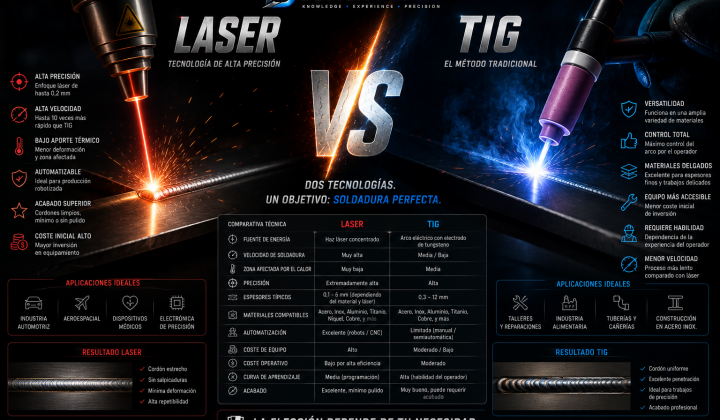
Comparison between laser and TIG welding focusing on the advantages of laser: speed, distortion, penetration, and automation.