Archive

Author: admin

General
General

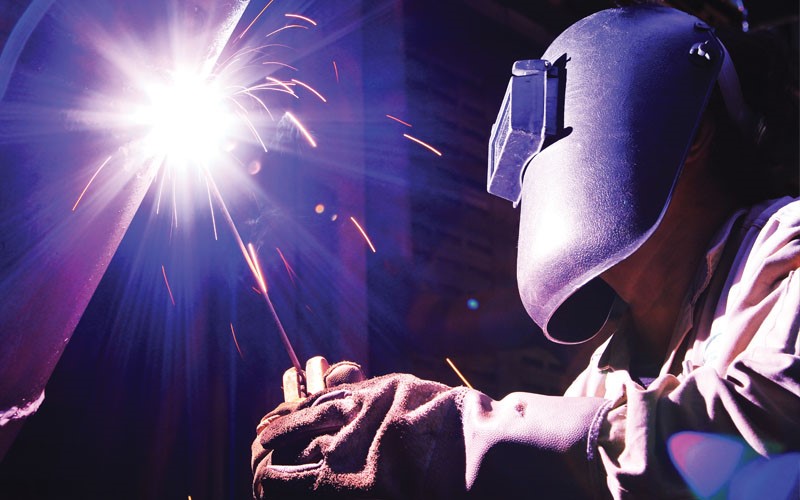
# WHAT TYPE OF SHIELDING GASES TO USE FOR THE GTAW OR TIG PROCESS? The shielding gases used in the GTAW (Gas Tungsten Arc Welding) or TIG (Tungsten Inert Gas) process must be **inert**, meaning they do not react chemically with the weld pool, the base metal, or the tungsten electrode. The most commonly used gases are: — ## **1. Argon (Ar)** – Most widely used shielding gas for TIG welding. – Provides excellent arc stability. – Offers good cleaning action on aluminum and magnesium (when using AC current). – Suitable for welding most metals: carbon steel, stainless steel, aluminum, copper, titanium, and nickel alloys. – Lower ionization potential allows easier arc starting. — ## **2. Helium (He)** – Produces a hotter arc than argon, allowing deeper penetration and faster travel speeds. – Used for welding thicker sections and highly heat-conductive metals such as copper and aluminum. – Requires higher flow rates

One of the main functions of these types of gases is to eliminate Hydrogen, Nitrogen, and Oxygen from…
3 min
PROCESOS SOLDADURA
PROCESOS SOLDADURA

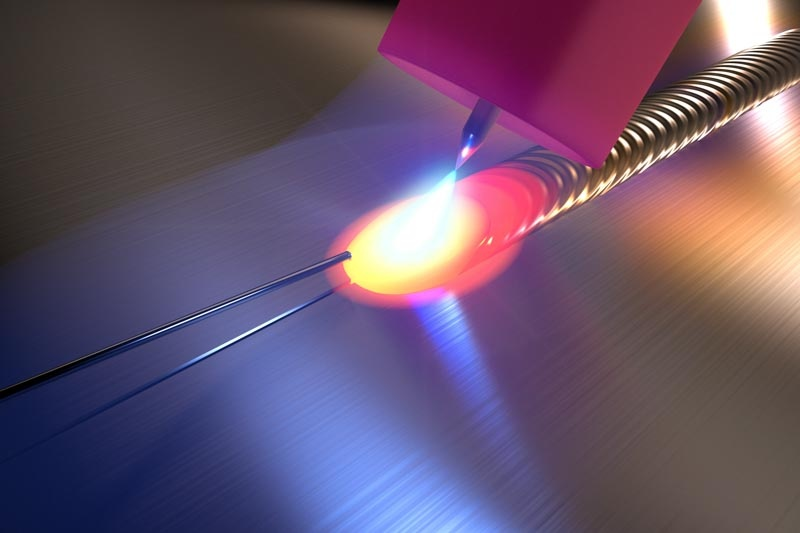
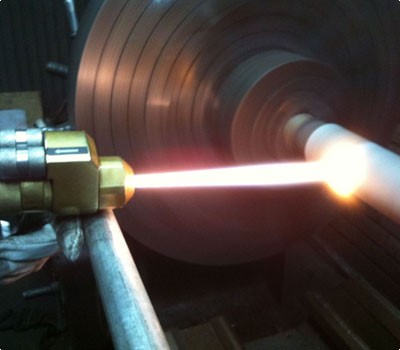
# WHAT IS THERMAL SPRAYING OR METALLIZATION?

HISTORY Thermal spraying is a material protection process that emerged in the early 20th century. Its first applications…

4 min
General
General

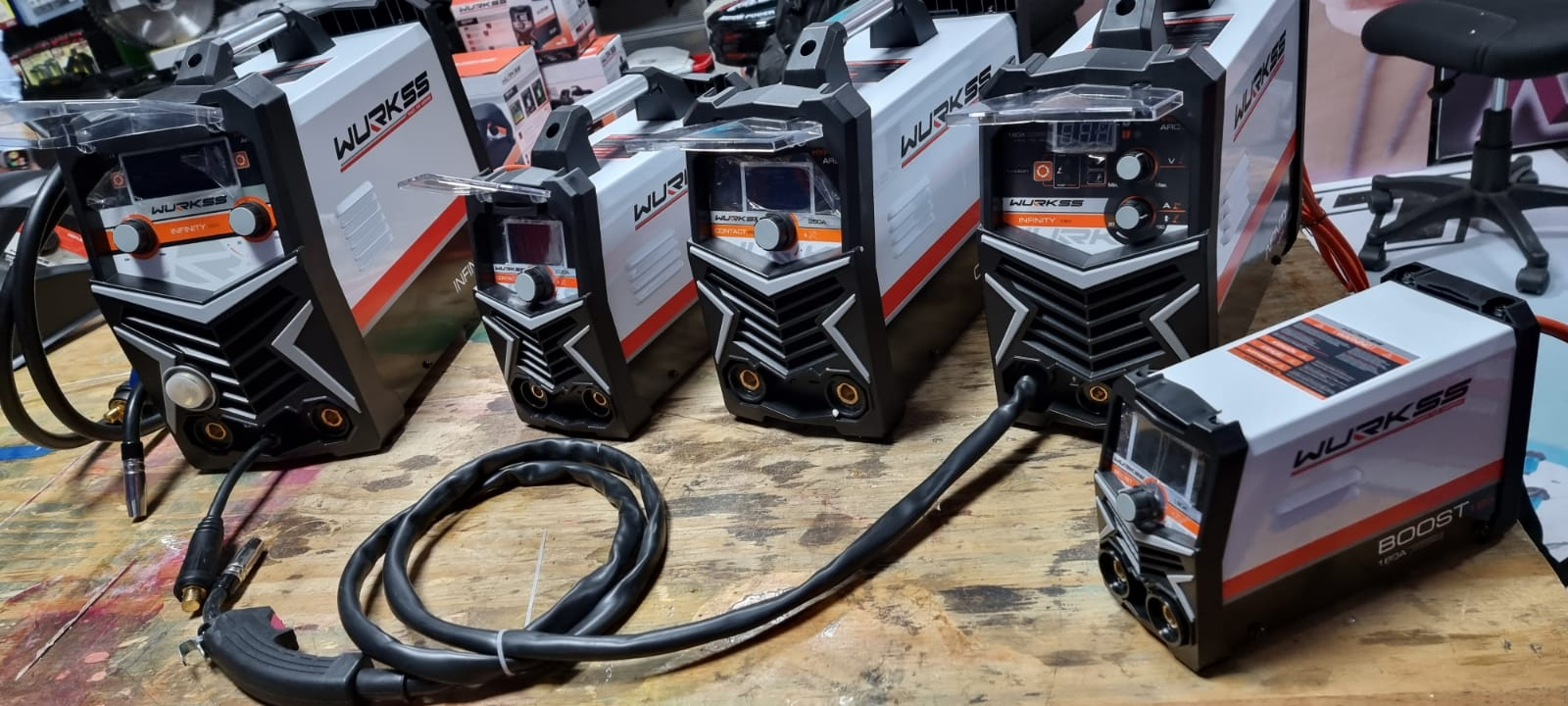
“WURKSS, WE DIDN’T INVENT THE ELECTRIC ARC, WE JUST MAKE IT BETTER”

Welding equipment plays a fundamental role in a welder’s work. These tools have become the best ally for…

2 min
MATERIALES
MATERIALES

## WHAT ARE ORGANIC ELECTRODES? Organic electrodes are those whose coating contains **cellulose-based compounds** as the main component in their covering formulation. ### Main Characteristics: – **Cellulose content:** 30% or more in the coating – During the arc, cellulose **decomposes and generates a gaseous shield** (mainly hydrogen and carbon dioxide) that protects the weld pool – Produce a **deep penetrating arc** with high energy – Generate **high amounts of spatter** – The slag produced is **thin and easy to remove** ### Most Common Types: | Electrode | Classification | |———–|—————| | **E6010** | DC+ (DCEP), deep penetration | | **E6011** | AC and DC+, versatile | | **E7010** | DC+, higher strength | | **E8010** | DC+, high strength steels | ### Main Applications: – **Pipeline welding** (oil and gas) – **Vertical-down (stovepipe) welding technique** – Root pass welding

SODIUM CELLULOSIC: These are high-penetration electrodes with excellent fusion, easy slag removal, good radiographic quality, smooth arc, easy…

2 min
General
General

# HOW DOES THE METAL CUTTING PROCESS WITH METAL ELECTRODES WORK? Metal cutting with metal electrodes is an arc-based process that uses the intense heat generated by the electric arc to melt and sever metal. Below is a description of how this process works: ## Basic Principle The process relies on establishing an electric arc between a coated metal electrode and the base metal. The arc generates temperatures exceeding **6,000°C (10,800°F)**, which are sufficient to melt virtually any metal. ## Main Steps of the Process ### 1. Equipment Setup – A conventional **arc welding power source** is used (AC or DC) – The amperage is set **higher than that used for welding** with the same electrode diameter – DC with **electrode positive (DCEP)** polarity is recommended for better performance ### 2. Arc Striking – The electrode is brought into contact with the base metal to strike the arc – A **stable and continuous arc** is maintained throughout the cut ### 3. Cutting Action – The arc melts the base metal at the point of contact – The molten metal

It is possible to cut, pierce, gouge, and bevel metals by melting the metal using the intense heat…

3 min